



Laboratory Centrifuges
Showing 25–26 of 26 results
Laboratory centrifuge: how to compare and choose
The centrifuges above differ in speed, rotor capacity and cooling. This guide explains the differences step by step, so you can compare the models and ask for the right configuration.
1Types of laboratory centrifuge
| Clinical / blood centrifuge | Separation of serum and plasma, urine sediment and cytology in vacutainers and clinical tubes. Clinical centrifuges |
|---|---|
| Refrigerated centrifuge | Cooling keeps enzymes, cells and blood components stable during the run — from microcentrifuges to high-capacity models for 4 × 750 ml. RITACUBA16R, RITACUBA18R, LACE56R. Refrigerated centrifuges |
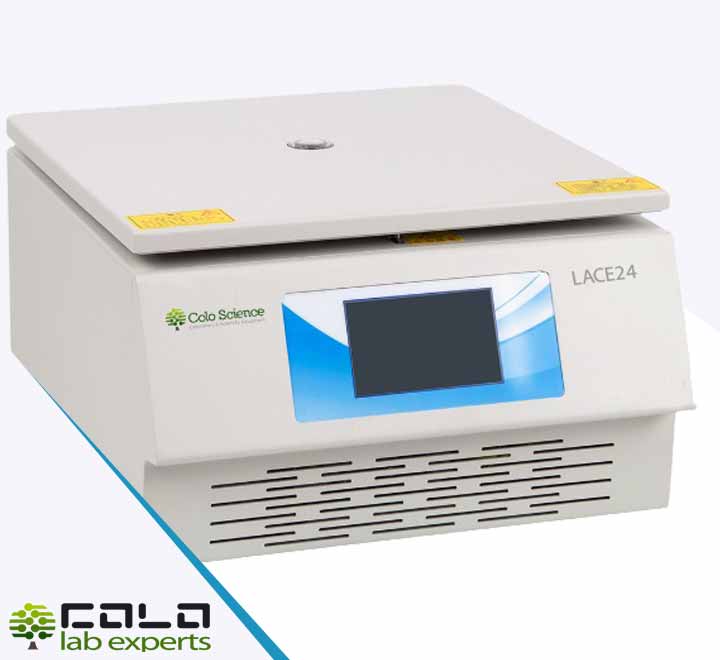
| Benchtop centrifuge | The general-purpose laboratory centrifuge for 5–100 ml tubes with swing-out or angle rotors: LACE24, LACE32, the high-capacity LACE56N (6000 rpm) and the high-speed LACE17B. Benchtop centrifuges |
| Microcentrifuge (high-speed) | Microtubes 1.5/2 ml at 16,000–20,000 rpm for DNA/RNA work, protein and cell pellets: RITACUBA16N, RITACUBA18N, LACE16AS. Microcentrifuges |
| Special-purpose centrifuge | Dedicated designs: CRUDE100 for crude oil (4×100 ml), GERBER8 with heating for the Gerber milk-fat method, the COLOCYT cytocentrifuge and LACEVAC4 / LACEVAC7 centrifugal vacuum concentrators. Special-purpose centrifuges |
| Mini centrifuge | Compact, quiet spin-down of microtubes, PCR strips and small tubes. MICE12, MINICEN7K and MINICEN7T (4000–7000 rpm) fit on any bench. Mini centrifuges |
2How to choose a laboratory centrifuge
- Tube type and volume. Start from the tube you use every day — microtubes, 15/50 ml conical tubes, vacutainers, bottles or plates. The tube decides the rotor, and the rotor decides the centrifuge.
- Samples per run. Count how many tubes you process at once. A rotor with too few places means extra runs; the capacity planner shows places per run and the number of runs for every rotor.
- Speed and g-force. Protocols give the force in × g (RCF). The same rpm gives a different force on a small and a large rotor, so always compare the maximum × g of the rotor, not only the rpm of the centrifuge.
- Cooling. Choose a refrigerated centrifuge for enzymes, cells, RNA and long or high-speed runs — friction warms the rotor chamber. For routine clinical and industrial work an ambient centrifuge is enough.
- Rotor types. Swing-out rotors give flat, clean pellets and are preferred for blood and gradients; fixed-angle rotors reach higher g-force and shorter run times.
3Understanding the main specifications
Not sure which model fits? The capacity planner lists every centrifuge and rotor for your tube type, number of samples and g-force — with places per run and number of runs.
4Where laboratory centrifuges are used
 Clinical & bloodSerum, plasma, urine sediment, cytology.
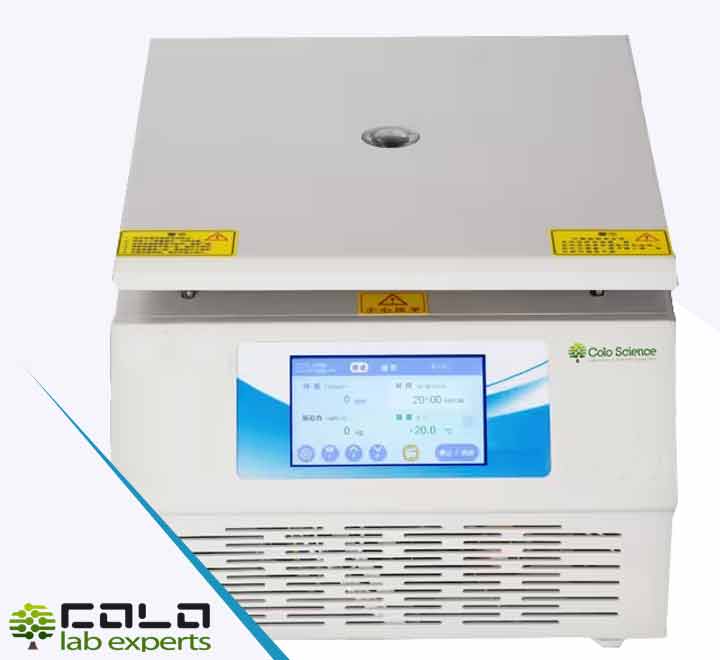 Molecular biologyDNA/RNA extraction, pellets in 1.5/2 ml microtubes.
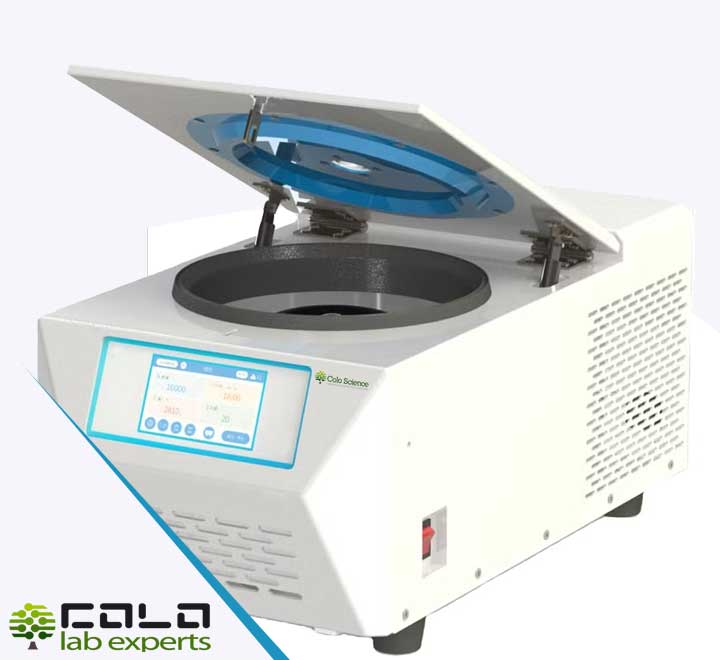 Cells & proteinsCooled separation of temperature-sensitive samples.
 Food & industryMilk fat (Gerber), crude oil, QC samples.
Laboratory centrifuges – frequently asked questions
How do I convert rpm to × g?
RCF = 1.118 × 10⁻⁵ × r × rpm², where r is the rotor radius in cm. The centrifuges overview has an rpm ⇄ RCF calculator, and the catalogue lists the maximum × g of every rotor.
Do I need a refrigerated centrifuge?
Yes for enzymes, cells, RNA/DNA and long or high-speed runs, where the chamber would otherwise warm up. For routine clinical tubes and short runs an ambient centrifuge is sufficient.
Swing-out or fixed-angle rotor?
Swing-out rotors form a flat pellet at the tube bottom and suit blood, urine and gradients. Fixed-angle rotors reach higher g-force and are faster for pellets in microtubes and conical tubes.
Can one centrifuge take different tubes?
Yes — most benchtop and refrigerated models accept several rotors and adapters. Tell us your tube types and we configure the rotor set.
Choosing a centrifuge?
Send us the tube type, number of samples per run, required × g and whether cooling is needed — we recommend the centrifuge and rotor set and send a quotation.