


Laboratory Centrifuges
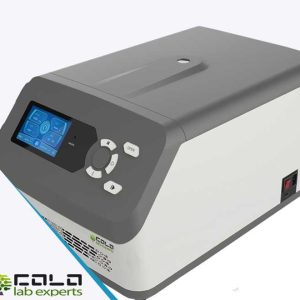
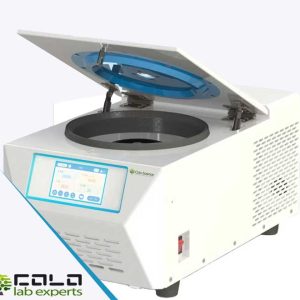
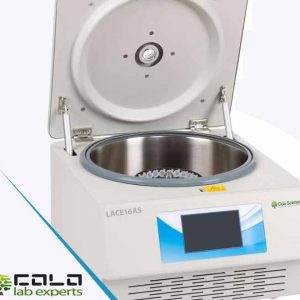
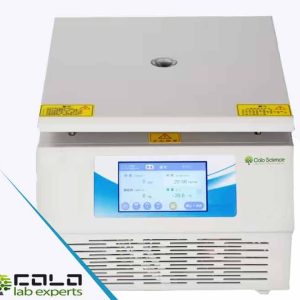
Laboratory centrifuges are essential instruments for sample separation in clinical, microbiology, molecular biology, food, environmental, pharmaceutical, educational and industrial laboratories. They are used to separate liquids, suspensions, cells, precipitates, blood components and other sample materials by applying centrifugal force under controlled conditions.
In routine sample preparation, laboratory centrifuges help laboratories obtain clear fractions before further analysis, testing or processing. Typical applications include serum and plasma separation, cell pelleting, microbiological sample preparation, DNA/RNA workflows, protein handling, environmental sample processing, food testing and general QC procedures. Depending on the application, the correct centrifuge must match the tube format, sample volume, rotor type, maximum speed, RCF value and safety requirements of the laboratory workflow.
The COLO laboratory centrifuge range is structured for practical instrument selection. This category includes compact mini centrifuges for small sample volumes, microcentrifuges for high-speed microtube workflows, clinical and blood centrifuges for routine medical and veterinary laboratories, and refrigerated centrifuges for temperature-sensitive samples. Larger benchtop and high-capacity systems are suitable for laboratories that require higher throughput, swing-out rotors, multiple tube formats or larger sample vessels.
Selecting the right laboratory centrifuge requires evaluation of both speed and separation force. RPM describes rotor speed, while RCF indicates the actual centrifugal force applied to the sample. Rotor geometry, radius, tube angle and vessel compatibility also influence separation quality. For reproducible centrifugation, laboratories should consider rotor balance, lid safety, acceleration and braking profiles, noise level, maintenance requirements and availability of suitable adapters.
CATEGORY STRUCTURE (NAVIGATION HUB)
- Lab Equipment
– general laboratory instruments and equipment for routine, QC and R&D workflows.- Sample Preparation
– equipment used before measurement, testing or analytical evaluation.- Sample Separation
– instruments for physical and mechanical separation of laboratory samples.
- Sample Separation
- Sample Preparation
LABORATORY CENTRIFUGE GROUPS
- Mini centrifuges – compact instruments for quick spin-down, small sample volumes, basic tube formats and routine preparation steps in teaching, clinical and laboratory workflows.
- Microcentrifuges – high-speed centrifuges for microtubes, PCR tubes, nucleic acid preparation, protein work, microbiology and molecular biology applications.
- Clinical / blood centrifuges – centrifuges for serum, plasma, urine, blood collection tubes, routine diagnostics, veterinary laboratories and general medical sample preparation.
- Refrigerated centrifuges – temperature-controlled centrifuges for biological samples, enzymes, proteins, cell suspensions and other materials that require stable thermal conditions during separation.
- High-capacity benchtop centrifuges – systems for larger sample throughput, multiple tube adapters, swing-out rotors, buckets, bottles and laboratory workflows with higher processing demand.
SELECTION PARAMETERS
- Sample volume and tube format – microtubes, PCR tubes, 5 ml, 10 ml, 15 ml, 50 ml, blood tubes, bottles or special sample vessels.
- Rotor type – fixed-angle rotors for fast sedimentation, swing-out rotors for horizontal separation layers and special rotors for application-specific workflows.
- Speed and RCF – maximum RPM must be evaluated together with RCF, because separation force depends on rotor radius and geometry.
- Temperature control – refrigerated centrifuges are recommended for temperature-sensitive biological, biochemical and molecular samples.
- Safety and usability – lid locking, imbalance detection, stable motor operation, clear control interface and rotor compatibility are important for daily laboratory use.
FEATURED: CENTRIFUGES FOR SAMPLE SEPARATION
Laboratory centrifuges are the central instrument group within sample separation. They support reproducible preparation of samples before analytical measurement, clinical testing, microbiological evaluation, molecular biology workflows and general laboratory processing. The right configuration depends on sample type, tube capacity, rotor design, required RCF, throughput and whether temperature control is needed.
For laboratories that process different sample types, a flexible benchtop centrifuge with interchangeable rotors and adapters can be a practical choice. For small-volume biological workflows, microcentrifuges and refrigerated microcentrifuges are more suitable. Clinical and blood laboratories usually require reliable tube compatibility, controlled acceleration and safe daily operation.
Laboratory Centrifuges Categories
Laboratory Centrifuges
Showing 1–24 of 38 results
-
Mini centrifuges
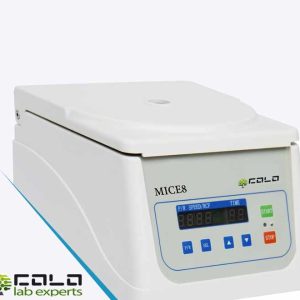
MICE8 Mini Table Top Centrifuge 4000 rpm with Rotor 8X15 ml
COLO.Science · Mini Laboratory Centrifuge
MICE8 is a compact mini centrifuge for blood, urine and routine sample prep with 4000 rpm, 2800 ×g and 8 × 15 mL rotor.
Key specs: 4000 rpm · 2800 ×g · 8 × 15 mL · 0–99 min timer · LED display · brushless motor · <45 dBA · SKU PRO5044
SKU: PRO6856 -
Clinical / blood centrifuges, Mini centrifuges
MICE12 Portable Mini Centrifuge 4000 rpm 12 x 10ml
-22%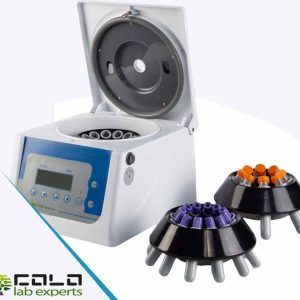 Clinical / blood centrifuges, Mini centrifuges
MICE12 Portable Mini Centrifuge 4000 rpm 12 x 10ml
MICE12 portable mini centrifuge — 4000 rpm, standard 12 × 10 ml fixed-angle rotor, optional 8 × 15 ml rotor, backlit LCD display, DC brushless motor, electromagnetic lid lock and compact 7.5 kg benchtop design.
SKU: PRO6855 -
Clinical / blood centrifuges
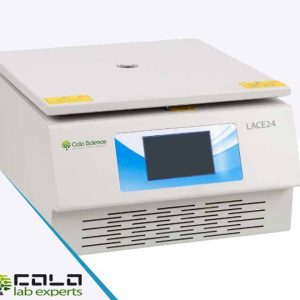
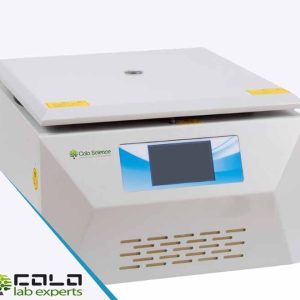
LACE24 Benchtop Laboratory Centrifuge — 4000 rpm
LACE24 benchtop laboratory centrifuge — 4000 rpm, up to 2250 × g, LCD touch-screen control, 99 stored programs and 10 acceleration / deceleration levels. Centrifuge unit supplied with rotor selected separately: PRO6994 24 × 10 ml or PRO6993 6 × 50 ml.
SKU: PRO6857 -
Clinical / blood centrifuges
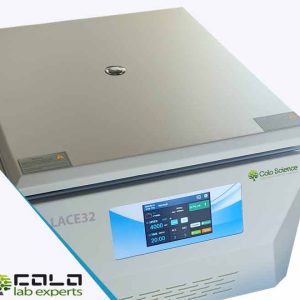
LACE32 6000rpm Table Top Centrifuge
LACE32 universal laboratory centrifuge for routine sample preparation — up to 6000 rpm, 6321 × g, maximum capacity 4 × 250 ml, 9 swing-out, fixed-angle and microplate rotor configurations, 10 acceleration/deceleration levels and a 5-inch touch screen.
SKU: PRO6925 -
Clinical / blood centrifuges
LACE56N High Capacity High Speed Centrifuge 6000 rpm, 6321 × g
LACE56N high capacity high speed centrifuge for large-volume laboratory separation — 6000 rpm, 6321 × g, capacity up to 4 × 750 ml, 5-inch touch screen, automatic rotor identification and 11 configurable rotor families.
SKU: PRO6932 -
Clinical / blood centrifuges, Refrigerated Centrifuges
LACE56R High Capacity Refrigerated Centrifuge 6000 rpm, 6321 × g
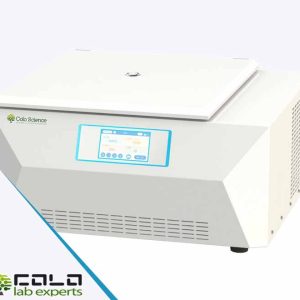 Clinical / blood centrifuges, Refrigerated Centrifuges
LACE56R High Capacity Refrigerated Centrifuge 6000 rpm, 6321 × g
LACE56R high capacity refrigerated centrifuge — 6000 rpm, 6321 × g, capacity up to 4 × 750 ml, -20 °C to +40 °C temperature range, ±1 °C precision, cooling to 4 °C in 8 minutes and 11 configurable rotor families.
SKU: PRO6992 -
Microcentrifuges, Refrigerated Centrifuges
LACE-LION Refrigerated Microcentrifuge 15000rpm/21400xg
LACE-LION refrigerated microcentrifuge for clinical, medical, biochemistry and molecular laboratory workflows.
15,100 rpm / 21,400 × g · -20 °C to 40 °C · 24 × 1.5 / 2 ml included rotor · LCD soft touch · rotor ID · IVD compliant.
SKU: PRO3905 -
Microcentrifuges, Refrigerated Centrifuges
RITACUBA16R High-Speed Refrigerated Centrifuge
RITACUBA16R high-speed refrigerated centrifuge for PCR, molecular biology and routine sample preparation.
16,500 rpm / 24,148 × g · max. 6 × 50 ml · 8 fixed-angle rotors · 5-inch touch screen · 99 programs · rotor auto-ID.
SKU: PRO6933 -
Microcentrifuges, Refrigerated Centrifuges
LACE16AR refrigerated high-speed centrifuge with NCP composite rotors 16,500 rpm, 24,148 × g
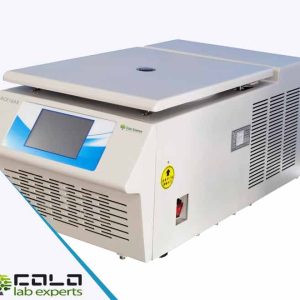 Microcentrifuges, Refrigerated Centrifuges
LACE16AR refrigerated high-speed centrifuge with NCP composite rotors 16,500 rpm, 24,148 × g
LACE16AR refrigerated high-speed centrifuge for molecular biology and temperature-sensitive samples — 16,500 rpm, 24,148 × g, -20 °C to +40 °C, capacity up to 18 × 5 ml, 4 NCP rotors, nano-ceramic chamber and 5-inch touch screen.
SKU: PRO7067 -
Microcentrifuges, Refrigerated Centrifuges
RITACUBA18R – High Speed Laboratory Refrigerated Centrifuge 18500rpm
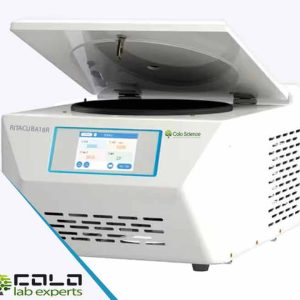 Microcentrifuges, Refrigerated Centrifuges
RITACUBA18R – High Speed Laboratory Refrigerated Centrifuge 18500rpm
RITACUBA18R high-speed refrigerated centrifuge — up to 18,500 rpm, 27,100 × g and 6 × 100 ml, with a −20 to +40 °C temperature range, rapid cooling to 4 °C, 5-inch HD touchscreen, automatic rotor recognition and a broad multi-rotor configuration range.
SKU: PRO7071 -
Microcentrifuges, Refrigerated Centrifuges
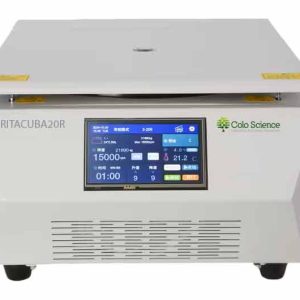
RITACUBA20R refrigerated centrifuge for high- and low-speed laboratory workflows
 Microcentrifuges, Refrigerated Centrifuges
RITACUBA20R refrigerated centrifuge for high- and low-speed laboratory workflows
RITACUBA20R refrigerated centrifuge — up to 20,000 rpm, 29,060 × g and 4 × 250 ml, with −20 to +40 °C temperature control, 99 custom programs and flexible angle and swing-out rotor configurations.
SKU: PRO7073 -
-
-
Microcentrifuges
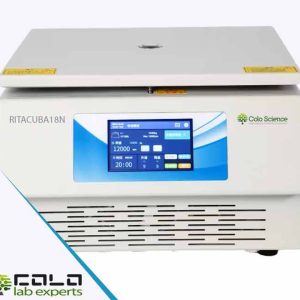
RITACUBA18N high-speed laboratory centrifuge 18,500 rpm
RITACUBA18N high-speed laboratory centrifuge — up to 18,500 rpm, 27,100 × g and 6 × 100 ml; ambient operation, 5-inch HD touchscreen, automatic rotor recognition, 99 programs and a broad rotor range for microtubes, plates and larger vessels.
SKU: PRO7070 -
Microcentrifuges, Refrigerated Centrifuges
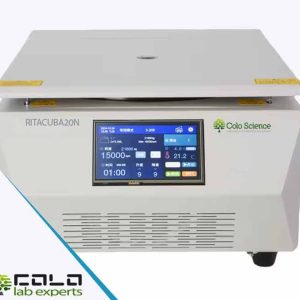
RITACUBA20N high-speed centrifuge 20,000 rpm
RITACUBA20N high-speed centrifuge — up to 20,000 rpm, 29,060 × g and 4 × 250 ml; non-refrigerated operation, 5-inch HD touchscreen, automatic rotor recognition, up to 999 custom programs and a broad rotor range for high-speed microtube and higher-capacity workflows.
SKU: PRO7072