


A laboratory hot plate heats beakers, flasks, digestion vessels and sand baths from RT+5 °C up to 350–500 °C. COLO.Science hot plates come with aluminium, graphite and glass-ceramic surfaces, digital PID control and plate sizes from 30×30 cm to 60×40 cm.
Hot Plates
Showing all 5 results
-
Hot Plates
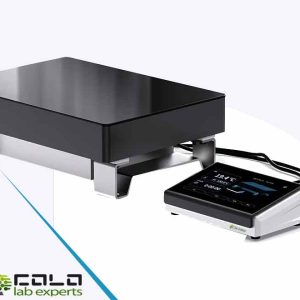
GOBI-GC Laboratory Hotplate with Programmable Glass-Ceramic Heating Surface
GOBI-GC laboratory hotplate with a 6 mm glass-ceramic surface, separate LCD PID controller, 10 stored methods, 6-stage programming, heating areas up to 600 × 400 mm and operating temperatures up to 500 °C.
SKU: GOBI-GC



Laboratory hot plates: how to compare and choose
The products above differ in temperature range, capacity and control. The guide below explains those differences step by step, so you can compare the models and ask for the right configuration.
1Hot plate models
| GOBI-GC – glass-ceramic hot plate | GOBI-GC has a 6 mm glass-ceramic surface, separate LCD PID controller, 10 stored methods and 6-step programs up to 500 °C — chemically resistant and easy to clean. |
|---|---|
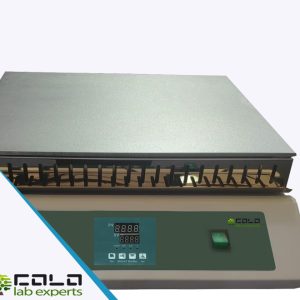
| GOBI – aluminium hot plate 40×60 cm | GOBI 40×60 cm and GOBI heat large batches of beakers evenly up to 350 °C with 3000 W. |
| THAR – graphite hot plate | THAR with a graphite surface resists acids and reaches 450 °C — the choice for acid digestion. |
| HPLA – dual heating plate | HPLA 30×30 cm with two independent zones for parallel work at different temperatures. |
2How to choose a laboratory hot plate
- Surface material. Aluminium for fast, even heat; graphite for acid digestion; glass-ceramic for chemical resistance and cleaning. Ceramic surfaces show spills and protect against corrosion.
- Plate size and power. Count vessels per batch — a 40×60 cm plate holds 20+ beakers. Higher power shortens heating time.
- Temperature control. PID control with an external probe holds the liquid temperature, not only the surface temperature; programs and timers help unattended work.
- Stirring. For stirring and heating in one beaker choose a magnetic stirrer hot plate; for flasks use a heating mantle.
3Hot plate applications

- Acid digestion of samples before AAS, ICP-OES and ICP-MS
- Evaporation and concentration of solutions
- Heating of sand baths, water baths and reaction vessels
- Drying of samples on trays and Petri dishes
- Melting of waxes, paraffin and media preparation
Laboratory hot plate – frequently asked questions
What is the maximum temperature of a laboratory hot plate?
Aluminium plates typically reach 350 °C, graphite plates 450 °C and glass-ceramic plates up to 500 °C.
Which hot plate is best for acid digestion?
A graphite or glass-ceramic surface, because aluminium corrodes in acid vapours. THAR and GOBI-GC are designed for this work.
Can I heat flammable solvents on a hot plate?
Only with care, below the flash point and under a fume hood. For flasks with solvents a heating mantle is safer.
What size do I need?
30×30 cm for a few beakers, 40×60 cm for series of digestion vessels.
Choosing a hot plate?
Tell us the vessels, temperature and chemicals — we recommend the surface and plate size.