




Laboratory balances from COLO.Science cover every weighing step from 1 µg to 60 kg: micro and semi-micro balances, analytical balances at 0.1 mg, milligram balances, precision balances at 0.01 g, high-capacity balances and special balances for density and textiles. Choose by readability, the heaviest load including the container and the calibration your method requires.
Balances Categories


Balances
Showing 1–24 of 32 results





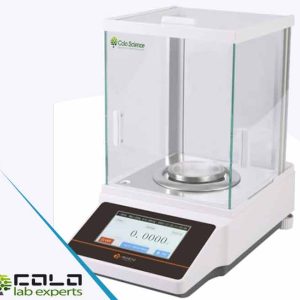


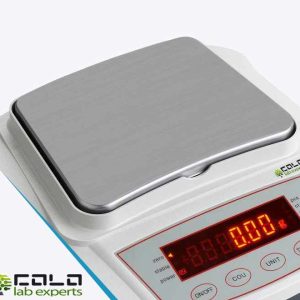


Laboratory balances: how to choose the right class
The balance class follows from the smallest sample you weigh, the capacity from the heaviest load on the pan. These three steps take you to the right model.
1Balance classes at a glance
| Micro and semi-micro balance | 1 µg – 0.01 mg, up to 220 g. Filters, residues, reference standards and very small samples. MEUSE, ANB-SEMIC, LOIRE |
|---|---|
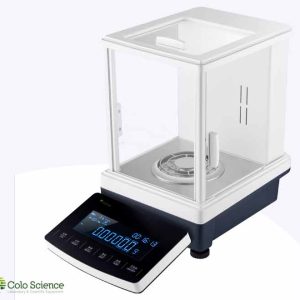
| Analytical balance | 0.1 mg, 100 – 1100 g. Standards, sample preparation and QC weighing in pharma and chemistry. SIRET, RHONE, SIENE, ANB-HIC |
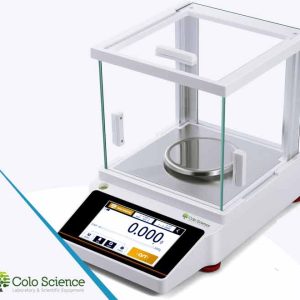
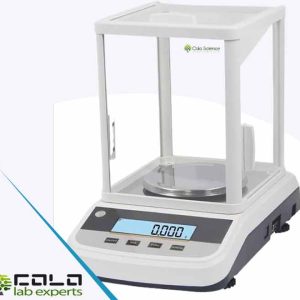
| Milligram balance | 1 mg, 100 – 2000 g. Formulation, media preparation, food and teaching laboratories. MILIM, MILIX, MILI-TGH |
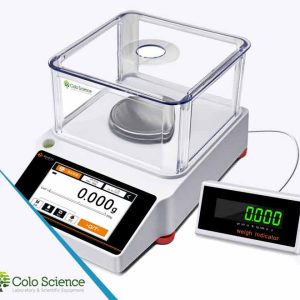
| Precision balance | 0.01 g, 600 – 12 100 g. Recipes, batches and general laboratory weighing. CENTA, CENKA, CENSK |
| High-capacity and technical balance | 0.1 – 1 g, 6 – 60 kg. Raw materials, production control, incoming goods. DECX, TECX, TECB |
2Checklist before you order
- Readability. Take the smallest sample and the tolerance you must meet; the balance class follows from it, not from the largest load.
- Capacity with the container. Add the beaker, weighing boat or bucket to the heaviest sample and keep some reserve.
- Minimum weight. Below a certain sample mass the relative error is too high; it follows from the repeatability of the balance and its place.
- Calibration. Internal calibration with a built-in weight, or external calibration with an OIML weight of the right class.
- Pan and draft shield. From 1 mg down a draft shield is needed; large or bulky containers need a large pan.
- Data and documentation. RS232 or USB output, printer and GLP report when every weighing must be recorded.
3Internal or external calibration

Internal calibration uses a weight built into the balance. It keeps analytical and semi-micro balances adjusted when the room temperature changes and records each adjustment for GLP and ISO 17025.
External calibration is done with a separate weight. It suits precision, milligram and technical balances in a stable room — choose the weight class in OIML calibration weights.
Laboratory balances – frequently asked questions
Which balance do I need for 0.1 mg?
An analytical balance. It works inside a glass draft shield and is available from 100 g up to 1100 g capacity.
Is a milligram balance enough instead of an analytical balance?
Only when your smallest sample and tolerance allow 1 mg readability. For standards and small samples choose an analytical balance.
Why include the container in the capacity?
The balance weighs everything on the pan. A heavy beaker or bucket can use a large part of the capacity before the sample is added.
Can you help me choose the model?
Yes. Use the weighing planner, browse the weighing catalogue or send us your sample mass, readability and method.
Choosing a laboratory balance?
Send us the smallest and largest mass you weigh, the readability and the method — we recommend the model and send a quotation with delivery time.