


MILIM milligram balances — series overview
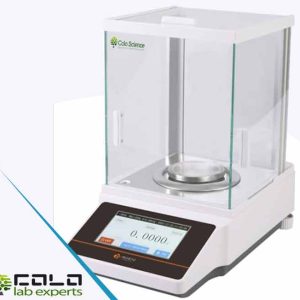
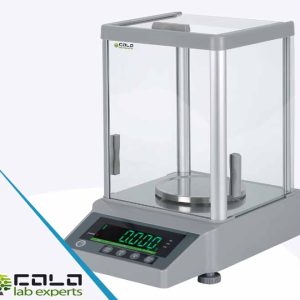
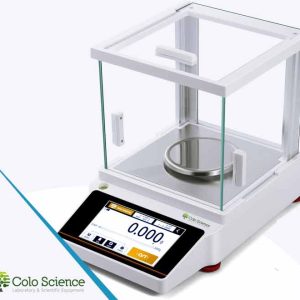
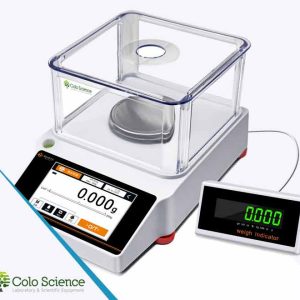
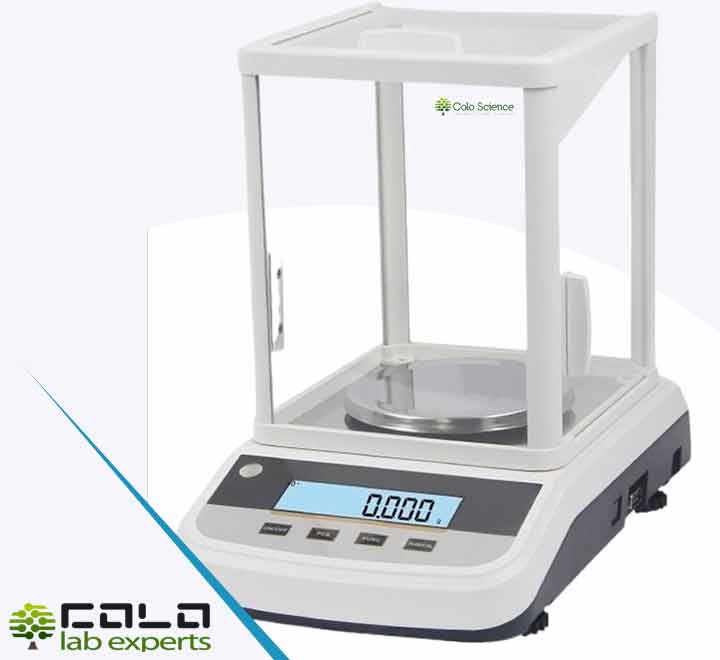
The series covers small-sample weighing with a single measuring platform: a high-precision load cell with overload protection, repeatability of ±0.002 g and linearity of ±0.002 g, and a stabilisation time of 1.5 s. A glass draft shield with a sliding side door keeps air movement off the round stainless steel pan, which is what makes the third decimal place usable on an ordinary bench. Results are read on a backlit LCD and can be sent to a printer or a PC over RS232.
All four models share the same load cell technology, draft shield, pan size, control logic, weighing functions, calibration method and interface. They differ in maximum capacity only — which turns model selection into a straightforward capacity decision instead of a comparison of performance trade-offs.
SELECTION NOTE — MILIM MILLIGRAM BALANCES
MILIM100 covers 100 g for the smallest samples and for benches where the full resolution is used over a short range. MILIM200 and MILIM300 are the usual choices for general small-sample work. MILIM500 extends the same 0.001 g resolution to 500 g for heavier containers and larger preparations. Because the resolution does not change with capacity, there is no reason to pick a smaller model than the heaviest load actually requires — and with a milligram balance the container itself is often most of that load.
Key characteristics of the MILIM milligram balances
Key characteristics
- Readability of 0.001 g on every model, from 100 g to 500 g.
- Repeatability ±0.002 g, linearity ±0.002 g.
- Stabilisation time of 1.5 s.
- Glass draft shield with a sliding side door.
- Round stainless steel pan, 120 mm diameter.
- Backlit LCD and a simple five-key panel.
- RS232 interface; full-capacity tare, check weighing and piece counting.
- Selectable units g, oz and ct; below-balance weighing position.
Suitable for
- Weighing of small samples, reagents and standards to the milligram.
- Formulation, dosing and dilution work in laboratories and dispensaries.
- Gemstone and precious metal weighing, with readings in carats.
- Incoming inspection of small components and fine materials.
- Piece counting of light parts where a gram-resolution balance cannot resolve one piece.
- Teaching and research benches that need three decimal places without an analytical balance.
One 0.001 g platform across the full capacity range
The MILIM milligram balances are built on one measuring platform shared by all four models, so a laboratory can standardise operator training, calibration procedure, accessories and data handling while still choosing the capacity each bench actually needs. A laboratory that runs a 100 g balance for reagent weighing and a 500 g balance for larger preparations works with the same keypad, the same tare behaviour, the same draft shield, the same calibration routine and the same RS232 output on both instruments.
That consistency matters more at three decimal places than at two. A milligram balance is sensitive to draughts, to vibration and to an unlevel bench, so the procedure that keeps it reading correctly has to be written once and followed everywhere. Because the MILIM milligram balances keep readability at 0.001 g and repeatability at ±0.002 g regardless of capacity, one written weighing procedure applies across the series. The series uses external calibration throughout, so one documented calibration routine and one control weight class — OIML F1 — cover the whole family.
Models, SKU and capacities of the MILIM milligram balances
SKU: PRO7096
MILIM100
- Maximum capacity: 100 g
- Readability: 0.001 g
- Pan: stainless steel, ∅ 120 mm
- Calibration: external
SKU: PRO7097
MILIM200
- Maximum capacity: 200 g
- Readability: 0.001 g
- Pan: stainless steel, ∅ 120 mm
- Calibration: external
SKU: PRO5142
MILIM300
- Maximum capacity: 300 g
- Readability: 0.001 g
- Pan: stainless steel, ∅ 120 mm
- Calibration: external
SKU: PRO7086
MILIM500
- Maximum capacity: 500 g
- Readability: 0.001 g
- Pan: stainless steel, ∅ 120 mm
- Calibration: external
Repeatability ±0.002 g and linearity ±0.002 g apply to every model of the series. The SKU shown on each card is the COLO product number used on quotations and order confirmations.
Technical specifications — MILIM milligram balances platform
| Readability | 0.001 g (all models) |
| Repeatability | ±0.002 g |
| Linearity | ±0.002 g |
| Stabilisation time | 1.5 s |
| Calibration | External, with control weight |
| Sensor | High-precision load cell, overload protection |
| Weighing pan | Stainless steel, ∅ 120 mm |
| Draft shield | Glass, with sliding side door |
| Below-balance weighing | Provided; under-hook available as an option |
| Display | LCD with backlight |
| Control panel | Five keys |
| Measuring units | g, oz, ct |
| Interface | RS232 |
| Housing | Plastic housing, height-adjustable feet |
| Power supply | AC 220–240 V, mains adapter supplied; 4 × AAA batteries |
| Dimensions (L × W × H) | 320 × 195 × 280 mm |
| Packing size | 375 × 255 × 340 mm |
| Net / gross weight | 3.0 / 4.0 kg |
The table lists the values shared by the whole series. Capacity is the only parameter that changes between models — see the model cards above.
Operating and weighing functions of the MILIM milligram balances
Full-capacity tare
The tare function works over the whole capacity, so a weighing boat or a small flask does not reduce the usable range as long as the total load stays within the maximum.
Check weighing
Preset limits let the operator confirm portions against a target value without reading the exact mass each time — useful in repeat dosing.
Piece counting
A reference sample sets the unit mass and the balance reports the number of pieces. At 0.001 g resolution this reaches parts that a gram-resolution balance cannot count.
Units g, oz and ct
Readings switch between grams, ounces and carats, so the same instrument serves laboratory work and gemstone or precious metal weighing.
External calibration
Calibration is performed with a control weight, so the routine can be documented and repeated at whatever interval the laboratory procedure requires.
RS232 data output
Readings can be sent to a thermal printer for a paper record or to a PC with the optional communication software for further processing.
Draft shield, construction and power supply
- Glass draft shield. A transparent chamber with a sliding side door closes around the pan. At 0.001 g a passing person or an open window is enough to move the reading, so the shield is not a refinement — it is what makes the third decimal place usable.
- Load cell and pan. A high-precision load cell with overload protection carries a round stainless steel pan of 120 mm diameter, which can be wiped down and does not corrode from spilled reagents.
- Levelling. Height-adjustable feet let the balance be levelled on a bench that is not perfectly flat — a condition for reaching the stated repeatability.
- Below-balance weighing. The instrument provides a position for weighing a suspended sample, which covers density determination and samples that will not sit on a pan. The under-hook itself is ordered as an option.
- Power supply. Mains operation is AC 220–240 V with the adapter supplied as standard. The balance also runs on 4 × AAA batteries, which covers benches without a nearby socket and short work away from the laboratory.
- Siting. Place the balance on a solid bench away from draughts, vibration, heat sources and direct sunlight, and level it before calibrating. These conditions matter more here than on a gram-resolution balance.
Bench space to allow
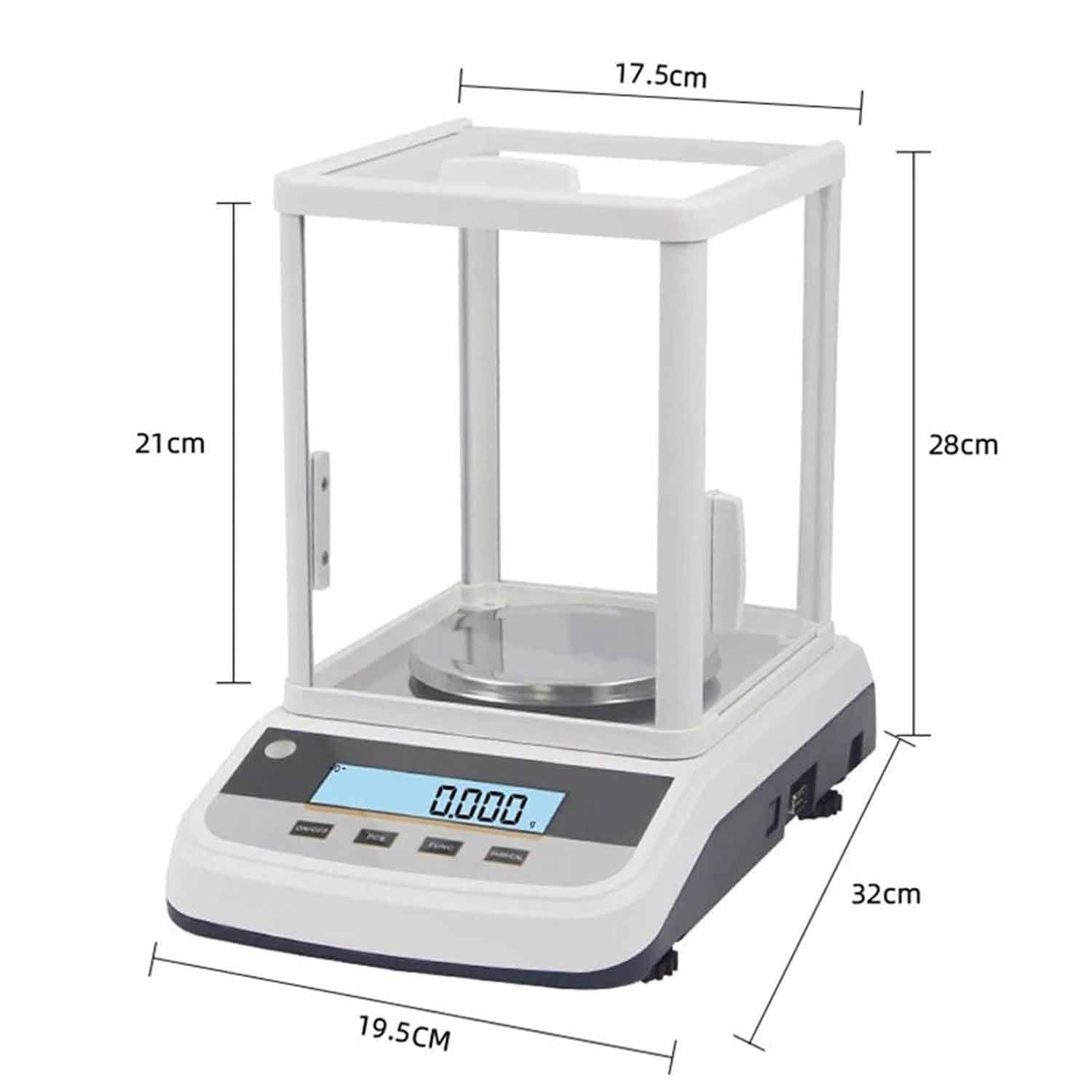
Overall footprint is 320 × 195 mm with a height of 280 mm. The draft shield chamber itself is about 175 mm wide and 210 mm high, which is the space available around the pan.
Allow clearance above and to the side of the door so the chamber can be opened and the pan reached comfortably. Shipping carton is 375 × 255 × 340 mm, net 3.0 kg and gross 4.0 kg.
Standard delivery, calibration weights and optional devices
Standard delivery
- Balance of the ordered model, draft shield and ∅ 120 mm pan fitted
- Mains adapter, AC 220–240 V
- Instruction manual
A calibration weight is not included in the standard delivery.
Recommended: OIML F1 control weight
Because the series calibrates externally, a control weight matched to the capacity should be ordered with the balance. At 0.001 g readability the class matters: OIML F1 is the recommended class, while M1 weights used with gram-resolution balances are too coarse to verify a milligram balance.
Available as sets from 1 mg to 500 g or as single weights. A calibration certificate for the weight, and a separate calibration certificate for the balance, can be supplied on request.
Optional devices for the MILIM milligram balances
Thermal printer
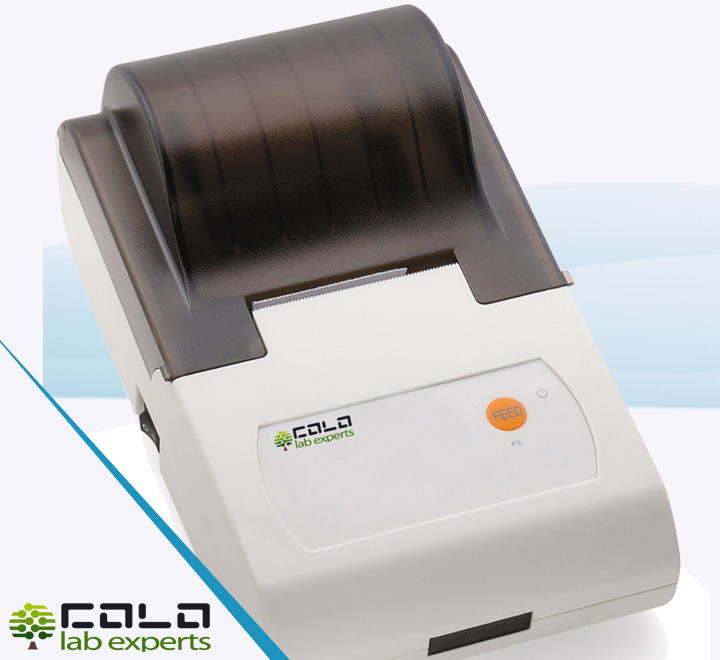
Prints the weighing result directly from the balance over RS232, without a PC on the bench. The printout is attached to the worksheet or the batch record. Ordered together with the matching RS232 cable.
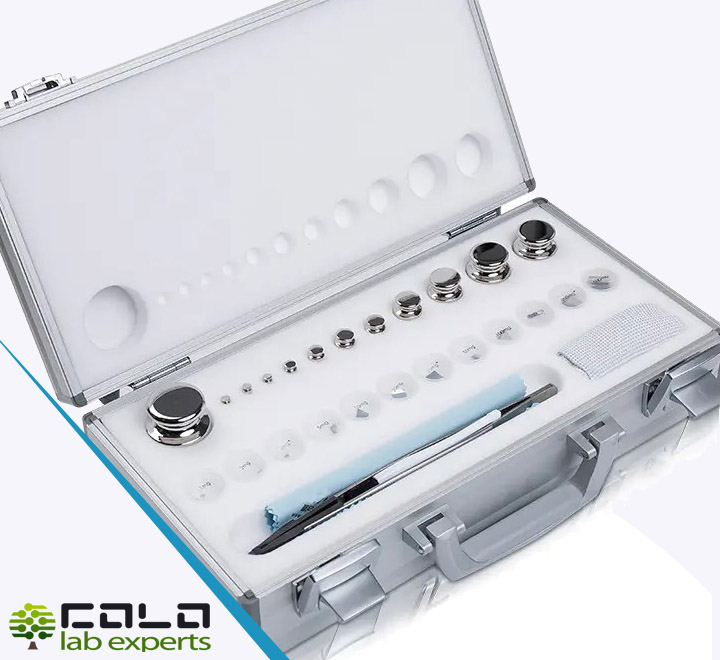
OIML F1 weight set, 1 mg – 500 g
Control weights for external calibration and routine verification. At 0.001 g readability the class must be F1; an M1 set from a gram-resolution balance is too coarse. Also available as single weights.
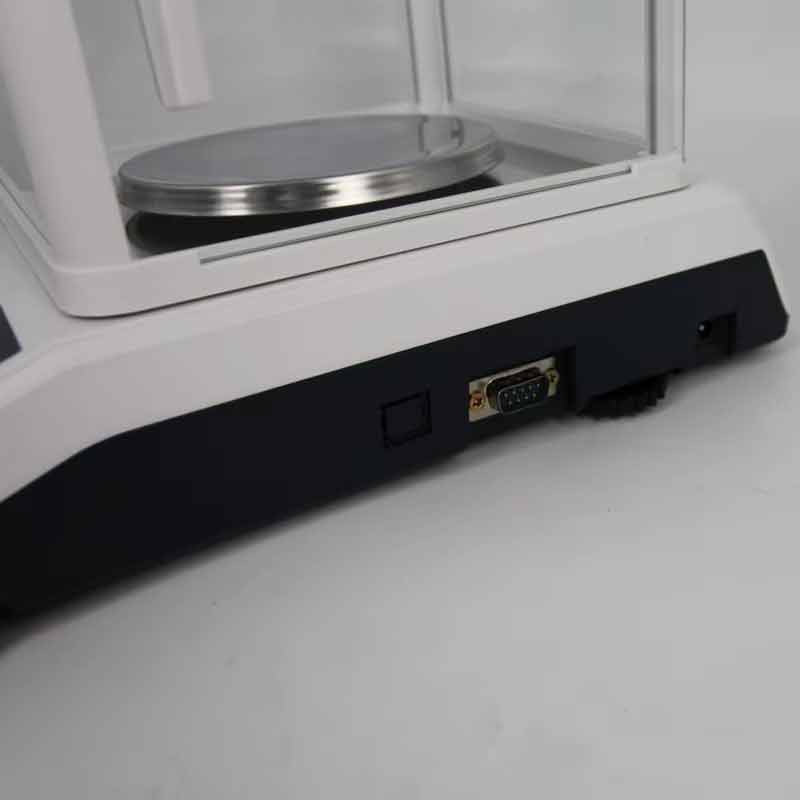
RS232 cable and software
The RS232 connector on the rear panel takes the cable to a printer or to a PC. With the optional communication software the readings are transferred to the PC for records and further processing.
| Thermal printer | Direct printout of weighing results without a PC; connects over RS232 |
| RS232 cable | Connection of the balance to a printer or PC |
| Communication software | Transfer of readings to a PC for records and further processing |
| Under-hook for below-balance weighing | Weighing of suspended samples and density determination |
| OIML F1 weight sets and single weights | External calibration and routine verification, 1 mg–500 g |
| Calibration certificates | Documented traceability for the control weight or for the instrument |
BALANCES OVERVIEW
Compare MILIM with the other COLO.Science balance series by readability and capacity.
BALANCES CATALOGUE
Full weighing range with capacity, readability, calibration type and interface per model.
TECHNICAL SPECIFICATION
Five-page PDF with the model table, full specification, accessories and support contact.
Applications and operational value of the MILIM milligram balances
Small-sample laboratory work
Reagents, standards and small samples weighed to 0.001 g behind a closed draft shield, with a stabilisation time of 1.5 s that keeps a working day moving.
Formulation and dosing
Check weighing against preset limits supports repeat dosing and dilution series where an error of a few milligrams changes the result.
Gemstones and precious metals
The carat unit and the draft shield cover jewellery work, appraisal and trade, where the mass is small and the value per milligram is high.
Documented records
The RS232 output with a printer or PC software turns individual readings into a record that can be filed with the batch or the analysis.
How to select the right MILIM model
Selection starts from the heaviest load that will ever sit on the pan — the sample together with its container. On a milligram balance the container is usually the larger part of that total, so weigh the vessel you actually intend to use before deciding. Add a reasonable margin and choose the model whose maximum capacity covers it: 100 g, 200 g, 300 g or 500 g. Since readability stays at 0.001 g on all four models, a larger capacity costs nothing in resolution, while a balance that is too small simply cannot be used with a heavier flask.
Three further questions settle the configuration. Do results have to leave the balance? If yes, add the RS232 cable with a thermal printer for paper records, or the communication software for transfer to a PC. Will suspended samples or density determination be part of the work? If yes, order the under-hook for below-balance weighing. Does the laboratory procedure require documented calibration? If yes, order the OIML F1 control weight matched to the capacity, and the calibration certificate for the weight, the instrument, or both. One note on the weight: an M1 set bought for a gram-resolution balance will not verify a milligram balance, so budget for F1 separately.
More about balances and other measuring instruments in the COLO programme is on our international site COLO.Science — Measurement.
Configuration notice: the MILIM milligram balances are supplied according to the confirmed specification — the final configuration, accessories, control weight and any calibration or certification requirement are defined by the official COLO.Science quotation and the PDF technical specification. Manufacturer reserves the right to change technical specifications. B2B prices are quoted net, excluding VAT.
Sales and technical support
COLO LabExperts
Polje ob Sotli 4, SI-3255, Slovenia
Quotations and technical support for the MILIM milligram balances across our international sales territory. B2B prices are net, excluding VAT.
COLO.SCIENCE | MILIM SUPPORT
Not sure which capacity and which control weight you need?
Send the maximum load including the container, the type of samples, which units are used, whether piece counting or below-balance weighing is needed, and any printing, data transfer or certification requirement. COLO.Science will confirm the model and the approved configuration.