


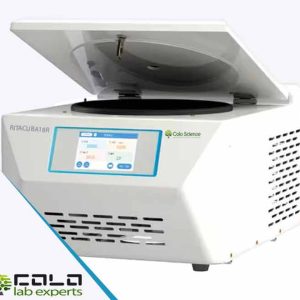
A refrigerated centrifuge keeps the rotor chamber cool during the run, so cells, enzymes, RNA and blood components stay stable. COLO.Science offers refrigerated microcentrifuges such as RITACUBA16R and RITACUBA18R, universal benchtop models such as RITACUBA20R and LACE5RH, and the high-capacity LACE56R for up to 4 × 750 ml. Choose by tube volume, places per run, × g and cooling performance.
Refrigerated Centrifuges
Showing all 6 results
-
High-Speed Centrifuges, Microcentrifuges, Refrigerated Centrifuges
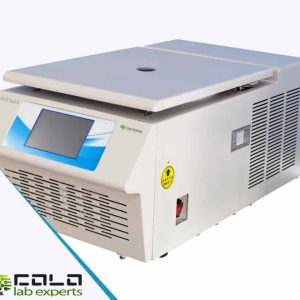
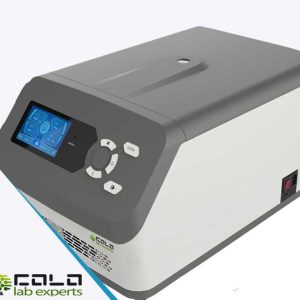
LACE16AR refrigerated high-speed centrifuge with NCP composite rotors 16,500 rpm, 24,148 × g
 High-Speed Centrifuges, Microcentrifuges, Refrigerated Centrifuges
LACE16AR refrigerated high-speed centrifuge with NCP composite rotors 16,500 rpm, 24,148 × g
Refrigerated high-speed centrifuge for PCR and molecular biology
16,500 rpm · 24,148 × g · up to 18 × 5 ml · −20 to +40 °C · 4 NCP rotors
SKU: PRO7067 -
High-Speed Centrifuges, Microcentrifuges, Refrigerated Centrifuges
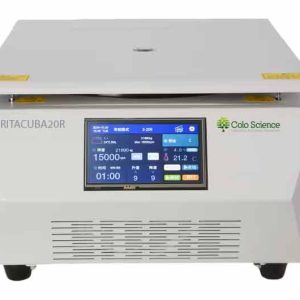
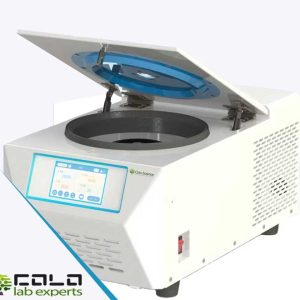
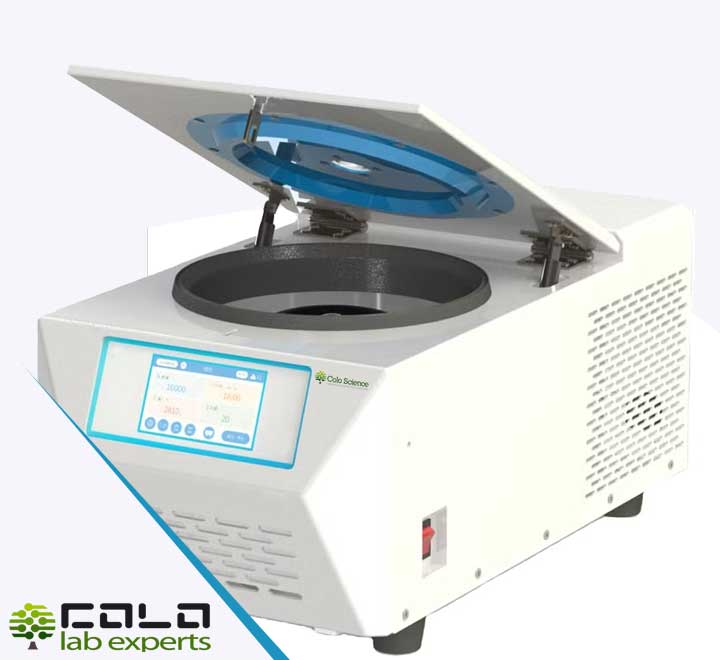
RITACUBA20R refrigerated centrifuge for high- and low-speed laboratory workflows
 High-Speed Centrifuges, Microcentrifuges, Refrigerated Centrifuges
RITACUBA20R refrigerated centrifuge for high- and low-speed laboratory workflows
Refrigerated high-speed centrifuge for microtubes, tubes and plates
20,000 rpm · 29,060 × g · up to 4 × 250 ml · −20 to +40 °C · 99 programs
SKU: PRO7073
Refrigerated centrifuges: how to compare and choose
Refrigerated centrifuges range from compact microcentrifuges to high-capacity models for 4 × 750 ml. The guide below shows the main types.
1Types of refrigerated centrifuge
| Refrigerated microcentrifuge | RITACUBA16R, RITACUBA18R, RITACUBA20R, LACE16AR and LACE-LION for 1.5/2 ml tubes at high force. |
|---|---|
| Refrigerated benchtop – low speed | LACE6HRC, LACE5RH (5000 rpm / 4730 × g) and LACE5RS for tubes, bottles and blood components. |
| Refrigerated benchtop – high speed | RITACUBA18R (18,500 rpm / 27,100 × g), RITACUBA20R (20,000 rpm / 29,060 × g) and LACE21RM for pellets at high force. |
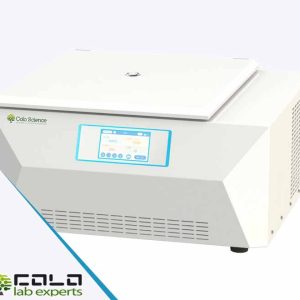
| High-capacity refrigerated | LACE56R (6000 rpm / 6321 × g, up to 4 × 750 ml, −20 to +40 °C) for large volumes and blood components. |
2How to choose a refrigerated centrifuge
- Volume per run. From 24 × 1.5 ml to several litres — the rotor decides the size class of the centrifuge.
- Force. Low-speed models (up to about 6000 rpm) for blood and cells; high-speed models for pellets of proteins, organelles and nucleic acids.
- Cooling. Check that the chamber holds about 4 °C at full speed and that pre-cooling is available.
- Space. All models are benchtop units; high-capacity models need a stable bench, ventilation and a suitable power supply.
Not sure which model fits? The capacity planner lists every centrifuge and rotor for your tube type, number of samples and g-force — with places per run and number of runs.
3Refrigerated centrifuge applications
- RNA and enzyme work in microtubes
- Cell harvesting and washing
- Blood component separation in blood banks
- Protein and organelle pellets at high × g
- Large-volume separation in bottles
Refrigerated centrifuge – frequently asked questions
Why does a centrifuge need cooling?
Air friction warms the rotor chamber at high speed; cooling keeps temperature-sensitive samples stable.
Which model for large volumes?
Up to 4 × 250 ml choose a universal refrigerated model; for 4 × 750 ml bottles choose the high-capacity LACE56R.
Choosing a refrigerated centrifuge?
Send the tube or bottle type, volume per run, required × g and temperature — we recommend the model and rotor set and send a quotation.