

COLO.SCIENCE – SAMPLE PREPARATION & SEPARATION
Clinical blood centrifuges are essential laboratory instruments for separating whole blood
into serum, plasma and cellular components. They are widely used in clinical diagnostics,
hospital laboratories, blood banks and routine biochemical analyses, where
repeatability, safety and regulatory compliance are of critical importance.
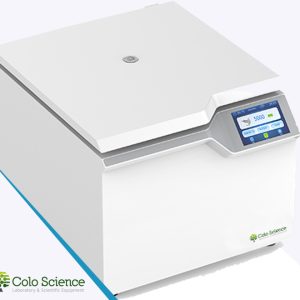
This category includes compact laboratory centrifuges and dedicated clinical models
designed for standard blood collection tubes, offering controlled acceleration,
stable rotor operation and reliable separation results in everyday laboratory work.
TYPICAL APPLICATIONS
- Separation of serum and plasma from whole blood
- Routine clinical diagnostics and hospital laboratory workflows
- Sample preparation for hematological and biochemical analyses
- Blood bank and transfusion service laboratories
- Teaching and educational laboratories in medical sciences
KEY FEATURES
- Compatibility with standard blood collection tubes
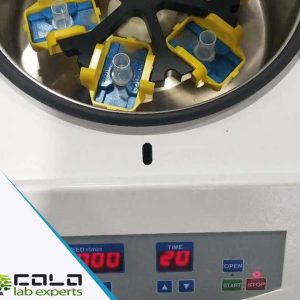
- Stable fixed-angle or swing-out rotors for clinical use
- Precise speed and RCF control
- Safety systems including lid locking and imbalance protection
- Compact design for routine laboratory bench use
COLO.SCIENCE – KNOWLEDGE & LABORATORY SOLUTIONS
On the COLO.Science platform you can find practical guides on centrifugation principles,
rotor selection, differences between RCF and RPM values, as well as best practices
for handling clinical blood samples.
COLO.Science, supported by the LabServis partner network, assists laboratories
with instrument selection, installation and calibration.
Clinical / blood centrifuges
Showing all 14 results