

Thermal Sample Treatment
Thermal sample treatment covers the core laboratory processes where controlled heating is used to prepare samples
for analysis: drying and conditioning, ashing and ignition, solvent evaporation, reagent activation, and matrix
breakdown prior to elemental analysis. In routine laboratories, this category supports reproducible preparation
steps before chromatography, spectroscopy, titration, gravimetry and microbiology workflows.
Depending on the sample matrix (soil, food, polymers, pharmaceuticals, biological materials) and the analytical goal,
thermal sample treatment may require gentle convection drying, high-temperature furnace ashing, volumetric heating via
microwave digestion, or direct-contact surface heating for fast evaporation and reagent preparation.
Consistent temperature control, uniform heat distribution and safe operation are the critical performance drivers.
Selecting the right thermal sample treatment equipment typically comes down to: target temperature range,
heating uniformity, chamber/plate volume, ventilation or corrosion resistance, programmability (ramps/holds),
documentation needs, and compatibility with your sample vessels, crucibles or digestion reactors.
CATEGORY STRUCTURE (NAVIGATION HUB)
- Lab Equipment
– instruments and systems for routine and regulated laboratory workflows.
THERMAL SAMPLE TREATMENT INSTRUMENT GROUPS
- Microwave digestion systems – closed-vessel or controlled digestion platforms for fast, reproducible
matrix breakdown prior to elemental analysis (e.g., ICP/OES, ICP-MS, AAS). Key factors include pressure/temperature
control, rotor capacity, acid compatibility and validated digestion programs. - Muffle furnaces – high-temperature ashing/ignition equipment used for gravimetric residue, loss-on-ignition,
mineralization, ceramic/metal heat treatment and crucible workflows. Focus on maximum temperature, ramp/hold profiles,
chamber volume, insulation quality and safety cut-offs. - Laboratory drying ovens – convection or specialized ovens for drying, curing, tempering and thermal conditioning
of samples and labware. Selection typically depends on temperature uniformity, airflow pattern (natural/forced),
corrosion-resistant chambers, timers and over-temperature protection. - Heating mantles – vessel-shaped heating solutions for round-bottom flasks used in chemistry workflows such as
reflux, distillation and controlled heating of solvents. Important criteria include flask size compatibility,
temperature regulation mode and chemical-resistance of the housing. - Hot plates – direct-contact surface heating for evaporation, reagent preparation, digestion support and fast thermal
steps on the bench. Consider plate material/chemical resistance, power rating, temperature control stability and
plate size for your typical vessels.
FEATURED: LABORATORY DRYING OVENS (EVERYDAY THERMAL WORKHORSE)
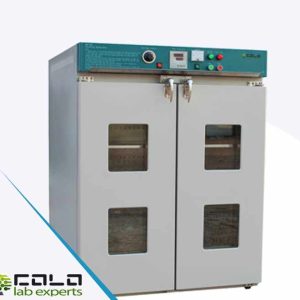
In most laboratories, drying ovens are the daily backbone for moisture removal, sample conditioning and stable
thermal pre-treatment prior to measurement. The practical difference between “good” and “excellent” oven results
is usually temperature uniformity, airflow stability, and reliable safety limiting—especially when methods require
consistent drying time-to-constant-mass or repeatable thermal conditioning of materials.
Thermal Sample Treatment Categories
Thermal Sample Treatment
Showing 1–24 of 43 results
-
Drying Ovens
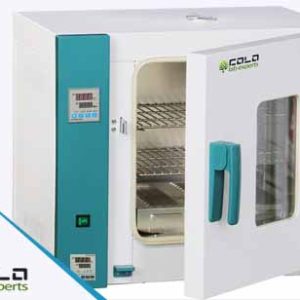
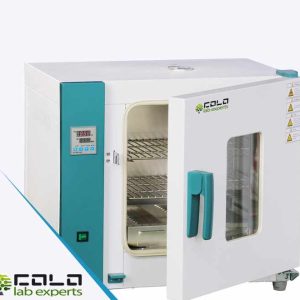
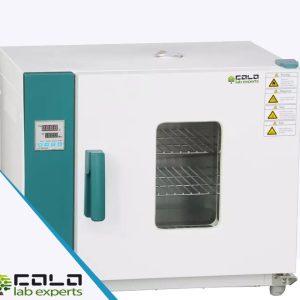
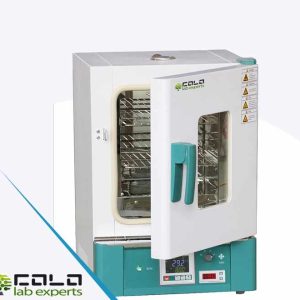
DRYSE45 Laboratory Drying Oven LCD 45L
-
DRYSE laboratory drying oven with LCD microprocessor display.
Digital temperature control
High temperature uniformity
Heating temperature range RT+10 to 300°C
Corrosion resistant steel chamber with rounded corners
Built in glass for sample observation
Auto control fan speed
Function self check in
Shelves 2 supplied
Temperature limit additional settings
Timer function 0 – 9999 min
SKU: PRO2959 -
-
Drying Ovens
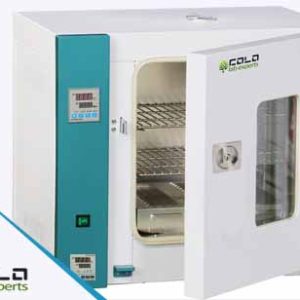
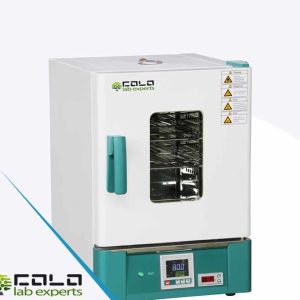
DRYSB65 Laboratory Drying Oven Natural Convection 65L
DRYSB is economical sterilizer – drying oven with a vertical hot air circulation ensure the temperature evenness. Stainless steel inner chamber & removable shelves. PID intelligent double digital temperature controller with functions of timing and over-temperature protection. Door with wide double-glass observation window, adjustable airtight buckle lock which efficiently prevent heat loss. Good temperature uniformity
.
Digital temperature control
High temperature uniformity
Heating temperature range RT+10 to 300°C
Corrosion resistant steel chamber with rounded corners
Inner Chamber Size: 260 x 260 x 260 mm
Volume: 18-125 L
Voltage: 220V /
Shelves 2 supplied
Timer function 0 – 9999 minSKU: PRO4646