


A laboratory drying oven dries, sterilises and conditions samples and glassware from RT+10 °C up to 300 °C. COLO.Science drying ovens come with forced-air or natural convection, 18 to 1000 L chambers, LED or LCD controllers and independent temperature limiters — from compact benchtop ovens to industrial cabinet models.
Drying Ovens Categories
Drying Ovens
Showing all 17 results
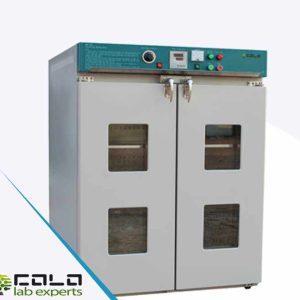
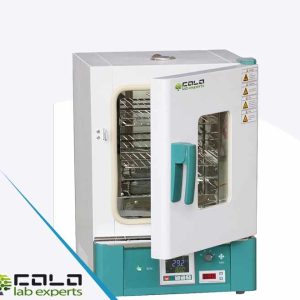


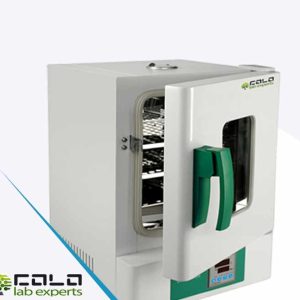
Laboratory drying ovens: how to compare and choose
The products above differ in temperature range, capacity and control. The guide below explains those differences step by step, so you can compare the models and ask for the right configuration.
1Types of drying oven
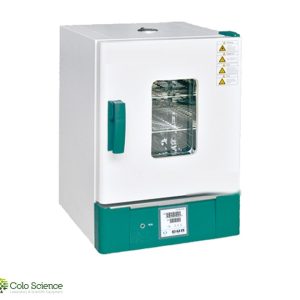
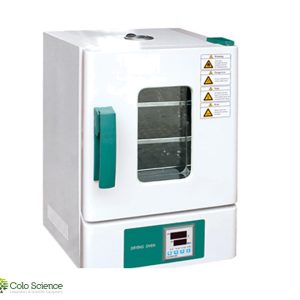
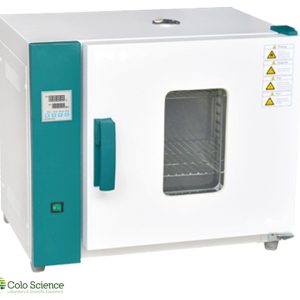
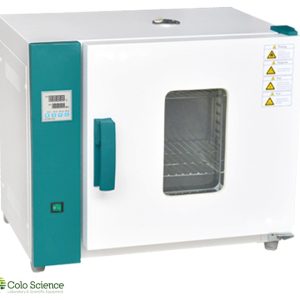
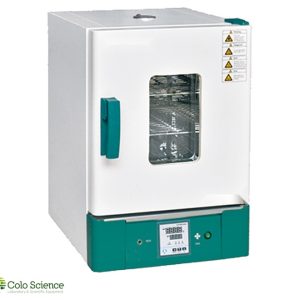
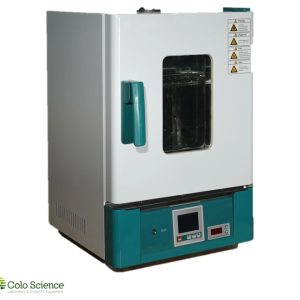
| Forced-air drying oven | A fan circulates heated air through the chamber for the best uniformity and fastest drying. DRYSD (30–625 L, 300 °C), DRYSE with LCD controller and limiter, and DRYSC (43–225 L) are the standard choice for QC and routine drying. |
|---|---|
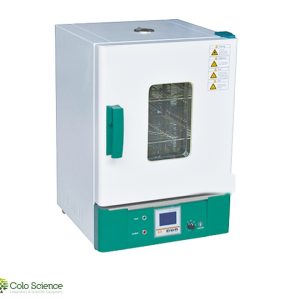
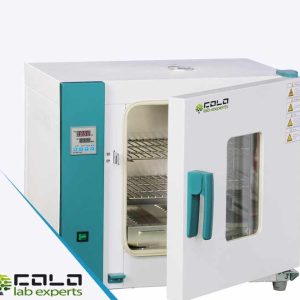
| Natural convection drying oven | Without a fan, air moves by gravity — gentle for light powders, filters and samples that must not be disturbed. See DRYSA, DRYSCN and DRYSB with temperature limiter. |
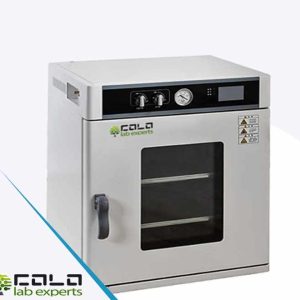
| Vacuum drying oven | Reduced pressure lowers the boiling point, so heat-sensitive, oxidisable or solvent-wet samples dry at low temperature. See our vacuum drying ovens DRYVA, DRYVH and DRYVE with four-side heating. |
| Hot-air sterilizer and large ovens | The DRYSA18 dry sterilizer sterilises instruments and glassware with hot air. For bulk drying the vertical DRYBF industrial drying oven offers 640 and 1000 L. |
2How to choose a laboratory drying oven
- Temperature range. Most drying, moisture and solvent-removal work runs at 105 °C; curing, ageing and dry-heat sterilisation need 160–250 °C. All COLO.Science ovens reach 250 or 300 °C.
- Uniformity and recovery. For gravimetric methods and stability tests choose forced air — it gives tighter uniformity and recovers faster after the door is opened.
- Chamber volume. Count shelves and samples per batch and leave about one third of the volume free for air circulation. Benchtop ovens start at 18–30 L; floor models reach 625 L and more.
- Controller and safety. LCD/PID controllers with timer and programmable steps, an independent over-temperature limiter and alarm protect samples during overnight drying.
3Drying oven applications

- Drying of glassware, filters and crucibles to constant weight
- Moisture and dry-matter determination in food, feed and soil
- Dry-heat sterilisation of instruments and glassware
- Curing, ageing and stability tests of materials and coatings
- Heat treatment and conditioning of components in industrial QC
Drying oven – frequently asked questions
What temperature is used in a laboratory drying oven?
Drying to constant weight is usually done at 105 °C. Dry-heat sterilisation needs 160–180 °C, curing and material tests up to 250–300 °C.
Forced air or natural convection?
Forced air gives better uniformity and faster drying and is the default for QC. Natural convection is gentler for light powders and samples that must not be blown around.
Can a drying oven be used as an incubator?
A standard drying oven starts at RT+10 °C and is not precise enough for incubation. The DRYMB30 is a dual-function drying oven and incubator; for microbiology use a dedicated incubator.
When do I need a vacuum drying oven?
When samples are heat-sensitive, oxidise in air or contain solvents — vacuum lowers the drying temperature and removes vapours safely.
Choosing a drying oven?
Tell us the temperature, chamber volume and samples — we recommend forced-air, natural convection or vacuum and send a quotation.