


A thermostatic bath holds samples, reagents or external equipment at a constant temperature in water or oil. COLO.Science offers laboratory water baths from 3.4 to 62 L, a shaking water bath, heating circulators to 200 °C, refrigerated circulating baths from −20 °C, high-precision baths with 0.001 °C resolution and a tissue flotation bath for histology.
Thermostatic Baths Categories


Thermostatic Baths
Showing all 12 results
Thermostatic baths: how to compare and choose
The products above differ in temperature range, capacity and control. The guide below explains those differences step by step, so you can compare the models and ask for the right configuration.
1Types of thermostatic bath
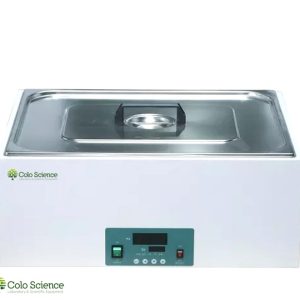
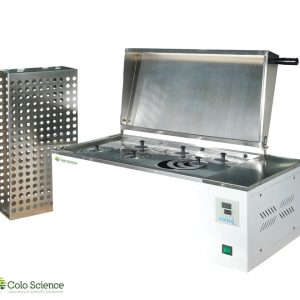
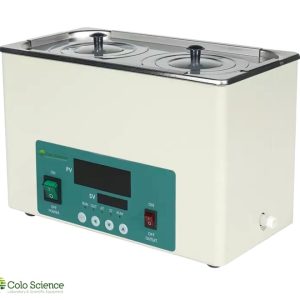
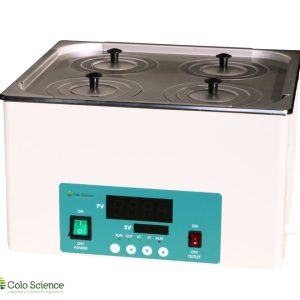
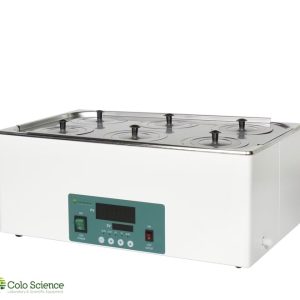
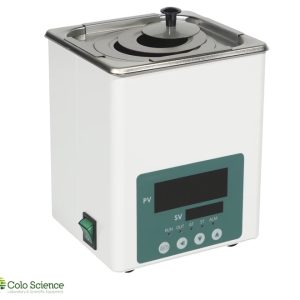
| Laboratory water baths | ODRA baths with 1, 2, 4 or 6 holes and PURUS 11–62 L hold RT+5 to 100 °C with 0.1 °C resolution for incubation, thawing and media preparation. |
|---|---|
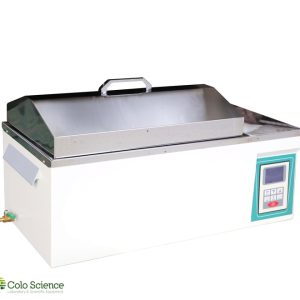
| Shaking water bath | ORSHAWB combines a 31 L bath with reciprocating shaking at 20–200 rpm for enzyme reactions, hybridisation and extraction. |
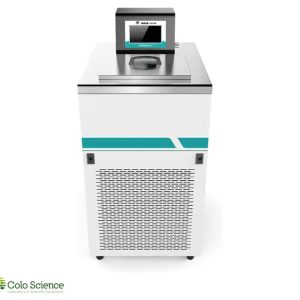
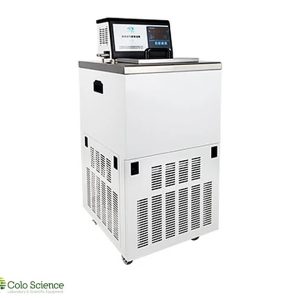
| Circulating baths and circulators | A pump circulates the bath liquid to an external device — refractometer, viscometer, jacketed reactor or condenser. CIBAH15 heats to 200 °C; CIBAC45 cools to −10 °C. |
| High-precision and histology baths | CIBAC-2008HP and CIBAH-HP reach ±0.01 °C stability for calibration and viscometry; WATIF1 flattens paraffin sections. |
2How to choose a thermostatic bath
- Inside or outside the bath?. If samples sit in the bath, a water bath is enough. If temperature is needed in an external device, choose a circulating bath with pump.
- Temperature range. Water covers 5–95 °C; oil is needed above 100 °C; cooling below ambient requires a refrigerated circulator.
- Stability and uniformity. Routine incubation needs ±0.1–0.5 °C; calibration, viscometry and density measurement need ±0.01 °C or better.
- Volume and openings. Choose the number of holes or bath volume by the number and size of vessels; rings and racks hold flasks and tubes.
3Thermostatic bath applications

- Incubation of samples, enzyme and serological tests
- Thawing and warming of media, blood products and reagents
- Temperature control of refractometers, polarimeters and viscometers
- Cooling and heating of jacketed reactors and condensers
- Calibration of thermometers and sensors
- Tissue flotation in histopathology
Thermostatic bath – frequently asked questions
What is the difference between a thermostatic bath and a circulating bath?
In a thermostatic water bath the samples are placed in the bath. A circulating bath has a pump that transfers the temperature-controlled liquid to an external instrument or reactor.
Which liquid should I use?
Distilled water for 5–95 °C, water–glycol for operation below 0 °C, and silicone oil above 100 °C.
What stability do I need?
Routine incubation works with ±0.1–0.5 °C; calibration, viscometry and density measurement need ±0.01 °C.
Do you supply racks and covers?
Yes — ring covers, gable lids and test-tube racks are available for most water baths.
Choosing a thermostatic bath?
Tell us the temperature range, volume and whether you need circulation — we recommend the bath.