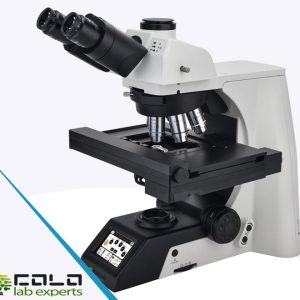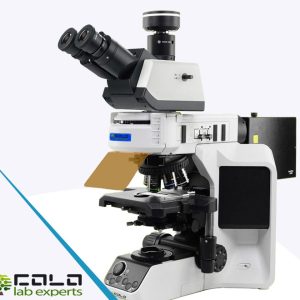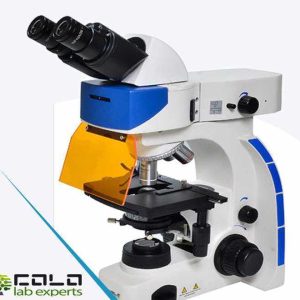


Upright fluorescence microscopy (epi-fluorescence) systems are most often found through search terms like “LED fluorescence microscope”,
“fluorescence filter cube/set”, and “DAPI, FITC, TRITC microscope channels”.
In real laboratory workflows, microscope performance is driven by excitation and emission bands, dichroic mirrors, Plan-Fluor objectives,
numerical aperture (NA), and high-transmission optics optimized for fluorophores on glass slides.
This category brings together upright systems configured around what users actually prioritize and type into search bars:
“fluorescence filter cube”, “multi-band fluorescence filter set”, “Plan Fluor objective microscope”,
and “CMOS fluorescence microscope camera”.
From single-channel epi-fluorescence to 3- and 4-channel imaging setups (DAPI/FITC/TRITC/Cy), users can navigate to models built for
high fluorophore signal throughput, reduced photobleaching, accurate color separation, and repeatable documentation protocols.
FLUORESCENCE CORE COMPONENTS & METHODS
- Epi-fluorescence microscopy – incident light method for slide-based fluorescence detection.
- Fluorescence filter cubes/sets – excitation filter, emission filter, and dichroic mirror matched to fluorophores.
- 3–4 channel imaging – DAPI (UV), FITC (Blue), TRITC (Green), Cy/Red for standard and clinical panels.
- Multi-band filter sets – simultaneous or rapid sequential imaging of multiple fluorophore bands.
- Plan-Fluor / high-transmission objectives – optimized coatings for maximal signal intensity and contrast.
- NA (Numerical Aperture) selection – key factor for resolution, brightness, and low-light fluorescence performance.
- LED fluorescence modules – wavelength-specific stable illumination (UV/blue/green/red LEDs).
- CMOS/CMOS cameras – exposure control, noise reduction, and documentation for lab reports.
HOW USERS CHOOSE: FILTERS, OBJECTIVES, CAMERA
Users typically start by defining fluorophores (DAPI, FITC, TRITC, Cy), then search for compatible
“fluorescence filter cubes/sets” or “multi-band filter sets”.
The next decision point is objective class (Plan Fluor / Plan-Achro with fluorescence coatings) and
NA selection for signal brightness and resolution.
For documentation, buyers frequently include “CMOS fluorescence microscope camera” or “low-noise CMOS imaging” in their queries,
prioritizing stable acquisition, minimal bleaching, and repeatable exposure for lab reporting protocols.
Upright Fluorescence Microscopy
Showing all 3 results