

Pharmaceutical Dissolution Testers
Pharmaceutical dissolution testers are essential instruments for standardized, in-vitro evaluation of drug release
from solid dosage forms in modern pharmaceutical quality control laboratories. Dissolution testing plays a central role
in assessing release behavior, formulation performance and batch-to-batch consistency under controlled conditions.
In routine QC and R&D environments, dissolution testers are commonly aligned with pharmacopeial methodologies such as
USP <711> and European Pharmacopoeia (EP) 2.9.3. Typical workflows include paddle (Apparatus 2) and
basket (Apparatus 1) configurations, stable water bath temperature control and calibrated rotational speed to ensure
repeatable and defensible in-vitro performance data.
Selecting the right dissolution tester requires evaluation of throughput (number of stations), temperature stability,
agitation precision, sampling workflow (manual vs automated options), documentation capabilities and long-term operational
reliability. For GMP-regulated laboratories, data integrity features (user permissions, audit trail) and qualification
documentation (IQ/OQ/PQ) can be as important as mechanical performance.
CATEGORY STRUCTURE (NAVIGATION HUB)
- Testing Equipment
– general laboratory and industrial testing instruments.
WHAT DISSOLUTION TESTERS TYPICALLY INCLUDE
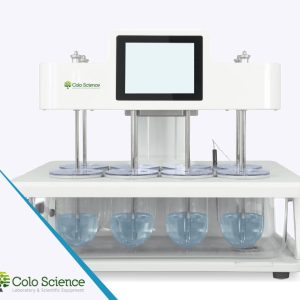
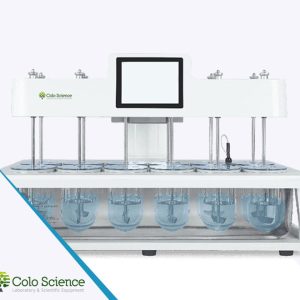
- Multi-station platforms – typically 6 or 8 vessels for parallel dissolution runs and consistent hydrodynamics.
- Water bath heating – stable bath temperature control for reproducible results across all stations.
- Basket & paddle testing – support for Apparatus 1 (basket) and Apparatus 2 (paddle) workflows (configuration dependent).
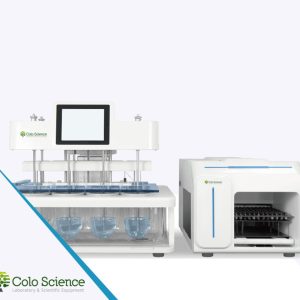
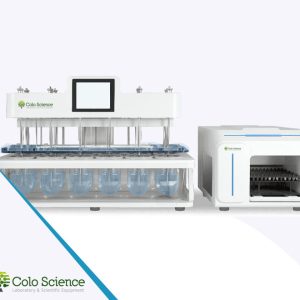
- Sampling workflows – manual sampling for flexible operation; automated sampling options may be available depending on model.
- Compliance support – user management, audit trail and IQ/OQ/PQ documentation for regulated laboratories (as configured).
FEATURED: MULTI-STATION DISSOLUTION SYSTEMS
Modern multi-station dissolution testers enable reproducible release profiling for immediate-release and
controlled-release dosage forms. Key evaluation parameters include temperature stability, rotational accuracy, sampling
workflow efficiency and documentation suitable for regulated pharmaceutical environments.
Pharmaceutical Dissolution Testers
Showing all 4 results