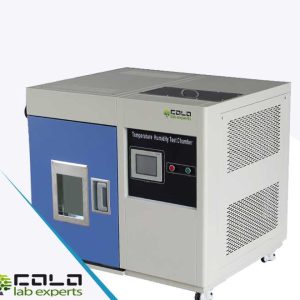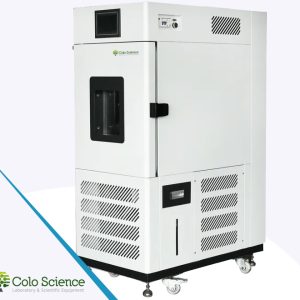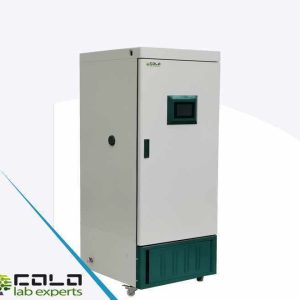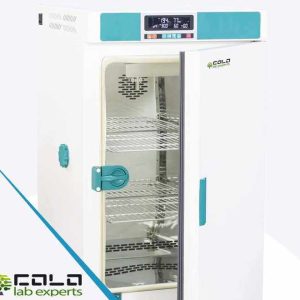



Climatic Test Chambers
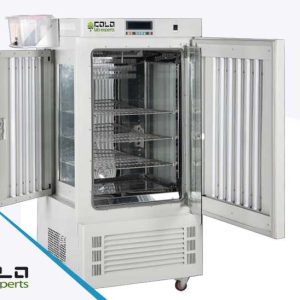
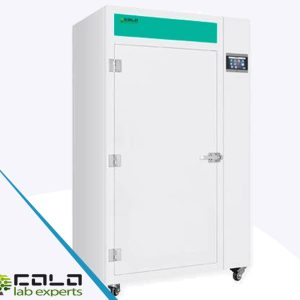
Climatic test chambers are essential laboratory and industrial systems for controlled environmental simulation under defined temperature and humidity conditions. They are used whenever products, materials, components or packaged samples must be exposed to stable or changing climatic conditions in order to evaluate performance, durability, storage behavior or long-term reliability.
In modern laboratories, climatic test chambers support routine quality control, product development, stability studies, material conditioning and accelerated environmental testing. These systems are widely used in pharmaceutical, electronics, materials, food, packaging, automotive and general industrial environments where reproducible temperature and humidity control is critical for valid testing results and internal documentation.
Selecting the right climatic test chamber requires more than chamber volume alone. Laboratories typically evaluate working temperature range, humidity control capability, recovery time after door opening, chamber uniformity, controller functionality, data logging options and long-term operational stability. For many workflows, it is equally important that the chamber provides intuitive programming of test cycles, dependable alarm protection and a construction suitable for continuous daily operation.
Whether the application involves constant climate storage, cyclic environmental testing, temperature aging, humidity exposure or sample conditioning before measurement, climatic test chambers help standardize the test environment and improve the comparability of results between operators, batches and internal protocols.
CATEGORY STRUCTURE (NAVIGATION HUB)
- Testing Equipment
– laboratory and industrial systems for controlled performance, durability and environmental testing.- Climatic Test Chambers
- Temperature Test Chambers
- Temperature & Humidity Chambers
- Stability Test Chambers
- Environmental Simulation Chambers
- Custom Climatic Chamber Configurations
- Climatic Test Chambers
CLIMATIC CHAMBER APPLICATION GROUPS
- Constant climate chambers – designed for stable long-duration storage and conditioning under fixed temperature and humidity settings.
- Cyclic environmental chambers – suitable for programmed temperature and humidity changes used in stress simulation, product qualification and durability testing.
- Stability-oriented chambers – used for controlled storage of samples, formulations or packaged goods where repeatable environmental control and documentation are required.
- Material conditioning chambers – applied before mechanical, optical, chemical or packaging tests to ensure samples are equilibrated under defined atmospheric conditions.
HOW TO SELECT A CLIMATIC TEST CHAMBER
When comparing climatic test chambers, key technical priorities usually include usable chamber volume, temperature working range, humidity range, control accuracy, internal air circulation, shelf configuration and controller programming flexibility. Laboratories with validation, documentation or traceability requirements often also consider alarm systems, data export options and access-port availability for sensor routing or product-specific monitoring.
For demanding workflows, chamber construction quality, insulation performance and controller stability become especially important. A well-matched climatic chamber should support both the technical test method and the practical daily routine of the laboratory, including loading convenience, cleaning access and reliable long-term operation.
FEATURED: TEMPERATURE & HUMIDITY ENVIRONMENTAL CONTROL
Modern climatic test chambers provide reproducible environmental simulation for stability studies, conditioning procedures and accelerated testing protocols. Important evaluation parameters include chamber uniformity, humidity stability, ramp behavior, recovery performance and controller usability for repeatable day-to-day operation.
FAQ
What are climatic test chambers used for?
Climatic test chambers are used to simulate controlled environmental conditions such as temperature and humidity for testing, conditioning and storing samples under reproducible laboratory or industrial settings.
What is the difference between a temperature chamber and a climatic chamber?
A temperature chamber typically focuses on heating and cooling only, while a climatic chamber usually combines temperature control with humidity regulation for broader environmental simulation.
Which industries use climatic test chambers?
Common users include pharmaceutical laboratories, electronics manufacturers, material testing laboratories, packaging development teams, food laboratories and industrial quality control departments.
Which parameters matter most when selecting a chamber?
The most important factors usually include temperature range, humidity range, chamber volume, uniformity, controller functionality, data recording options and overall operational reliability.
Climatic Chambers
Showing all 8 results