



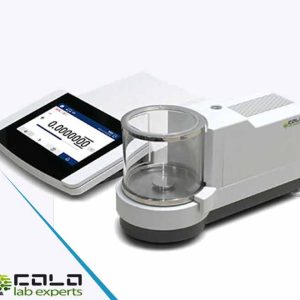
Semi-micro balances and micro balances from COLO.Science weigh the smallest samples in the laboratory: MEUSE micro balances read to 1 µg (3–6 g), ANB-SEMIC and LOIRE read to 0.01 mg, and the 30 g model of SIENE brings 0.01 mg to a touch-screen balance. All work inside a glass draft shield; choose by readability, capacity and whether you need a dual range.
Micro & Semi-Micro Balances
Showing all 4 results

Semi-micro balances: choosing 0.01 mg or 1 µg
When the sample is only a few milligrams, the readability and the weighing place decide the result. Three steps to the right balance.
1Micro, semi-micro or dual range
| Micro balance (1 µg) | For filters, residues, coatings and microsamples of a few milligrams; capacity 3 or 6 g. Automatic internal calibration. MEUSE |
|---|---|
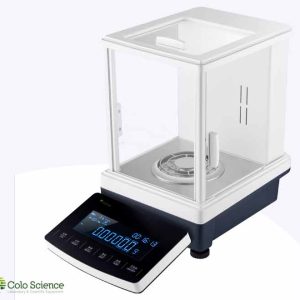
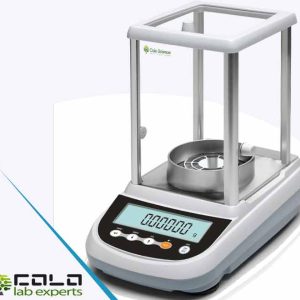
| Semi-micro balance (0.01 mg) | For reference standards, small sample weights and gravimetric analysis; 100, 120 or 220 g at 0.01 mg over the whole range. ANB-SEMIC |
| Dual-range semi-micro balance | 0.01 mg in the fine range (31–82 g), 0.1 mg up to 100–220 g — one balance for small and normal samples. LOIRE, ANB-SEMIC dual-range models |
2Prepare the weighing place
- Stable table. A heavy weighing table or stone slab, away from doors, lifts and machines.
- No draft, constant temperature. Keep the balance away from windows and air-conditioning outlets and leave it switched on.
- Acclimatise samples and vessels. Warm or cold samples cause air currents in the draft shield and a drifting reading.
- Static and handling. Use metal or glass vessels, tweezers and gloves; an ioniser helps with dry powders and filters.
3When the micro range pays off
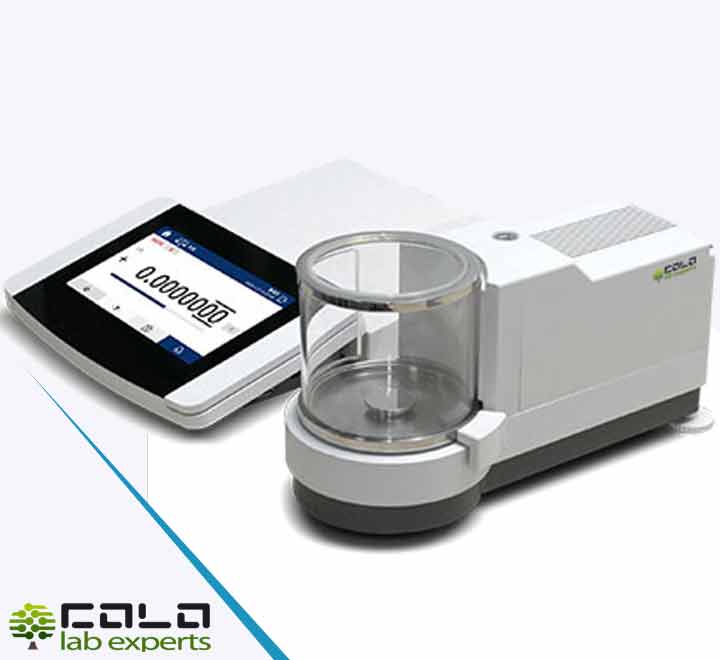
Below about 10 mg sample mass a semi-micro balance reaches its limits; a micro balance with 1 µg readability keeps the relative error low for filters, particulate matter and coating weights.
For standards and samples from tens of milligrams up, a semi-micro balance at 0.01 mg is faster and more economical. For routine weighing at 0.1 mg see analytical balances.
Semi-micro and micro balances – frequently asked questions
What is the difference between a semi-micro and a micro balance?
A semi-micro balance reads to 0.01 mg with up to 220 g capacity; a micro balance reads to 1 µg with a few grams of capacity.
What does dual range mean?
The balance reads to 0.01 mg in the lower part of the range and to 0.1 mg up to full capacity, so one balance covers small and normal samples.
Do these balances have internal calibration?
Yes, MEUSE, ANB-SEMIC and LOIRE calibrate with a built-in weight; the adjustment can be documented for GLP.
Which calibration weights do I need?
Class E1 weights for checking micro and semi-micro balances — see OIML E1 calibration weights.
Choosing a semi-micro balance?
Send us the smallest sample mass, the tolerance and the method — we recommend the balance and send a quotation with delivery time.