

'/%3E%3C/svg%3E)


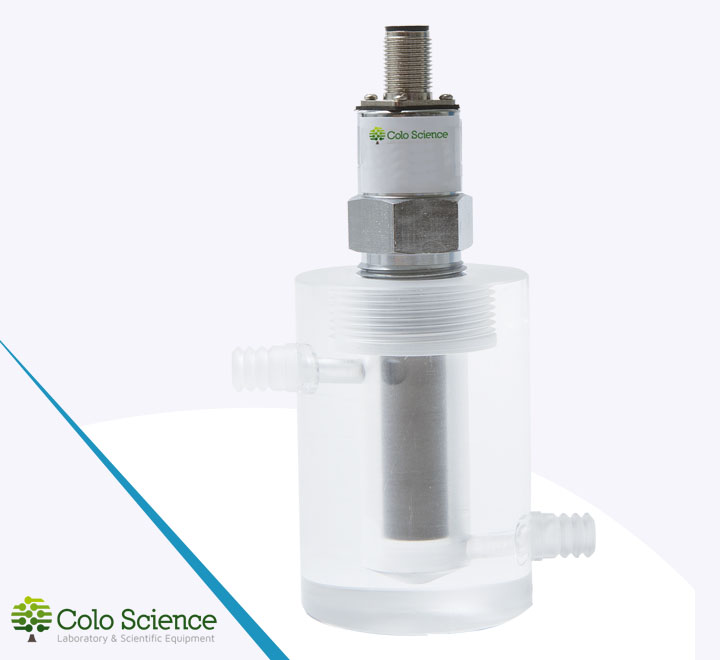
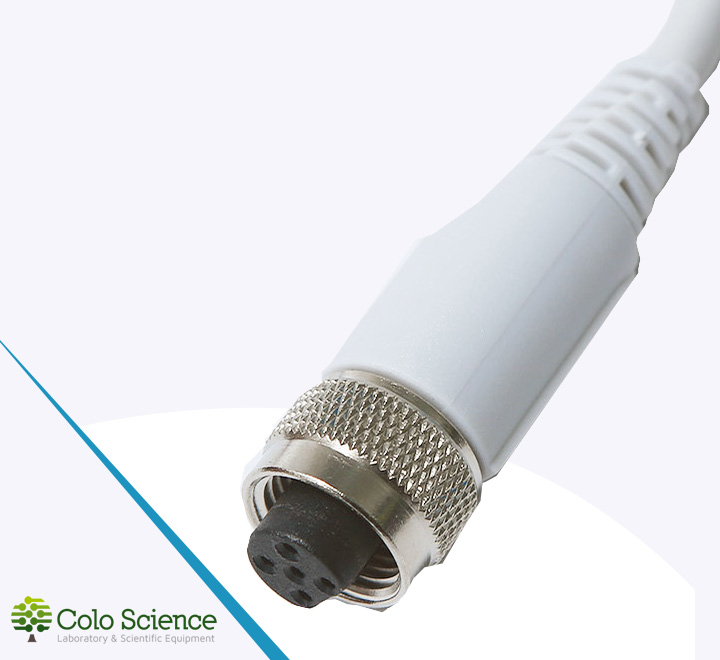
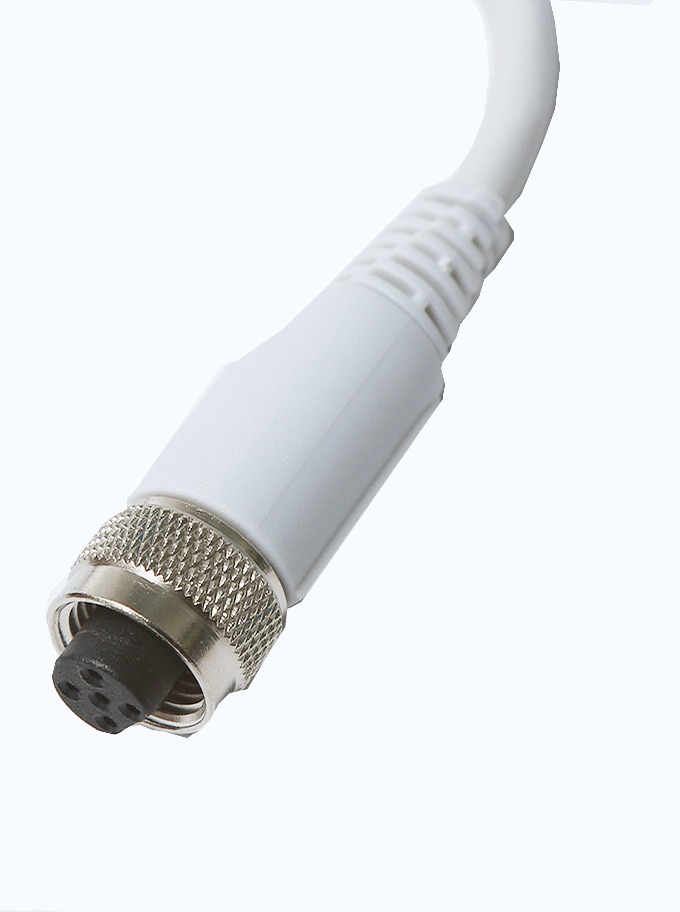
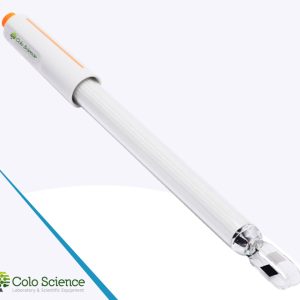
PRO6159 — conductivity electrode k≈0.01: a titanium-alloy conductivity cell with constant k = 0.01, a built-in temperature sensor and a removable flow cell, for ultrapure water measured in flow. It has a titanium-alloy body and a 5-pin aviation connector for the conductivity meter.
How the conductivity electrode k≈0.01 is built
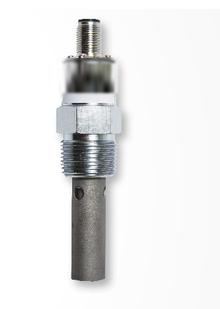
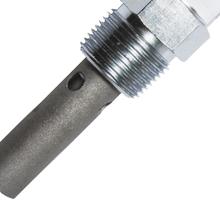
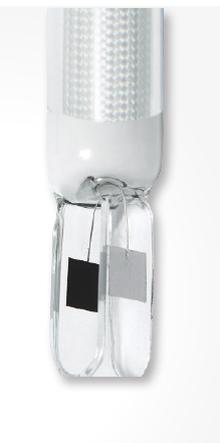
The cell constant describes the two electrodes of the sensor and decides in which conductivity range the cell measures accurately: a small constant for pure water, a large one for concentrated solutions. The conductivity electrode k≈0.01 covers 0 – 20 µS/cm.
Technical parameters
| Model / order code | PRO6159 |
| Electrode type | Conductivity electrode (conductivity cell) |
| Cell constant | k = 0.01 cm⁻¹ |
| Measuring range | 0 – 20 µS/cm |
| Temperature measurement | 0 – 60 °C (ATC) |
| Working temperature | 0 – 60 °C |
| Body material | Titanium alloy |
| Dimensions | Φ18 × 50 mm |
| Connector | 5-pin aviation |
Full data sheet: Technical Specification (PDF), two pages.
Is this the right electrode for your sample?
The conductivity electrode k≈0.01 is recommended for ultrapure water measured in flow.
Other samples need another cell constant. The conductivity electrodes in the electrode catalogue are chosen by the conductivity of the sample; the most frequent cases are:
- Pure and ion-exchange water: a cell with k = 0.1.
- Tap, drinking, rain and surface water: the k = 1 cell for the range 2 – 3000 µS/cm.
- Wastewater, seawater, juice: the k = 1 cell for the range 2 – 20 000 µS/cm.
- Very high conductivity: a cell with k = 10.
One electrode for benchtop and portable conductivity meters
The conductivity electrode k≈0.01 does not belong to one meter. The same cell works on a benchtop meter in the laboratory and on a portable meter in the field — what decides is the input of the meter. It needs a 5-pin aviation input; see the conductivity meters in the catalogue.
Conductivity rises with temperature — for most water samples by about two percent per degree — so results are reported at a reference temperature, usually 25 °C. Because the conductivity electrode k≈0.01 has a built-in temperature sensor, the meter measures conductivity and temperature at the same point and compensates automatically.
From sample to result
Sampling and keeping the sample
Conductivity changes when the sample takes up carbon dioxide from the air or loses dissolved gases, and the effect is strongest in pure and low-conductivity water. Take the sample in a clean bottle, fill it to the top, close it and measure as soon as possible. Do not add any preservative, and bring the sample and the standard to the same temperature before measuring.
Preparing the conductivity electrode k≈0.01 before calibration and measurement
- Rinse the cell with distilled water and then with a little of the solution that is going to be measured.
- Immerse the cell so that the electrodes are completely covered and no air bubbles stay between them; move the cell gently to release bubbles.
- Wait until the temperature reading is stable — the sensor is in the same shaft.
- For measurement in flow, fit the flow cell and let the water run through it until the reading is stable.
Calibrating the conductivity electrode k≈0.01
- Choose a conductivity standard close to the conductivity of your samples and suitable for the range of this cell.
- Start the calibration on the meter and immerse the rinsed cell in the standard.
- Wait for a stable reading and confirm the point; the meter stores the cell constant it has determined.
- For samples over a wide range, repeat with a second standard if the meter supports two-point calibration.
- Rinse the cell with distilled water before the first sample. Do not pour used standard back into the bottle.
Measuring
Immerse the cell in the sample, move it gently to release air bubbles, wait for a stable value and read conductivity together with the temperature. Rinse the cell with distilled water between samples; when two samples differ strongly, rinse with a little of the next sample first.
Conductivity in water analysis
In a water laboratory the conductivity electrode k≈0.01 gives the quickest overall picture of a sample: conductivity shows how much dissolved salt the water carries.
Drinking and surface water: a change in conductivity is an early sign that the composition of the water has changed — a different source, intrusion of salt water or pollution.
Wastewater: conductivity is followed at the inlet and the outlet of a treatment plant, and it warns of high-salt industrial discharges.
TDS and salinity: meters calculate total dissolved solids and salinity from conductivity, so the same cell serves all three readings.
Conductivity meters, together with pH and dissolved-oxygen meters and BOD and COD analysers, are in the electrochemistry catalogue.
Care, storage and accessories
Storing the electrode
After use, clean the electrodes and the flow cell and keep the conductivity electrode k≈0.01 and its accessories in a dry place until the next use. Do not let sample dry on the electrodes.
When the reading is unstable or drifts
The usual causes are air bubbles between the electrodes, deposits on the electrodes, a standard that is old or contaminated, or a temperature that has not settled. Release the bubbles, rinse the cell, take fresh standard and calibrate again.
Accessories
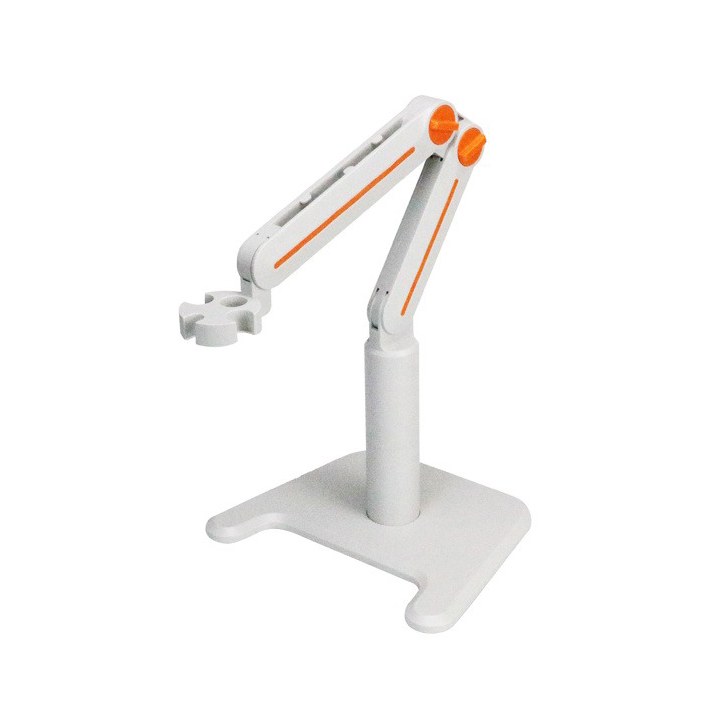
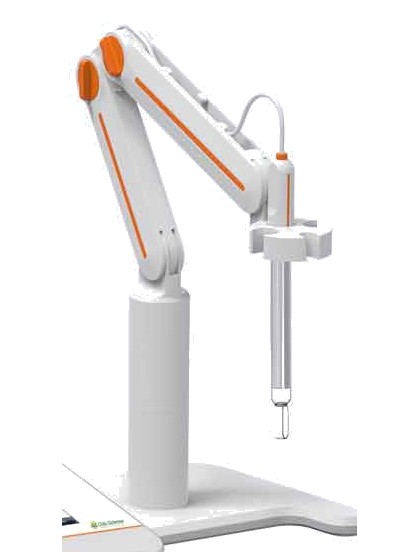
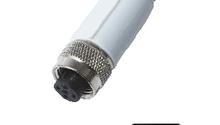
- Cable 5-pin aviation to 5-pin aviation: connects the cell to the meter.
Video: using the conductivity electrode
The film shows how the conductivity electrode k≈0.01 is prepared, connected and used.
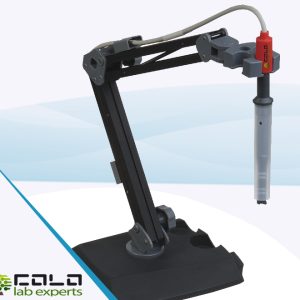
Video: how the electrode holder is installed and used
Standards, cables and holders are in the accessories section of the electrochemistry catalogue.
Frequently asked questions
Does the conductivity electrode k≈0.01 fit my meter?
The conductivity electrode k≈0.01 fits conductivity meters with a 5-pin aviation input. Meters with another input need a different cell, so tell us the meter model before you order.
How often should I calibrate the conductivity electrode k≈0.01?
Calibrate when the cell is new, after cleaning and at the intervals set by your laboratory procedure. For routine work, check the cell with a standard at the start of the working day.
Where can I read more about electrodes?
The electrode catalogue has an electrode guide with the cell constants and temperature measurement explained, a full selection matrix and an overview of connectors. The electrochemistry overview covers pH, conductivity, dissolved oxygen and ion measurement.