



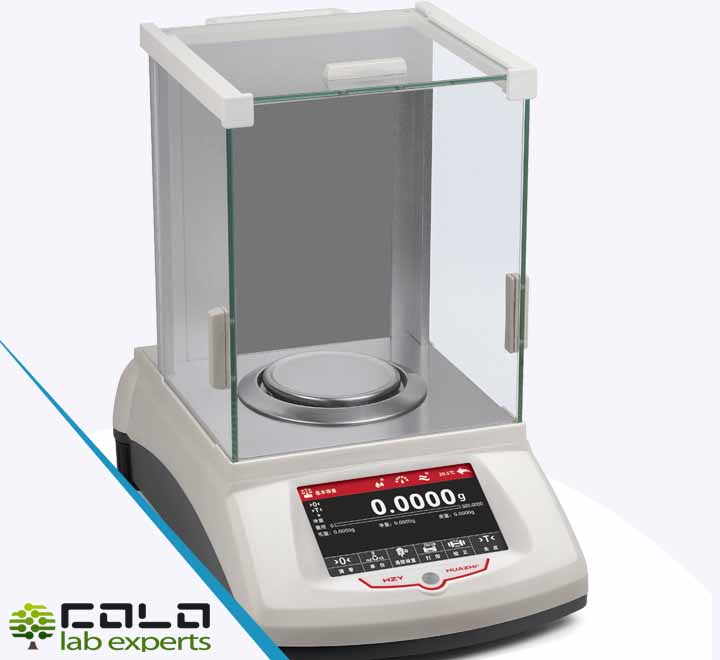
Analytical balances from COLO.Science weigh to 0.1 mg in a glass draft shield: SIRET from 100 to 500 g with internal or external calibration, RHONE and SIENE with touch display and internal calibration, and ANB-HIC for heavy containers up to 1100 g. Choose by capacity with the container, calibration and how the results are recorded.
Analytical Balances
Showing all 4 results


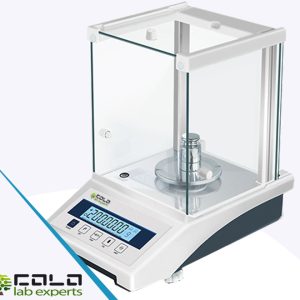
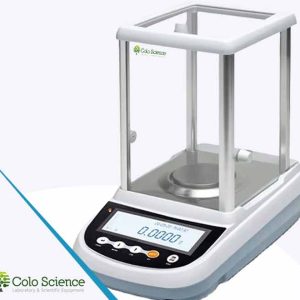
Analytical balances: how to choose a 0.1 mg balance
All analytical balances read to 0.1 mg — the differences are in capacity, calibration and operation. Three steps to the right series.
1Analytical balance series compared
| SIRET | 100 – 500 g, 0.1 mg. Internal or external calibration — the standard analytical balance for QC and teaching laboratories. SIRET series |
|---|---|
| RHONE | 120 – 400 g, 0.1 mg; dual-range models read 1 mg above 120, 220 or 320 g. Touch screen and internal calibration. RHONE series |
| SIENE | 120 – 500 g at 0.1 mg plus a 30 g model at 0.01 mg. Touch display, internal calibration on most models. SIENE series |
| ANB-HIC | 410 – 1100 g at 0.1 mg with automatic internal calibration — for heavy flasks and large samples. ANB-HIC series |
2What to check before you order
- Capacity with the container. 220 g covers most beakers and weighing boats; heavy flasks need 320 g or a high-capacity model.
- Calibration. Internal calibration for GLP, ISO 17025 and rooms with changing temperature; external calibration with an E2 weight for stable rooms.
- Display and operation. Touch screen and stored programs for many users, simple keys for routine work.
- Records. RS232 or USB output and a printer when each weighing has to be documented.
3Where analytical balances are used
Pharmaceutical and chemical QC weighs reference standards, active ingredients and samples for chromatography to 0.1 mg. Food, environmental and university laboratories use analytical balances for gravimetric methods, ash and dry matter.
For samples below about 100 mg choose a semi-micro balance; for 1 mg work a milligram balance is faster and more economical.
Analytical balances – frequently asked questions
What readability does an analytical balance have?
0.1 mg (0.0001 g). Semi-micro balances read to 0.01 mg, milligram balances to 1 mg.
Internal or external calibration?
Internal calibration adjusts the balance automatically with a built-in weight and suits GLP work; external calibration needs a separate class E2 weight.
Why does my analytical balance drift?
Draft, temperature change, an unlevelled balance or static charge on the sample. Check the weighing place first, then calibrate.
Which calibration weight fits an analytical balance?
Class E2 — see OIML E2 calibration weights.
Choosing an analytical balance?
Send us the sample and container mass, the calibration you need and the method — we recommend the model and send a quotation with delivery time.