


Laboratory benchtops are the foundation of safe, organized and efficient laboratory workspaces. Designed for daily use in research, quality control, educational and industrial environments, they provide a stable working surface for sample preparation, instrument placement and routine laboratory procedures.
At COLO.Science, laboratory benchtop solutions are selected to support durability, chemical resistance and long-term functionality. Whether the project requires a compact wall bench, a central island workstation or a fully integrated laboratory furniture system, benchtops can be adapted to the workflow, available space and technical requirements of the lab.
This category includes laboratory benchtop solutions suitable for modern laboratories where reliability, ergonomic design and practical workspace organization are essential. Depending on the application, configurations may include storage cabinets, sink modules, reagent shelving, service connections and other functional accessories that improve everyday laboratory operations.
Built for modern laboratory workflows
From general laboratory workstations to specialized furniture layouts, laboratory benchtops help create practical and professional environments for handling instruments, materials and routine testing tasks. The right benchtop system improves workflow efficiency, supports cleanliness and contributes to a safer and more productive laboratory setting.
Key Features of Laboratory Benchtops
Modern laboratory benchtops are designed to support demanding daily workflows while maintaining durability, safety and practical usability across different laboratory environments.
Durable Work Surfaces
Laboratory benchtops are built for continuous use and can support routine sample handling, instrument setup and day-to-day laboratory tasks in busy working environments.
Chemical Resistance
Depending on the selected worktop material, benchtops can offer resistance to common laboratory chemicals, spills and cleaning agents used in research, QC and educational laboratories.
Ergonomic Layout
Well-designed laboratory benches help improve movement, access to tools and overall workspace organization, supporting safer and more efficient laboratory operations.
Flexible Configurations
Benchtop systems can be configured as wall benches, island benches or integrated workstations with storage, sink units, shelving and service access points.
Applications of Laboratory Benchtops
Laboratory benchtops are used across a wide range of working environments where stable work surfaces, practical layouts and durable materials are required for daily laboratory operations.
Research Laboratories
In research environments, laboratory benchtops support sample preparation, instrument use, documentation and routine experimental workflows where flexible and organized workspaces are essential.
Quality Control Laboratories
QC laboratories require reliable benches for repetitive daily procedures, testing workflows and organized placement of instruments, consumables and laboratory accessories.
Educational and Teaching Labs
In schools, universities and training laboratories, benchtops help create practical workstations for teaching, demonstrations and supervised laboratory exercises.
Healthcare and Industrial Labs
Laboratory benchtops are also suitable for healthcare, clinical, production and industrial environments where durable work areas and easy-to-maintain surfaces are important.
Types of Laboratory Benchtop Configurations
Laboratory benchtops can be configured in different layouts depending on workflow, available floor space, instrument placement and storage requirements. The right configuration helps create a more efficient, organized and practical laboratory environment.
Wall Benchtops
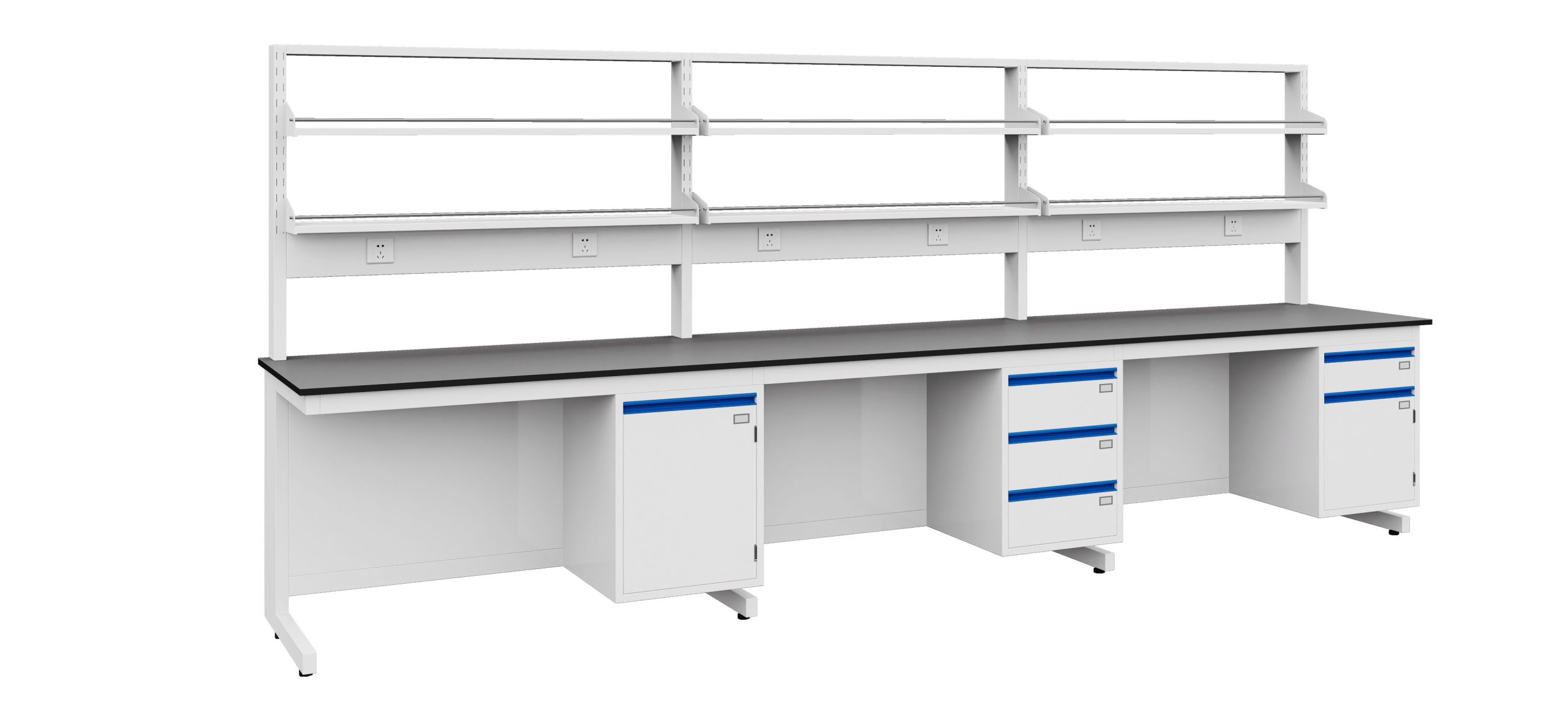
Wall laboratory benchtops are positioned along the laboratory perimeter and are well suited for efficient use of available space. They support routine procedures, instrument placement and organized workflow along the room boundary.
Island Benchtops
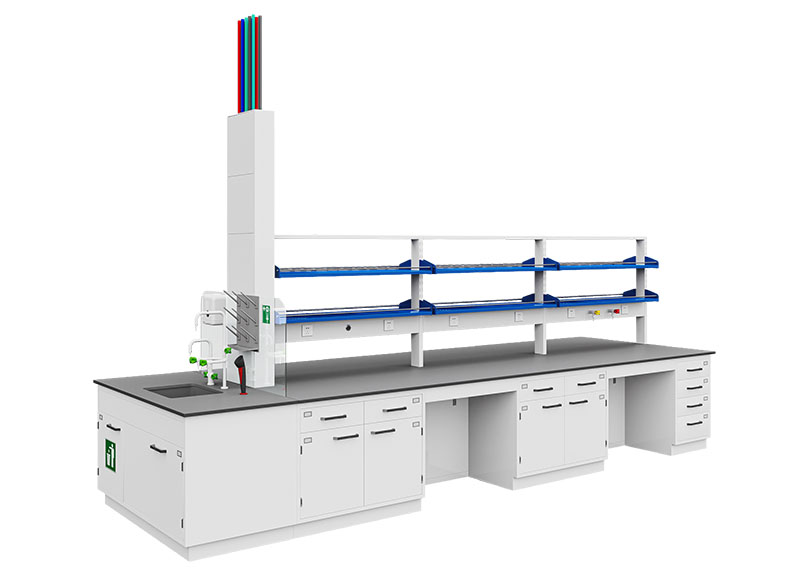
Island benchtops are placed in the center of the laboratory and allow access from multiple sides. They are suitable for collaborative work, shared workstations and workflows where open access to the bench is important.
Corner Benchtops
Corner benchtops are designed to make practical use of angled or connecting wall sections. They help optimize laboratory layouts where space efficiency and continuous work surfaces are required.
Benchtops with Sink
Laboratory benchtops with sink modules are suitable for workflows that involve washing, rinsing or wet processes. They combine worktop space with integrated utility functions for practical everyday lab use.
Benchtops with Storage
Storage-integrated benchtops include base cabinets, drawers or under-bench storage elements that improve organization and keep essential items close to the working area.
Custom Benchtop Solutions
Custom laboratory benchtops can be adapted to project-specific dimensions, workflows, service requirements and furniture layouts. This approach is suitable for laboratories that require tailored solutions rather than standard modules.
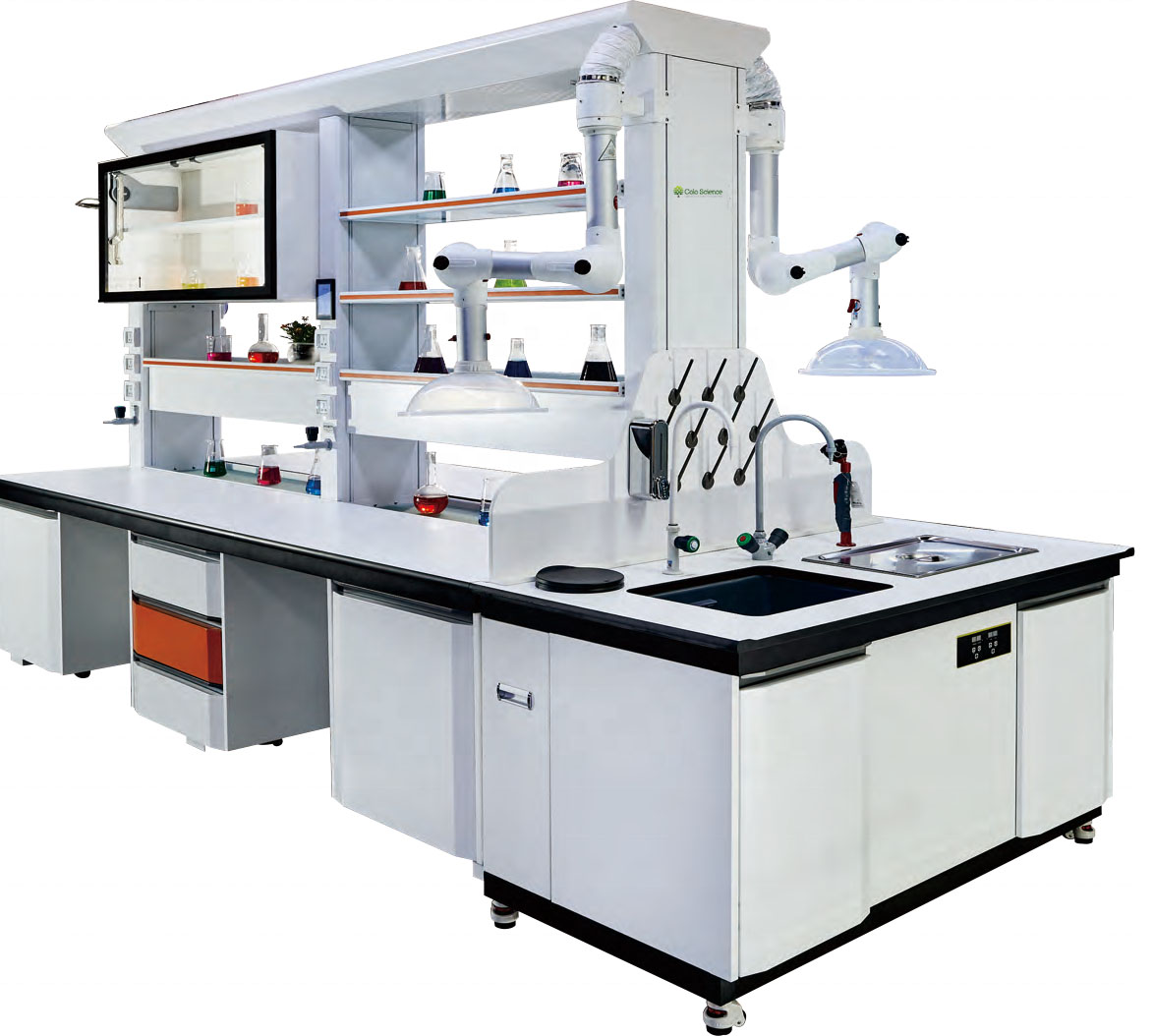
Visual Examples of Laboratory Benchtop Layouts
Different laboratory spaces require different bench arrangements. The examples below help illustrate how wall, island and integrated benchtop solutions can support practical workflow planning.
Materials & Worktop Options
The performance of a laboratory benchtop depends not only on its layout, but also on the selected materials. Worktop and construction choices should match the intended laboratory workflow, chemical exposure, cleaning requirements and mechanical load.
Chemical-Resistant Worktops
For laboratories handling reagents, solvents and aggressive cleaning agents, chemical-resistant worktops help maintain surface durability and long-term usability under demanding operating conditions.
Compact Laminate Surfaces
Compact laminate worktops are often selected for general laboratory use where moisture resistance, durability and practical maintenance are important in everyday workflows.
Epoxy Resin Worktops
Epoxy resin surfaces are suitable for more demanding laboratory environments where strong chemical resistance, robustness and dependable long-term performance are required.
Stainless Steel Surfaces
Stainless steel worktops are suitable for clean environments, wet processes and laboratory areas where hygiene, easy cleaning and corrosion resistance are important priorities.
Steel Support Frames
Powder-coated or treated steel frames provide structural stability for laboratory benchtops and are suitable for installations that require dependable load-bearing support.
Base Cabinets & Integrated Support
In some laboratory layouts, the benchtop structure can be combined with cabinet-based support to add storage capacity and create a more integrated furniture system.
What Can Be Included in a Laboratory Benchtop System
A laboratory benchtop system can include more than just the main work surface. Depending on the project, workflow and utility requirements, additional modules and integrated features can be selected to create a more practical and complete laboratory workstation.
Sink Units
Sink modules can be integrated into laboratory benchtops for washing, rinsing and wet-process workflows where water access is required within the working area.
Base Cabinets
Base cabinets can be added below the benchtop to provide organized storage for laboratory items, consumables, small equipment and routine working accessories.
Drawer Modules
Drawer units help improve daily organization by keeping frequently used tools, instruments or documentation close to the working position.
Reagent Shelves
Over-bench shelves or reagent racks can expand the usable workspace and provide easy access to frequently used laboratory materials.
Service Fixtures
Selected laboratory benchtop systems can include integrated service points for water, gas or other utilities required by the intended laboratory process.
Electrical & Utility Access
Integrated access to electrical outlets and technical utilities can improve workstation efficiency and help support instrument use directly at the bench.
Splashbacks & Rear Protection
Rear upstands or splashback elements can be included to improve cleanliness, protect adjacent surfaces and support easier maintenance in laboratory areas.
Custom Dimensions & Project Options
Laboratory benchtop systems can also be adapted with project-specific dimensions, layout details and optional modules to match the exact requirements of a laboratory installation.
Customization & Project Support
Laboratory benchtops are often part of a wider laboratory furniture concept. Depending on the project scope, workspace dimensions and process requirements, benchtop systems can be adapted to create a more functional, efficient and well-organized laboratory environment.
Custom Dimensions
Benchtop systems can be adapted to project-specific widths, depths and layout constraints in order to make the best use of available laboratory space.
Layout Adaptation
Different laboratory rooms require different furniture arrangements. Wall, island, corner and utility-integrated configurations can be selected according to workflow and circulation needs.
Worktop Selection
Worktop material can be selected according to chemical resistance, moisture exposure, hygiene requirements and expected mechanical load in the laboratory.
Optional Modules
Sink units, storage cabinets, drawers, shelving and utility access points can be integrated to create a more complete and practical workstation.
Project-Oriented Solutions
For new laboratory installations or refurbishment projects, benchtop systems can be planned as part of a broader laboratory furniture concept with coordinated modules and technical requirements.
Consultation & Planning Support
Early consultation helps define suitable layouts, worktop options and module combinations, making it easier to prepare a solution that matches both operational and spatial requirements.
How to Choose the Right Laboratory Benchtop
Choosing the right laboratory benchtop means balancing workflow, available space, material requirements and practical day-to-day use. A well-selected solution should support both current operations and future flexibility within the laboratory.
Evaluate Available Space
The first step is to consider the room layout, circulation paths and working zones. Wall, island or corner benchtop configurations should fit naturally into the available laboratory space without restricting movement.
Match the Workflow
The selected benchtop should reflect how the laboratory operates. Sample preparation, instrument use, wet processes, shared workstations or repetitive QC tasks may each require a different layout and support structure.
Choose Suitable Materials
Worktop and frame materials should be selected according to chemical exposure, cleaning routines, moisture, hygiene requirements and expected mechanical load in everyday use.
Consider Utility Requirements
If the laboratory process requires water, drainage, power access, gas points or other services, these should be considered early so the benchtop system can be planned as a complete workstation.
Plan Storage & Accessory Needs
Base cabinets, drawers, shelving and other modules should be selected according to the number of items that need to remain close to the workstation and the level of organization required.
Decide Between Standard and Custom
Some laboratories can use standard benchtop configurations, while others benefit from project-based customization. The right approach depends on room constraints, workflow complexity and integration needs.
A practical selection starts with the right questions
The most effective laboratory benchtop solution is usually defined by a combination of layout, worktop material, integrated modules and utility access. Reviewing these elements early helps create a workstation that is functional, durable and better aligned with the real needs of the laboratory.
Build the right laboratory benchtop solution for your workspace
Whether you need a standard laboratory benchtop, a utility-integrated workstation or a project-based furniture layout, COLO.Science can help you define a practical solution based on workflow, dimensions, worktop materials and required modules.
Contact us to discuss your laboratory benchtop requirements, preferred configuration, worktop options and project details. We can support both individual workstation planning and broader laboratory furniture concepts.