

'/%3E%3C/svg%3E)


ALEMADR range
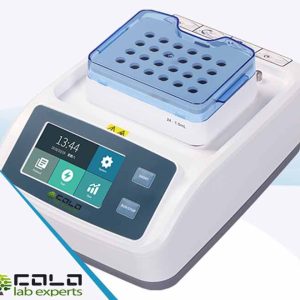
Dry bath incubators
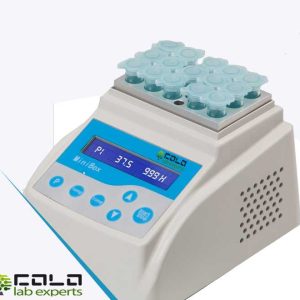 ALEMADR-MBMini · heating to 100 °C
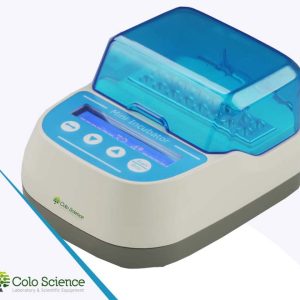 ALEMADR-MB2Mini · to 100 °C · block includedALEMADR-MCMini · heating/cooling · RT−15–100 °C
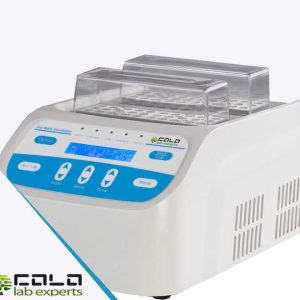 ALEMADR-MIDual block · RT+5–100 °C
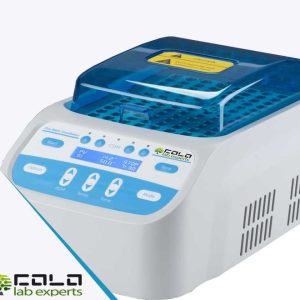 ALEMADR-MOSingle block · RT+5–110 °C
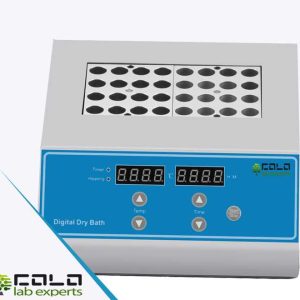 ALEMADR-SB1, 2 or 4 blocks · up to 160 °C
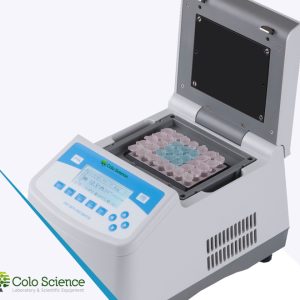 ALEMADR-DBAdjustable heated lid · to 100 °C
Thermo shakers
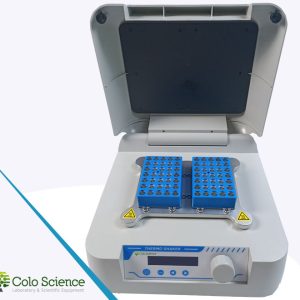
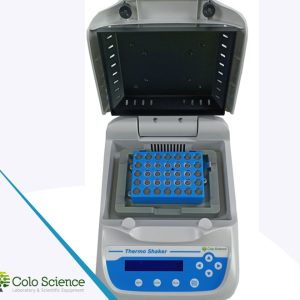
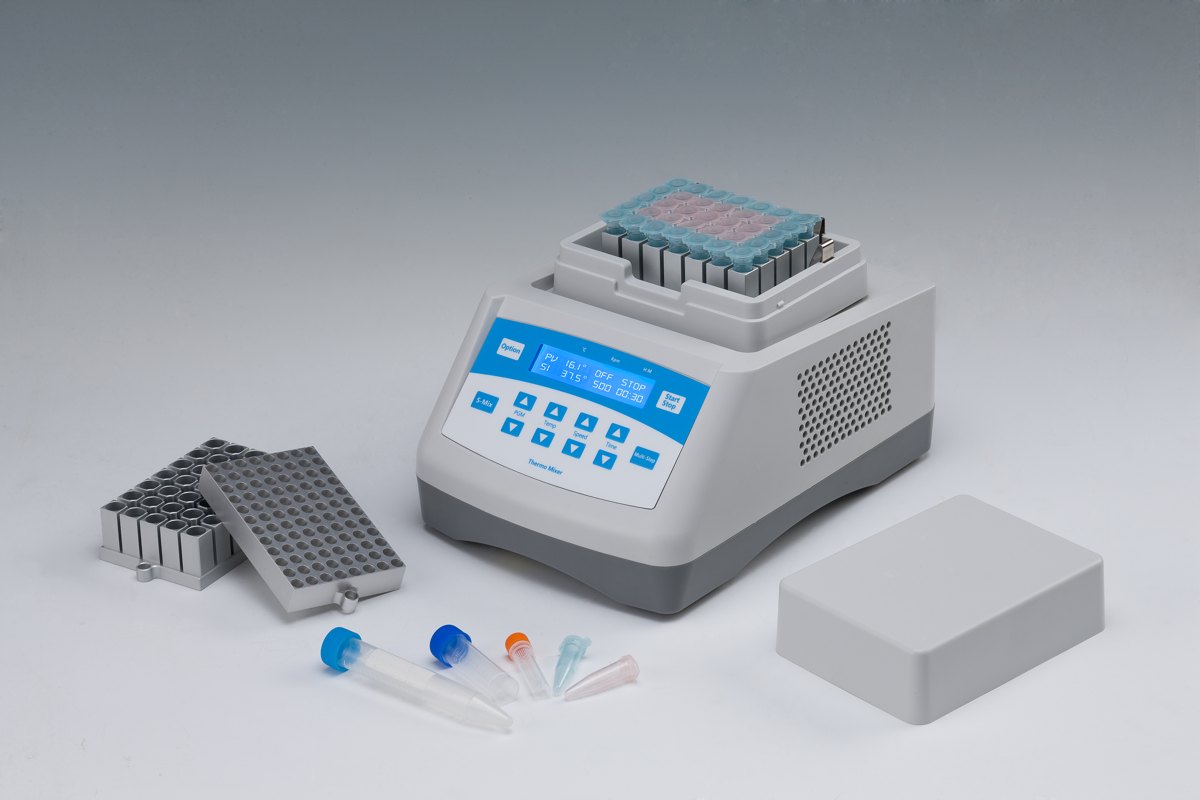
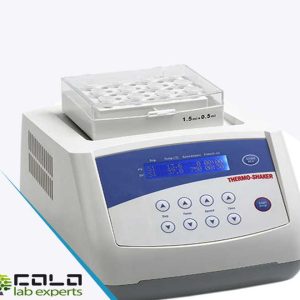
COLO.Science · Shakers & Mixers · Thermo shakers
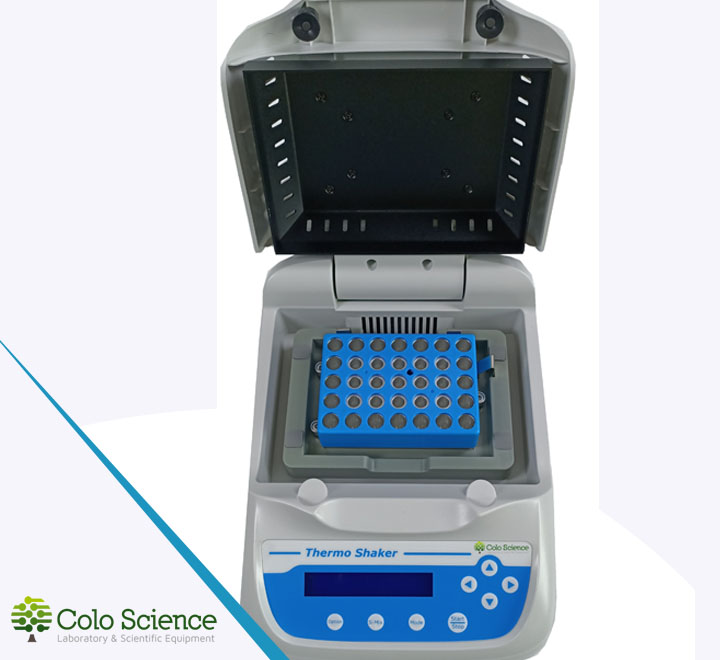
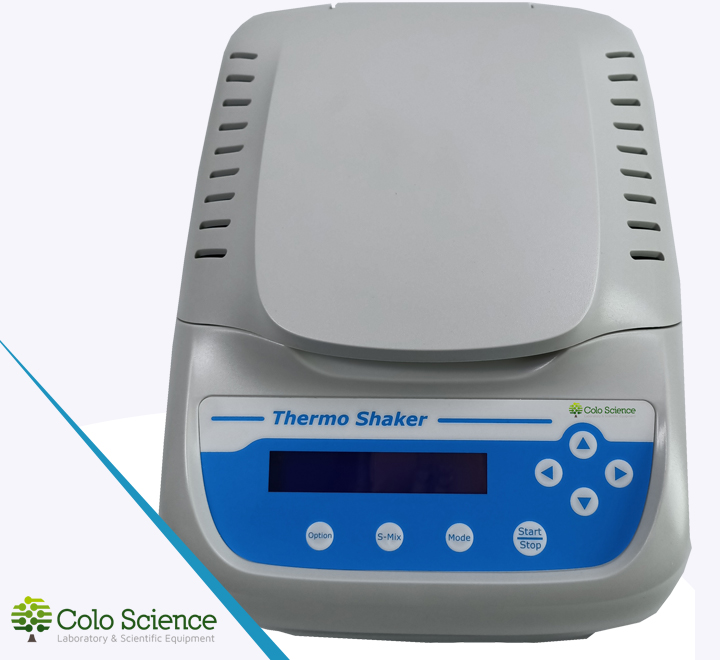
ALEMADR-TPS dry block thermo shaker — microtubes, Eppendorf tubes, PCR plates and microplates, 200–3000 rpm
The ALEMADR-TPS is a dry block thermo shaker for microtubes, Eppendorf tubes, PCR plates and microplates. It shakes to 3000 rpm, holds temperature to 105 °C under PID control, heats the lid independently of the block, and then — this is the part most dry blocks leave out — cools the sample back down by fan instead of leaving it to the room. Ten stored programs run the sequence without anyone at the bench. Product code PRO2647.
3000 rpm, 105 °C and a fan that gives the block back
A dry block holds a sample at temperature; a shaker keeps it moving; a heated lid keeps the volume from migrating to the cap. The ALEMADR-TPS does all three and adds a fourth: a dry block thermo shaker brings the block from 100 °C back to 37 °C in twelve minutes or less, so the next run starts when the protocol says, not when the metal has finished radiating. Shaking runs from 200 to 3000 rpm on a 2 mm orbit, temperature from 0 °C set point up to 105 °C.
Key characteristics
- Shaking 200–3000 rpm on a 2 mm orbit — the top of the range resuspends pellets that 2000 rpm leaves sitting.
- Temperature 0 °C setting, RT+5 °C to 105 °C controlled, PID, accuracy ≤ ±0.3 °C.
- Built-in cooling fan — 100 °C to 37 °C in ≤ 12 min, automatic or on demand.
- Heating lid OFF / AUTO / 0 °C to 110 °C, controlled independently of the block.
- 10 stored programs (S0–S9), up to 5 temperature points and up to 99 repeats.
- Heating time ≤ 10 min from 25 °C to 100 °C.
- Timer from 1 second to 99 h 59 min, or continuous running.
- Brushless DC motor, quiet, durable and maintenance-free.
Suitable for
- Enzymatic reactions with a heat-inactivation step, where the cool-down is part of the protocol and the built-in fan closes it.
- PCR sample preparation and controlled mixing before thermal cycling.
- ELISA, deep-well and tissue-culture plates, which run on the platform without a block at 3000 rpm.
- Field and mobile work, where a single instrument has to heat, mix and then cool without a water bath nearby.
- Laboratories running repeat protocols that benefit from ten stored programs rather than manual setting each time.
Why a cooling fan changes how a dry block is used
Heating a metal block is quick; cooling one is not. Left to the room, a block at 100 °C takes most of an hour to reach handling temperature, and every protocol with a denaturation or inactivation step waits for it. A dry block thermo shaker forces air across the block and cuts that to twelve minutes or less, which is the difference between two runs in a morning and four. On the ALEMADR-TPS the fan can run automatically at the end of a program or be called at any point.
The second effect is on the sample rather than the schedule. A slow, uncontrolled cool-down is an uncontrolled variable: enzymes keep working through it, and a reaction stopped by heat is only really stopped once the temperature is down. A dry block thermo shaker makes that part of the run repeatable instead of dependent on the room. Combined with the independently heated lid, which keeps vapour off the caps during the hot phase, the volume and the timing at the end of the run are both the ones the protocol specified.
Model, product code and identification
The ALEMADR-TPS is supplied as a base unit of the dry block thermo shaker range. Blocks are chosen separately by tube format, and plate work runs on the platform without a block. Quote and order with the COLO product code.
Thermo shaker with cooling fan and heating lid, 200–3000 rpm, 0 °C to 105 °C, 10 programs, blocks ordered separately.
Technical specifications
Shaking, temperature and heated lid
| Shaking speed | 200–3000 rpm |
| Orbit | 2 mm |
| Temperature setting range | 0 °C to 105 °C |
| Temperature control range | RT+5 °C to 105 °C |
| Temperature accuracy | ≤ ±0.3 °C |
| Temperature uniformity | ≤ ±0.3 °C |
| Display resolution | 0.1 °C |
| Heating time | ≤ 10 min, from 25 °C to 100 °C |
| Fan cooling time | ≤ 12 min, from 100 °C to 37 °C |
| Heating lid setting range | OFF / AUTO / 0 °C to 110 °C |
| Heating lid control range | RT+5 °C to 110 °C |
Programs and general data
| Timer | 1 s – 99 min 59 s / 1 min – 99 h 59 min, or continuous |
| Programs | 10 programs, S0–S9 |
| Multi-point running | Yes, max. 5 points |
| Multi-cycle running | Yes, max. 99 cycles |
| Power | 335 W |
| Supply voltage | AC 220 V or AC 110 V, 50/60 Hz |
| Dimensions (W × D × H) and net weight | 296 × 212 × 164 mm · 6.9 kg |
| Product code | PRO2647 |
Operating functions
Temperature, lid and fan
The block is set from 0 °C and controlled from RT+5 °C up to 105 °C, with 0.1 °C shown on the display. The lid is set separately — off, automatic, or a fixed value up to 110 °C — so the cap zone stays above the liquid and vapour has nowhere cold to condense. The fan runs automatically when a program ends or on demand during a run, and brings the block from 100 °C to 37 °C in twelve minutes or less. Automatic preheating brings the block up before the run starts, and the instrument can hold temperature after the timer ends.
Shaking
Speed is adjustable from 200 to 3000 rpm on a 2 mm orbit. The low end suits gentle mixing of protein solutions; the top of the range is what separates this instrument from a 2000 rpm dry block — it resuspends tight pellets in small volumes and drives plate mixing without a block. A short-mix function gives a brief burst without changing the running settings, and shaking is set independently of heating, so a protocol can heat without shaking or shake at room temperature.
Programs and timing
Ten programs are stored on the instrument as S0 to S9. Each can hold up to five temperature points in sequence and repeat up to 99 times, which covers step protocols that would otherwise need someone standing at the bench. The timer runs from one second to 99 hours 59 minutes, or continuously, and a delay function starts a run at a set time. Auto resume brings the instrument back to the running state after a power interruption.
Build, motor and safe operation
Inside the ALEMADR-TPS dry block thermo shaker the drive is a brushless DC motor: no brushes to wear, no service interval, no carbon dust near open samples, and quiet enough that the instrument stays on a working bench instead of being moved to a back room. At 3000 rpm that matters more than it does at 1500.
Built-in temperature calibration and over-heating protection are part of the instrument rather than an option. Power is 335 W from AC 220 V or AC 110 V at 50/60 Hz, protected by a 250 V 3 A Φ5×20 fuse — the voltage is fixed at order, so confirm it before the order is placed. The instrument measures 296 × 212 × 164 mm and weighs 6.9 kg without a block, a normal bench footprint next to a microcentrifuge or a cycler.
Standard delivery
- ALEMADR-TPS base unit of the dry block thermo shaker, with the heating lid fitted.
- Mains cable for the ordered voltage.
- Operating manual.
- Declaration of conformity and warranty documentation.
Blocks are not part of the base unit — they are ordered separately according to the tube format, and plate work runs on the platform without a block. The delivered configuration for a specific order is the one confirmed in the COLO.Science quotation.
Knowledge base
Shakers and mixers on COLO.Science — our knowledge base.
Applications and operational value
In molecular biology the ALEMADR-TPS dry block thermo shaker sits between sample preparation and the cycler: restriction digests, ligations, reverse transcription and bead clean-ups all need a fixed temperature with movement, and most of them end with a heat inactivation. A dry block thermo shaker closes that step properly — the reaction stops when the block does, not twenty minutes later.
For plate work the 3000 rpm ceiling is the argument. ELISA plates, deep-well plates and tissue-culture plates run directly on the platform without a block, and plate mixing needs the speed a tube block does not. The same instrument then covers 0.2 ml PCR plates, 0.5, 1.5 and 2.0 ml tubes and a mixed block, so one bench position handles the formats a protocol moves between.
In field and mobile work the value is self-sufficiency. Heating, mixing, controlled cooling and ten stored programs in a 6.9 kg instrument means enzyme storage, sample transport and on-site incubation do not depend on a water bath, a cold room or someone watching a timer. The practical limit is not the instrument but how many tubes fit the chosen block, which is why the block list matters as much as the specification table.
Selection guide
- Tube or plate format first. The block decides what the instrument takes: 96 × 0.2 ml PCR plate, 54 × 0.5 ml, 35 × 1.5 ml, 35 × 2.0 ml, a mixed 20 × 1.5 + 15 × 0.5 ml block, or plate work without a block. Count the positions per run before choosing.
- Speed you actually need. Tube blocks are listed to 2500 rpm and plate work to 3000 rpm; if 2000 rpm covers the protocol, a slower model is enough.
- Does the protocol cool? A dry block thermo shaker earns its place where a heat step is followed by a hold at a lower temperature. A single incubation at one temperature does not need it.
- Lid. Long incubations and small volumes justify the heated lid; a five-minute mix at room temperature does not.
- Voltage. AC 220 V or AC 110 V is fixed at order — confirm which one the laboratory uses.
Configuration notice
This page is provided for orientation and product selection. It does not replace the binding specification, the delivered configuration, the validation protocol or the acceptance criteria confirmed in the official COLO.Science quotation, proforma invoice or order confirmation. Blocks for this dry block thermo shaker are manufactured to order: hole layout, hole size and mixed tube formats can be made to the laboratory’s own requirement. Confirm the tube or plate format, the block type and the supply voltage for the specific order. B2B prices are quoted net, excluding VAT.
Sales and support for international customers
COLO Lab ExpertsPolje ob Sotli 4, SI-3255 Buče, Slovenia
Phone: +386 70 713 437 · Email: sales@colo.si · Web: colo.si
We supply laboratories across Europe directly and through partners. B2B prices are quoted net, excluding VAT.