


COLO.Science · Spectroscopy & Color · Haze and transparency
CH1810 Colour Haze Meter — haze, clarity and colour
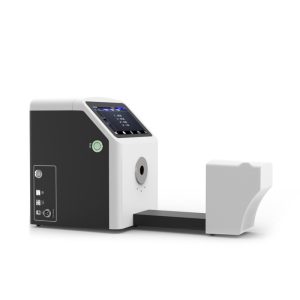
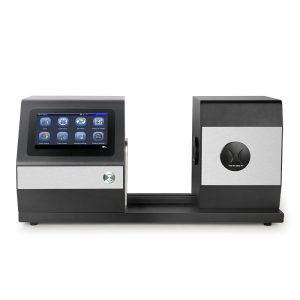
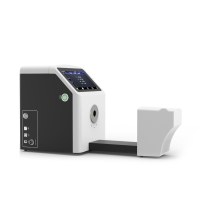
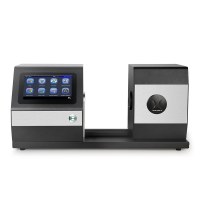
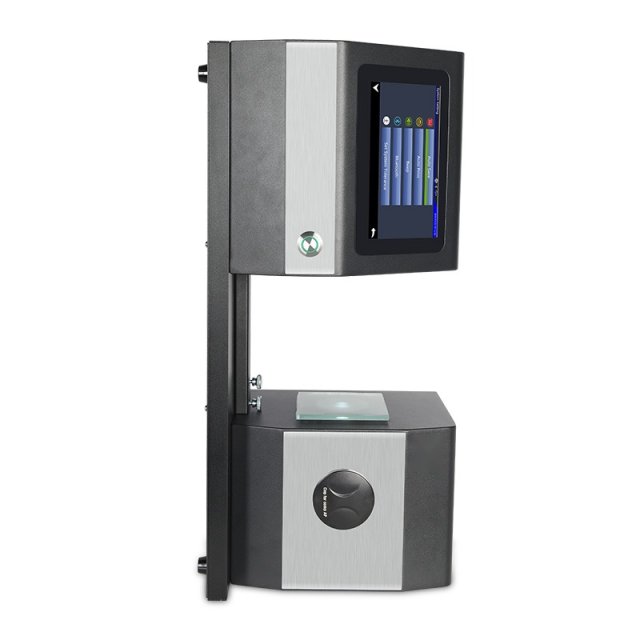
The CH1810 colour haze meter (COLO product code PRO7926) is the top colour haze meter of the series, adding clarity, Bluetooth and the largest memory. It measures haze and total luminous transmittance of transparent and translucent materials — films, sheets, glass, display covers, packaging and liquids in cells — with 0/d geometry and a Ø154 mm integrating sphere, as the ASTM D1003 and ISO 13468 methods require.
Which instrument?
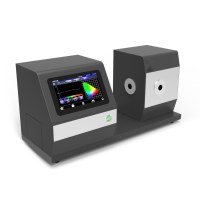
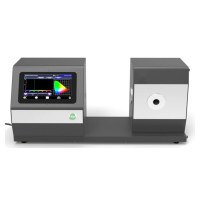
Overview
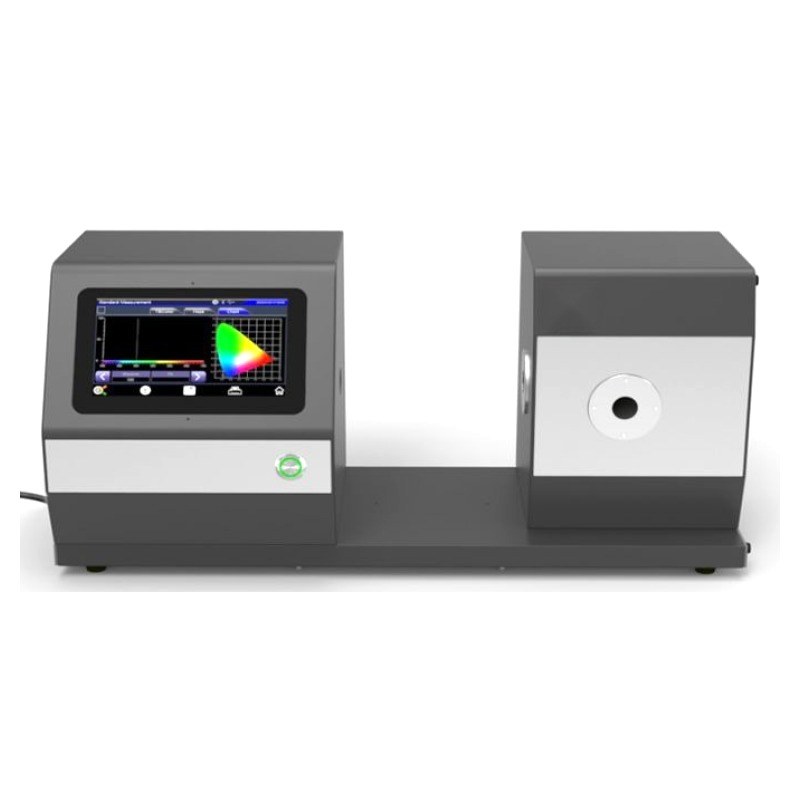
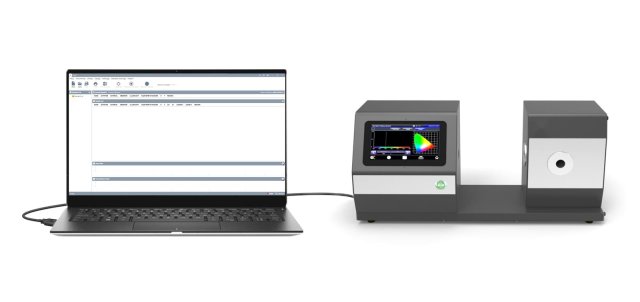
Place the sample at the measuring port — vertically for sheets and films, horizontally for small parts — and press Test: in about 1.5 s the instrument shows haze and total transmittance, together with the colour of the transmitted light, its spectrum and yellowness and clarity. A light-source monitor and a temperature sensor keep results stable through the working day.
Key characteristics
- 0/d geometry, Ø154 mm integrating sphere, combined LED 400–700 nm
- Method: ASTM D1003 (non-compensated), ISO 13468 (compensation port) and clarity
- Concave grating, 256-pixel dual-array CMOS; 400–700 nm, 10 nm interval
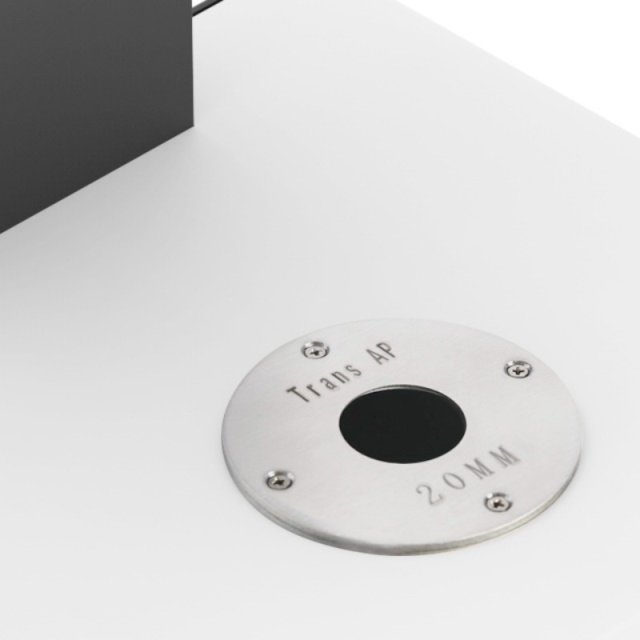
- Apertures Ø20, Ø15, Ø8 or Ø4 mm (one selected with the order); samples up to 105 mm
- Haze repeatability 0.05, inter-instrument agreement 0.4 (Ø20 mm, standard haze plate)
- 7″ touch screen, 5 000 standards, 30 000 samples, USB, serial printer port, Bluetooth
Suitable for
- Plastic films and sheets — haze and transmittance in production and incoming control
- Glass — coated, frosted, laminated and tinted glass
- Yellowing and colour of transparent plastics — YI, WI, CIE Lab of transmitted light
- Display covers, lenses, light guides and diffusers
- Packaging — bottles, trays, blister and shrink film
- Liquids and resins in cells
What is haze and how is it measured?
A transparent film or sheet can let almost all light through and still look milky. That milkiness is haze: the share of transmitted light that is scattered more than 2.5° away from the incoming beam. Total transmittance is the share of light that passes the sample at all. Both values are given in % and are part of most specifications for films, sheets, glass and packaging.
A haze meter illuminates the sample with a parallel beam and collects the transmitted light in an integrating sphere (0/d geometry). ASTM D1003 and ISO 13468 describe the procedure; they differ in how the sphere is corrected — the ISO method uses a compensation port. Your customer’s specification says which one applies.
- Haze — milkiness, wide-angle scattering above 2.5°.
- Total transmittance — how much light passes the sample.
- Clarity — narrow-angle scattering: whether fine detail stays sharp when seen through the sample (CH1810).
- Colour of transmitted light — yellowing or tint of transparent material, CIE Lab, YI (CH1610, CH1810).
Haze meter or colour spectrophotometer?
Our benchtop colour spectrophotometers of the CS60 and CS85 series can also report haze as an additional value. A dedicated haze meter is the better choice when haze and transmittance are the main values: it is built around the standard 0/d geometry with a large Ø154 mm sphere and an open measuring area for large sheets and films.
| Haze meter (CH1810) | Benchtop spectrophotometer | |
|---|---|---|
| Main purpose | Haze, transmittance, colour of transmitted light | Colour of solids, powders, liquids; haze as an additional value |
| Geometry | 0/d, Ø154 mm sphere, parallel beam | d/8 reflectance and d/0 transmission |
| Samples | Large sheets and films, open area, vertical or horizontal | Samples at the port or in the transmission chamber |
| Standards | ASTM D1003, ISO 13468 | CIE colour standards; haze as supplementary |
On the instrument
Technical specifications
Measurement
| Measuring geometry | 0/d — parallel illumination, diffuse viewing |
| Standards | ASTM D1003 / D1044, ISO 13468, ISO 14782, GB/T 2410, JJF 1303, CIE 15.2, JIS K 7105, JIS K 7361, JIS K 7136, ASTM E308, GB/T 3978 |
| Method | ASTM D1003 (non-compensated), ISO 13468 (compensation port) and clarity |
| Integrating sphere | Ø154 mm |
| Light source | Combined LED, 400–700 nm; more than 3 million measurements in 5 years |
| Sensor | Concave grating, 256-pixel dual-array CMOS; 400–700 nm, 10 nm interval |
| Measuring range | 0–100 % |
| Measuring aperture | Ø20, Ø15, Ø8 or Ø4 mm (one, as ordered) |
| Sample thickness | up to 105 mm |
| Repeatability | Haze, Ø20 mm: SD within 0.05 (standard plate ≈ 30) |
| Inter-instrument agreement | Haze, Ø20 mm: within 0.4 |
Data and general
| Measured values | Clarity, haze (ASTM, ISO), T (ASTM, ISO), WI, YI, absorbance, Pt-Co, Gardner, CMYK, tint, metamerism |
| Colour spaces · ΔE | CIE Lab, XYZ, Yxy, LCh, sRGB, βxy, CIE Luv, Munsell, Hunter Lab · ΔE*ab, ΔE*94, ΔE*cmc, ΔE*00, ΔE*uv, ΔE*CH |
| Observer · illuminants | 2° and 10° · D65, A, C, D50, D55, D75, F1–F12, CWF, DLF, TL83, TL84, TPL5, U30, NBF |
| Measuring time · resolution | approx. 1.5 s · 0.01 |
| Display | 7″ TFT colour, capacitive touch screen |
| Interface · storage | USB, serial printer port, Bluetooth · 5 000 standards, 30 000 samples |
| Power | 24 V DC / 3 A power adapter |
| Dimensions · weight | 487 × 260 × 298 mm · approx. 8.0 kg |
| Operating environment | 0–40 °C; storage −20–50 °C |
Which model? — comparison
All four use 0/d geometry with a Ø154 mm sphere, combined LED, Ø20/15/8/4 mm apertures and a 7″ touch screen. They differ in method, colour and clarity:
| CH1100 | CH1210 | CH1610 | CH1810 | |
|---|---|---|---|---|
| Haze, total transmittance | ✓ | ✓ | ✓ | ✓ |
| ISO 13468 method (compensation port) | — | ✓ | ✓ | ✓ |
| Colour of transmitted light (spectrum 400–700 nm) | — | — | ✓ | ✓ |
| Clarity | — | — | — | ✓ |
| Haze repeatability | 0.08 | 0.05 | 0.05 | 0.05 |
| Bluetooth | — | — | — | ✓ |
| Data memory (standards / samples) | 1 000 / 20 000 | 1 000 / 20 000 | 5 000 / 20 000 | 5 000 / 30 000 |
| Sample thickness | ≤ 170 mm | ≤ 105 mm | ≤ 105 mm | ≤ 105 mm |
- CH1100 — routine ASTM D1003 haze and transmittance; the economical choice for production control.
- CH1210 — when your customers also specify ISO 13468, with better repeatability.
- CH1610 — when the colour or yellowing of the transparent material matters as well as haze.
- CH1810 — adds clarity for see-through quality of films, Bluetooth and the largest memory.
Standard delivery
- CH1810 colour haze meter with 7″ touch screen
- One measuring aperture (Ø20, Ø15, Ø8 or Ø4 mm, as ordered)
- 0 % calibration box
- Power adapter, USB cable; PC quality-management software available for download
- User guide
Options: micro-printer, test fixture, standard haze plate, foot switch. The delivered configuration for a specific order is the one confirmed in the COLO.Science quotation.
Knowledge base
Haze, transmittance, clarity and the 0/d geometry are explained in the Haze Measurement Guide, colour values in the Colour Measurement Guide, and practical examples on COLO.Science, our knowledge base.
Selection guide
- Colour of opaque samples, powders or liquids: the CS60 benchtop spectrophotometers.
- Colour of liquids (Pt-Co, Gardner, Saybolt): the CS40 liquid spectrophotometers.
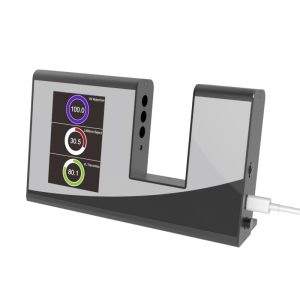
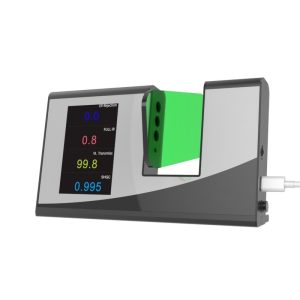
- Light transmittance of glass and window film: the compact CH1010 and CH1020 meters.
- Not sure which method or values your customer means? Send us the specification — we confirm it with the quotation.
Configuration notice
This page is provided for orientation and product selection. The aperture, accessories and the values you report are confirmed with the official COLO.Science quotation.
Sales and support for international customers
COLO Lab ExpertsPolje ob Sotli 4, SI-3255 Buče, Slovenia
Phone: +386 70 713 437 · Email: sales@colo.si · Web: colo.si
We supply laboratories across Europe directly and through partners. B2B prices are quoted net, excluding VAT.