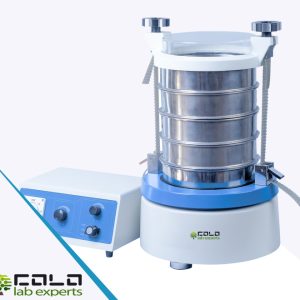
Particle Size Analysis (Granulometry)
Particle size analysis equipment is essential for standardized determination of particle size distribution (PSD) in powders,
granules and bulk solids across laboratory QC, process control and materials R&D. Among these methods, sieve-based granulometry
remains a practical and defensible approach for fractionation over defined size ranges, supporting routine comparability between
batches, suppliers and production campaigns.
In routine QC and industrial testing environments, particle size analysis supports raw material inspection, milling and
granulation process verification, control of flowability and packing behavior, and troubleshooting of segregation or blending
issues. A typical workflow combines certified test sieves (ISO / ASTM apertures), controlled sieving motion (manual or mechanical)
and gravimetric evaluation of retained fractions to produce a clear PSD profile.
Selecting the right particle size analysis equipment requires evaluation of target size range (coarse to fine), sample type
(dry powders vs. wet suspensions), required repeatability, throughput and documentation needs. Mechanical sieve shakers reduce
operator variability by controlling time and motion parameters, while proper sample splitting and preparation improves
representativeness and minimizes bias in heterogeneous bulk materials.
CATEGORY STRUCTURE (NAVIGATION HUB)
- Testing Equipment
– general laboratory and industrial testing instruments.
PARTICLE SIZE ANALYSIS INSTRUMENT GROUPS
- Laboratory test sieves – certified sieve frames and mesh apertures for standardized PSD fractionation.
Reliable results depend on correct stacking, lid/pan use and undamaged, clean mesh surfaces. - Sieve shakers – controlled sieving motion (vibratory / electromagnetic / rotational programs) that
improves repeatability and throughput versus manual shaking, especially in routine QC and comparative batch testing. - Sample preparation & splitting – tools such as riffle splitters, sample dividers and laboratory mills
that help produce representative test portions and reduce bias when analyzing heterogeneous bulk materials. - Wet sieving & cleaning – optional modules and accessories for dispersing cohesive or fine materials
and maintaining mesh performance through proper cleaning and handling.
FEATURED: SIEVE ANALYSIS WORKFLOW (PSD BY FRACTIONS)
Modern sieve analysis combines standardized test sieves with controlled shaking programs to deliver repeatable,
defensible particle size distributions. Key evaluation parameters include consistent sieving time and motion settings, clean mesh
surfaces, representative sample splitting, and gravimetric calculation of retained fractions for reliable PSD reporting in QC and
process control.
Particle Size Characterization
Showing the single result