


COLO.Science · Spectroscopy & Color · Light transmittance
CH1010 Light Transmittance Meter — VLT, UV and IR rejection
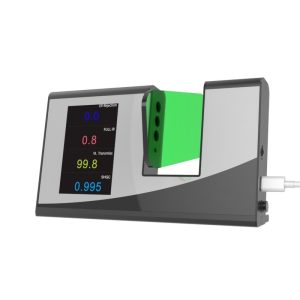
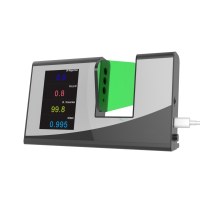
The CH1010 light transmittance meter (COLO product code PRO7934) is a compact meter for visible light transmittance, UV and IR rejection of glass and window film. It measures VLT, UV rejection, IR rejection (940 nm) in about 0.5 s, for samples up to 47 mm thick.
Which instrument?
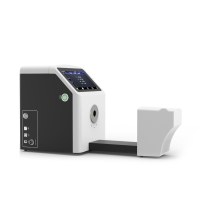
Overview
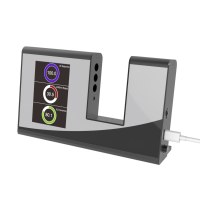
Switch on — the meter calibrates itself — slide the glass or film into the slot and read the values on the 3.5″ colour screen. Weighing 515 g and powered over USB-C, it works in the laboratory, at incoming control and on site.
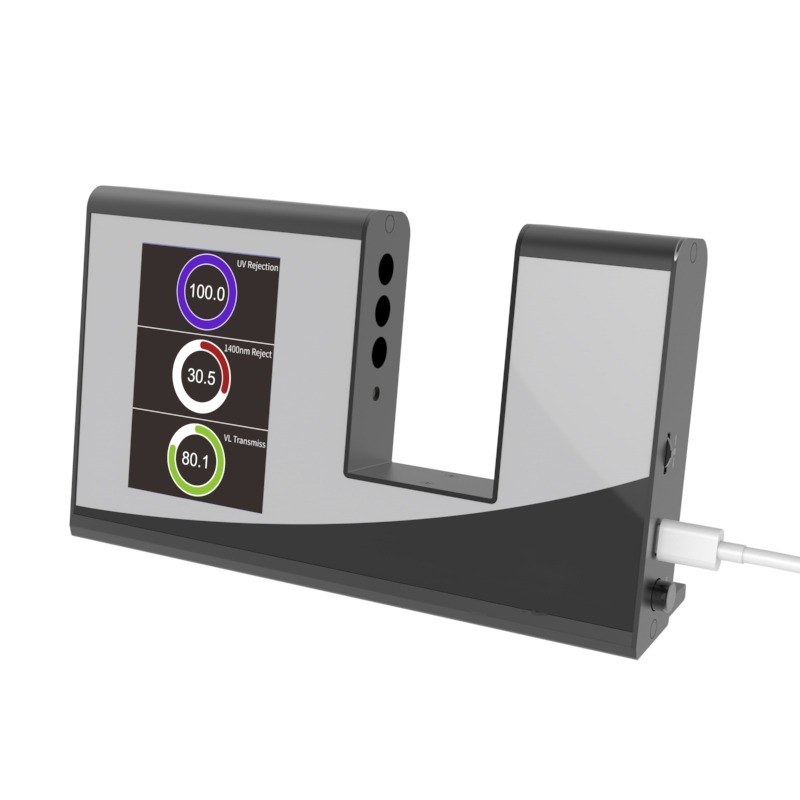
Key characteristics
- Light sources: UV, visible and infrared 940 nm
- Silicon photodiode sensors; Visible 380–760 nm; infrared peak 940 nm
- Measured: VLT, UV rejection, IR rejection (940 nm)
- Resolution 0.1 %; accuracy better than ±1.5 % (colourless uniform translucent sample)
- Samples up to 47 mm thick; automatic calibration at switch-on
- 3.5″ colour screen, USB; 5 V DC over USB-C; 203 × 120 × 29 mm, 515 g
Suitable for
- Window film — tinted and solar-control film before and after fitting
- Architectural and automotive glass
- Transparent plastic sheets and covers
- Incoming control of glass and film
What do VLT, UV and IR rejection mean?
Glass and window film are chosen by how much daylight they let through and how much ultraviolet and heat they keep out. VLT (visible light transmittance) is the share of daylight that passes, in %. UV rejection is the share of ultraviolet radiation blocked, IR rejection the share of infrared (heat) blocked at 940 nm.
- VLT — brightness through the glass; legal limits apply to vehicle glazing in many countries.
- UV rejection — protection of interiors, goods and skin.
- IR rejection — heat kept out; the main value for solar-control film.
Transmittance meter or haze meter?
Both measure how light passes a transparent sample, but for different questions. The transmittance meter answers how much light, UV and heat pass glass or film; a haze meter answers how clear or milky a material looks.
| Transmittance meter (CH1010) | Haze meter (CH1100–CH1810) | |
|---|---|---|
| Main values | VLT, UV rejection, IR rejection (940 nm) | Haze, total transmittance, clarity, colour |
| Typical user | Window film, glass processing, automotive | Plastics, film and packaging production, laboratories |
| Form | Compact, 515 g, USB-C | Benchtop, 0/d with Ø154 mm sphere |
On the instrument
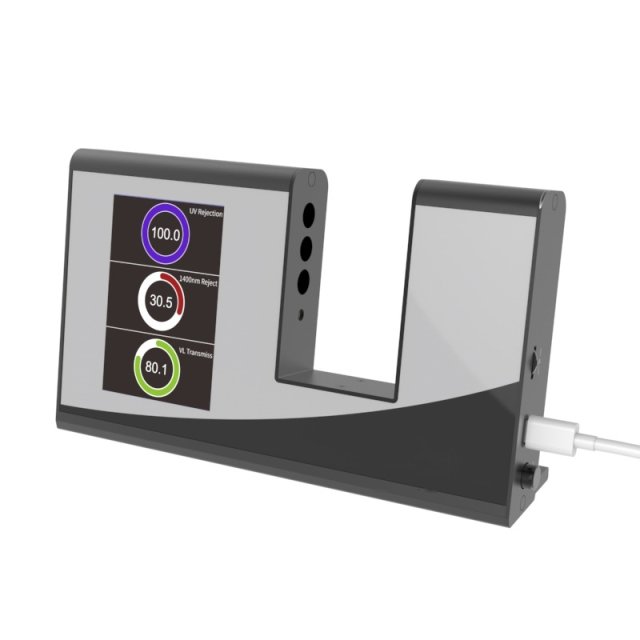
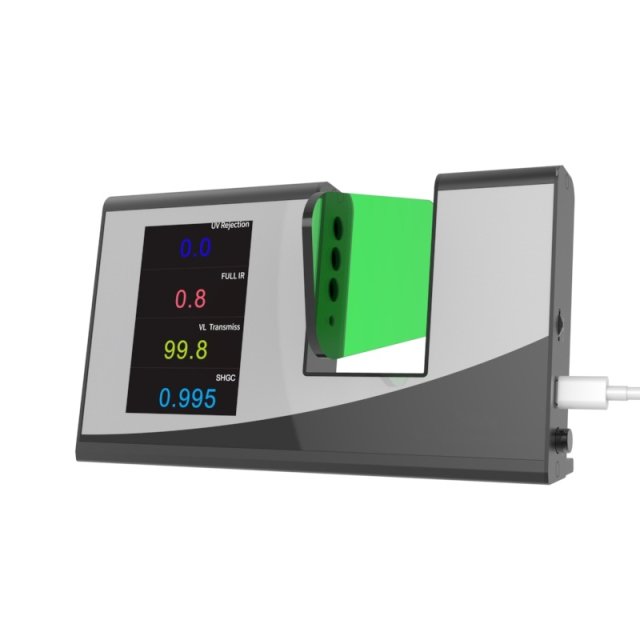
Technical specifications
Measurement
| Light sources | UV, visible and infrared 940 nm |
| Sensor | Silicon photodiodes |
| Wavelength range | Visible 380–760 nm; infrared peak 940 nm |
| Measured values | VLT, UV rejection, IR rejection (940 nm) |
| Resolution | 0.1 % |
| Accuracy | better than ±1.5 % (colourless uniform translucent sample); better than ±1 % on factory standards |
| Measuring time | approx. 0.5 s |
Data and general
| Sample thickness | up to 47 mm |
| Calibration | automatic at switch-on |
| Display | 3.5″ TFT colour |
| Interface · power | USB · 5 V DC, USB-C |
| Dimensions · weight | 203 × 120 × 29 mm · 515 g |
| Operating environment | 0–40 °C, 0–85 % RH non-condensing, up to 2000 m; storage −20–50 °C |
Which model? — comparison
Both meters share the same compact body, 0.5 s measurement, 0.1 % resolution, ±1.5 % accuracy and samples up to 47 mm. They differ in the infrared values:
| CH1010 | CH1020 | |
|---|---|---|
| VLT, UV rejection | ✓ | ✓ |
| IR rejection 940 nm | ✓ | ✓ |
| IR rejection 1400 nm, full-band IR | — | ✓ |
| SHGC, TSER | — | ✓ |
- CH1010 — VLT, UV and 940 nm IR rejection: the quick check of tinted glass and film.
- CH1020 — adds 1400 nm and full-band IR, SHGC and TSER for solar-control film and glazing.
Standard delivery
- CH1010 light transmittance meter
- Power adapter, data cable
- User guide
Calibration check on request. The delivered configuration for a specific order is the one confirmed in the COLO.Science quotation.
Knowledge base
Haze, transmittance, clarity and the 0/d geometry are explained in the Haze Measurement Guide, colour values in the Colour Measurement Guide, and practical examples on COLO.Science, our knowledge base.
Selection guide
- Haze, clarity or colour of transparent plastics and film: the CH1100–CH1810 haze meters.
- Colour of opaque samples: the CS60 benchtop spectrophotometers.
- Not sure which method or values your customer means? Send us the specification — we confirm it with the quotation.
Configuration notice
This page is provided for orientation and product selection. The model and the values you report are confirmed with the official COLO.Science quotation.
Sales and support for international customers
COLO Lab ExpertsPolje ob Sotli 4, SI-3255 Buče, Slovenia
Phone: +386 70 713 437 · Email: sales@colo.si · Web: colo.si
We supply laboratories across Europe directly and through partners. B2B prices are quoted net, excluding VAT.