


COLO.Science · Spectroscopy & Color · Portable spectrophotometers
SC810 Portable Spectrophotometer — d/8 colour measurement at the line, 400–700 nm
The SC810 portable spectrophotometer brings laboratory-grade colour measurement to the production line, incoming inspection and the customer’s site. A d/8 integrating sphere, a full 400–700 nm reflectance spectrum, two observers and twenty illuminants give CIE L*a*b* and ΔE values that agree with benchtop d/8 instruments — and with the optional universal test component the same instrument measures liquids, pastes, powders and granules.
Portable or benchtop spectrophotometer?
 Portable · at the lineSC810Hand-held d/8 · LED · 400–700 nm · Ø 8 mm · ΔE*ab 0.04 · battery · liquids and powders with test component
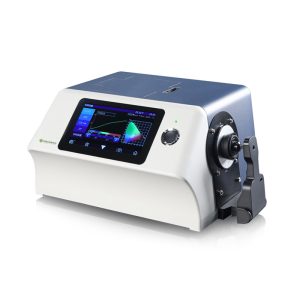 Laboratory · full UV controlCS6080Benchtop d/8 + d/0 · pulsed xenon with 3 UV filters (400/420/460 nm) · 360–780 nm · ΔE*ab ≤ 0.12 · transmittance and haze included
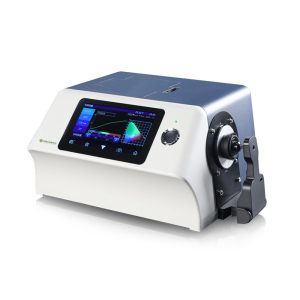 Laboratory · basic modelCS6020Benchtop d/8 + d/0 · same pulsed xenon, one UV filter (400 nm) · 360–780 nm · ΔE*ab ≤ 0.15 · transmittance optional
Overview
Laboratory colour data in a hand-held instrument
A portable spectrophotometer is the right tool when colour decisions are made far from the laboratory — at the moulding machine, at goods receipt or at the customer. The SC810 measures there, with the same d/8 geometry and the same colour data the laboratory uses, so a result taken at the line can be compared directly with the specification and with benchtop measurements.
Key characteristics
- d/8 geometry with Ø 58 mm integrating sphere, conforms to CIE No.15
- Reflectance spectrum 400–700 nm in 10 nm steps
- Long-life combined LED light source — 5 years, more than 1.6 million measurements
- Ø 8 mm aperture with cross-hair positioning
- 2° and 10° observer, illuminants D65, D50, A, C, D55, D75, F1–F12
Suitable for
- Colour quality control in production and goods receipt
- Batch-to-standard approval with ΔE tolerances and pass/fail
- Plastics, paints and coatings, textiles, paper and printing
- Food, cosmetics and pharmaceutical products
- Liquids, pastes and powders with the universal test component
Why SC810
Why this portable spectrophotometer
Results you can compare
Diffuse d/8 illumination evens out surface texture. Repeatability of ΔE*ab 0.04 and inter-instrument agreement of ΔE*ab 0.2 mean that two SC810 units — at the supplier and at your plant — report the same colour.
Fast decisions at the line
Measure the master once, then every sample shows L*a*b*, ΔE, pass/fail and the direction of the colour offset (lighter, redder, yellower). The 3.5″ touch screen is inclined at 15° for easy reading in the hand.
Built for daily work
Li-ion battery for about 5 000 measurements in 8 hours, 1 000 standards and 15 000 samples in memory, USB link to PC software and RS-232 for a micro printer.
On the instrument
Spectrum, colour values and ΔE on screen
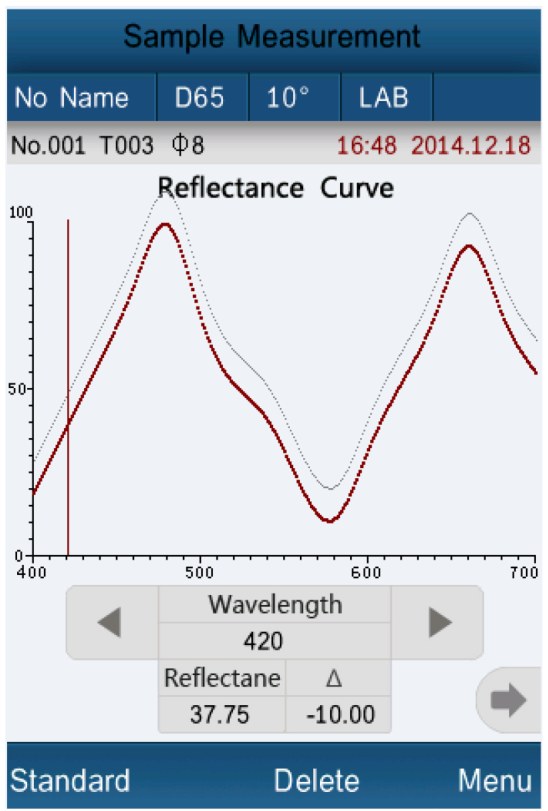
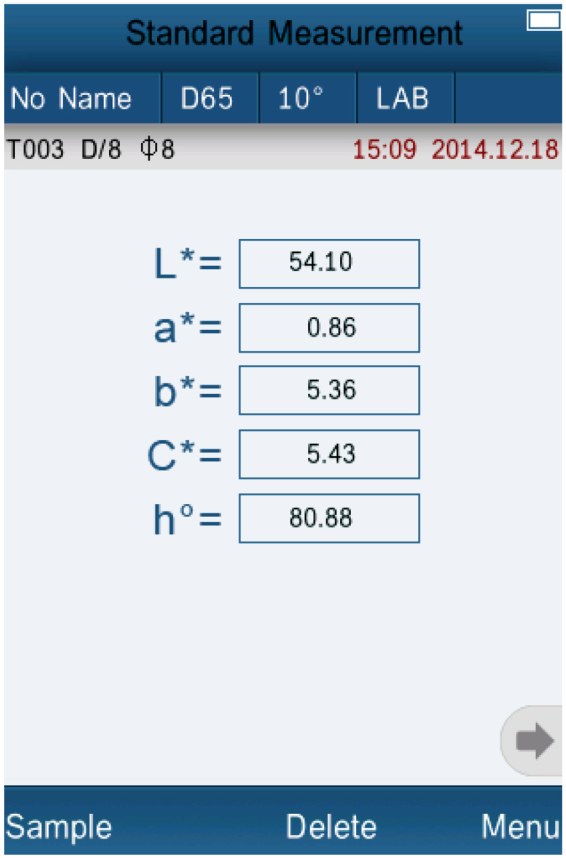
Colour spaces: CIE L*a*b*, XYZ, Yxy, LCh, CIE LUV and Hunter Lab. Colour difference: ΔE*ab, ΔE*uv, ΔE*94, ΔE*CMC (2:1) and (1:1), ΔE*00 and Hunter ΔE. Indices: whiteness (ASTM E313, CIE/ISO, AATCC, Hunter), yellowness (ASTM D1925, ASTM E313), tint, metamerism index, colour strength, staining and colour fastness.
Applications
Where the SC810 is used
Plastics and masterbatch
Moulded parts, plaques and films: ΔE against the master, yellowing after processing, lot-to-lot control at the machine.
Paints, coatings and inks
Drawdowns and coated panels: batch release, tinting correction and incoming inspection of coated parts.
Textiles and leather
Fabrics folded to opacity, yarn on cards, leather and artificial leather: shade approval with CMC (2:1) and metamerism checks.
Automotive parts
Interior plastics, trims and add-on parts with solid colours: supplier approval and goods receipt.
Paper, packaging and printing
Board, labels and printed brand colours: ΔE against the target, whiteness and yellowness of substrates.
Food, cosmetics and pharma
Powders, pastes and liquids in the universal test component: flour, spices, sauces, oils, creams and coated tablets.
The geometry and colour scales follow the definitions of the International Commission on Illumination (CIE). Sample preparation, standards and tolerances for each industry are explained in our Colour Measurement Guide.
Liquids, pastes and powders
Universal test component — one instrument for every sample form
The optional universal test component turns the SC810 into a small bench station. The instrument is placed in the stand with the aperture facing up; the sample is filled into a glass dish placed on the aperture and covered with a light-tight cap. Liquids, pastes, powders and granules are measured in the same geometry as solid samples.
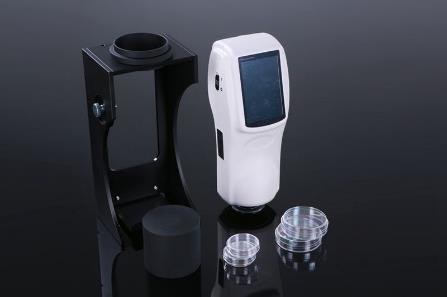
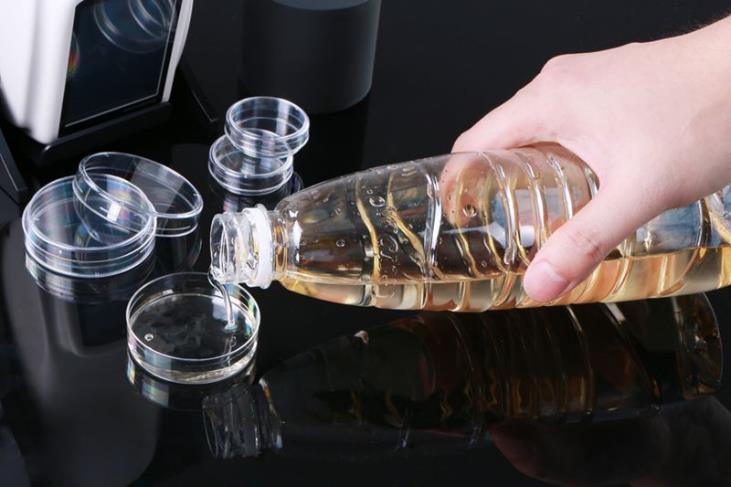
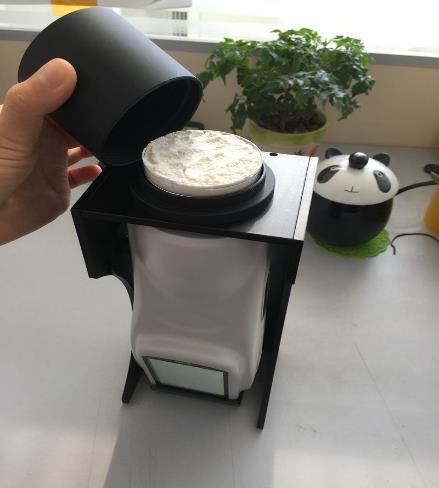
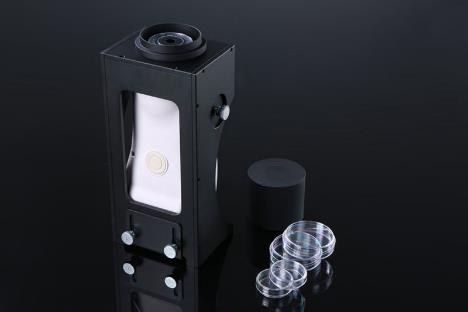
Tip: fill the dish to an opaque layer and keep the same filling height for the standard and all samples. For fine powders the powder test box gives a pressed, repeatable surface.
Technical specifications
Optics and performance
| Geometry | d/8 (diffuse illumination, 8° viewing), conforms to CIE No.15 |
| Integrating sphere | Ø 58 mm |
| Light source | Combined LED light source |
| Sensor | Silicon photodiode array |
| Wavelength range · interval | 400–700 nm · 10 nm |
| Measuring aperture | Ø 8 mm, cross-hair positioning |
| Repeatability | Spectral reflectance SD within 0.1 % (400–700 nm within 0.2 %); ΔE*ab 0.04 |
| Inter-instrument agreement | Within ΔE*ab 0.2 (average of 12 BCRA Series II tiles) |
| Minimum interval between measurements | 1.5 s |
| Lamp life | 5 years, more than 1.6 million measurements |
Colour data and general
| Colour spaces | CIE L*a*b*, XYZ, Yxy, LCh, CIE LUV, Hunter Lab |
| Colour difference | ΔE*ab, ΔE*uv, ΔE*94, ΔE*CMC (2:1), ΔE*CMC (1:1), ΔE*00, ΔE (Hunter) |
| Indices | WI (ASTM E313, CIE/ISO, AATCC, Hunter), YI (ASTM D1925, ASTM E313), TI, metamerism index, colour strength, staining, colour fastness |
| Observer · illuminants | 2° and 10° · D65, D50, A, C, D55, D75, F1–F12 |
| Displayed data | Spectral curve and values, colour values, ΔE values and graph, pass/fail, colour offset, colour simulation |
| Display | 3.5″ TFT capacitive touch screen, 320 × 480 |
| Interfaces · storage | USB, RS-232 · 1 000 standards, 15 000 samples |
| Power supply | Li-ion 3.7 V / 3 200 mAh, approx. 5 000 measurements in 8 h; DC 5 V / 2 A adapter |
| Dimensions (L × W × H) · weight | 90 × 77 × 230 mm · approx. 600 g |
| Operating environment | 0–40 °C, below 85 % RH, non-condensing |
Software and data
Software and data
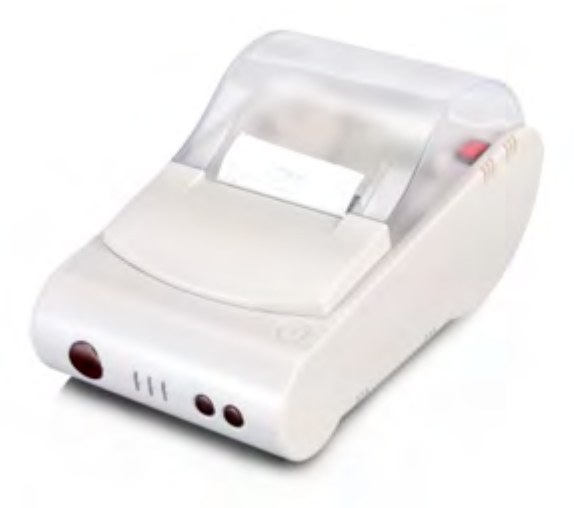
Standards can be measured or entered manually from a specification. Results are stored with name, illuminant, observer and time, and transferred by USB to the PC colour management software for reports, colour plots, trend control and export to spreadsheets. A micro printer can be connected via RS-232 for printouts at the line.
Delivery
Standard delivery and options
Standard delivery
- SC810 portable spectrophotometer
- White calibration board and black calibration cavity
- Li-ion battery and DC 5 V / 2 A power adapter
- PC colour management software and USB cable
- Protective cover and wrist strap
- User guide
Optional
- Universal test component with sample dishes — liquids, pastes, powders, granules
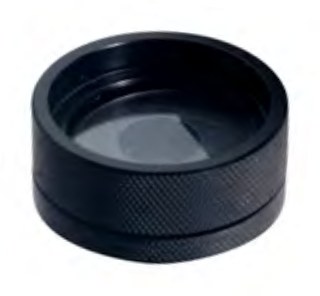
- Powder test box
- Micro printer
Knowledge base
Learn more about colour measurement
- Colour Measurement Guide — CIE L*a*b*, ΔE formulas, measuring geometry, light sources and sample preparation
- Which ΔE formula to use and how to set tolerances
- Preparing plastics, textiles, powders and liquids for measurement
- COLO.Science — spectrophotometers — articles, application notes and methods for colour and spectral measurement
Selection guide
Portable spectrophotometer or benchtop?
| SC810 portable | Large, curved or installed parts, measurements at the line and at goods receipt, opaque samples; liquids and powders with the universal test component. |
| CS6080 benchtop | Laboratory reference: reflectance d/8 and transmittance d/0, SCI and SCE simultaneously, UV control, 360–780 nm, haze of transparent materials. |
| CS6020 benchtop | Laboratory reflectance and transmittance with xenon light source for formulation and quality control. |
Many customers combine both a benchtop and a portable spectrophotometer: a benchtop instrument sets the standard in the laboratory, SC810 units check production against it.
FAQ
Frequently asked questions
Are SC810 results comparable with our laboratory instrument?
Yes, when both use d/8 geometry and the same illuminant, observer and ΔE formula. Measure the same reference samples on both instruments once and keep the comparison as part of your procedure.
Can the SC810 measure liquids?
Yes, with the optional universal test component. The liquid is filled into a glass dish and measured through the bottom under a light-tight cover. For clear liquids and colour scales such as APHA or Gardner in transmission, a benchtop instrument with a transmission compartment is the better choice.
How often do I need to calibrate?
Calibrate on the white board and in the black cavity at the start of each shift, after a longer pause and whenever the ambient temperature changes noticeably.
Which tolerance should we use?
There is no universal value — it depends on the colour and on what your customer accepts. A common starting point is ΔE*CMC (2:1) or ΔE*00 around 1.0, confirmed by visual assessment under the agreed light.
Sales and support for international customers
COLO Lab ExpertsPolje ob Sotli 4, SI-3255 Buče, Slovenia
Phone: +386 70 713 437 · Email: sales@colo.si · Web: colo.si
We supply laboratories across Europe directly and through partners. B2B prices are quoted net, excluding VAT.