


FLEX — ELISA Microplate Reader 200–1000 nm (Xenon)
OVERVIEW
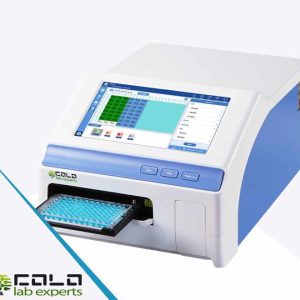
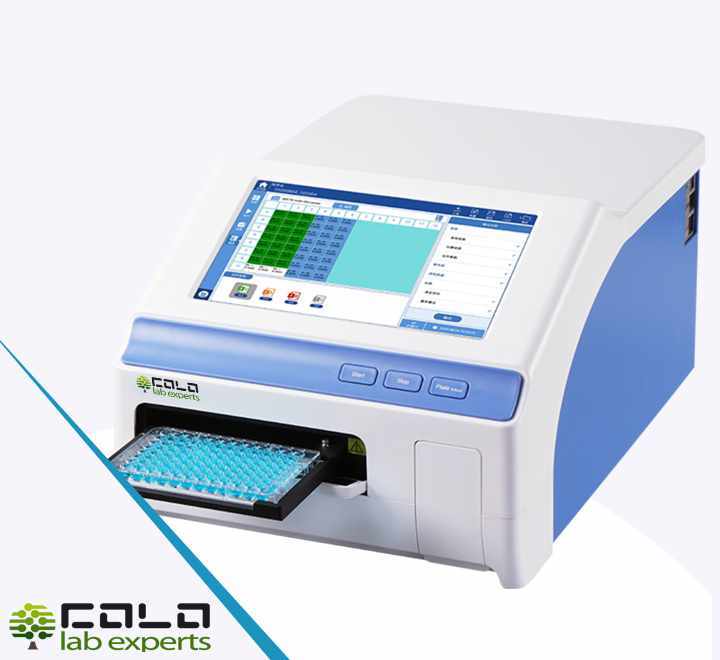
FLEX ELISA microplate reader is a versatile absorbance platform covering 200–1000 nm with a xenon flash lamp for reliable ELISA and routine plate-based assays. It supports endpoint and kinetic measurements and enables fast, reproducible results in bioscience and QC laboratories.
From UV measurements of nucleic acids and proteins to visible-range colorimetric assays and microplate-based quantification, FLEX is designed for everyday workflows that require dependable optics, straightforward operation and clean data output. The wide wavelength span makes it practical for labs that run multiple assay families on a single instrument without switching hardware or workflows.
As part of the COLO.Science portfolio, FLEX is positioned as a solid workhorse for clinical research, academic labs, biotechnology and pharmaceutical environments that need consistent absorbance readings, clear reporting and flexible export for further analysis.
IMAGES
Add your product gallery images in WooCommerce; use these alt texts to satisfy SEO checks:
- alt=”FLEX ELISA microplate reader 200–1000 nm xenon flash lamp”
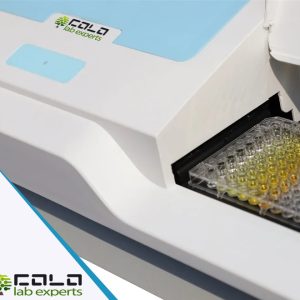
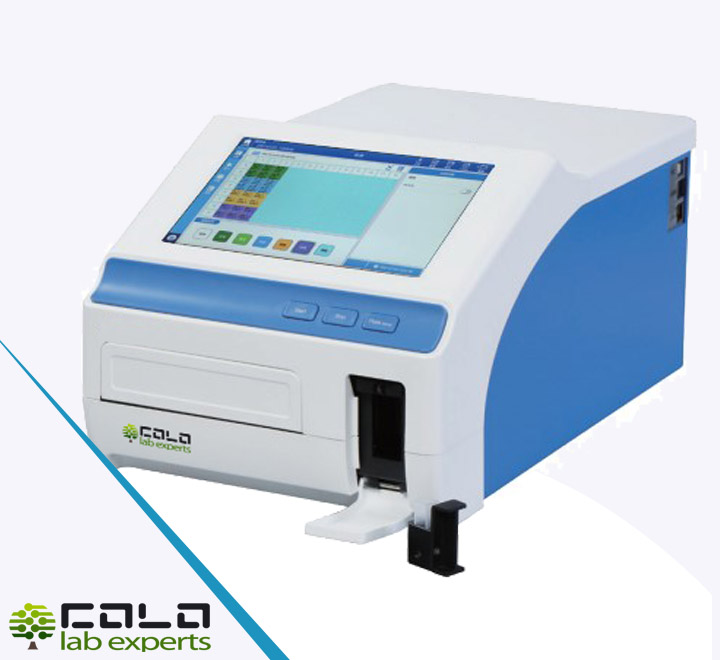
- alt=”ELISA plate reader FLEX absorbance measurement 96-well microplates”
- alt=”Absorbance microplate reader FLEX spectral scan endpoint and kinetic mode”
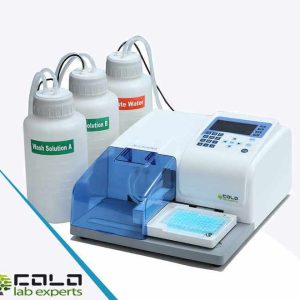
- alt=”Xenon microplate reader FLEX for ELISA assays and QC workflows”
- alt=”FLEX ELISA microplate reader software data export and reporting”
COLO.SCIENCE KNOWLEDGE
Microplate readers in bioscience laboratories
Browse bioscience resources: ELISA basics, absorbance measurement principles, and practical selection criteria for microplate reader workflows.
KEY BENEFITS
FLEX ELISA microplate reader for absorbance assays
The FLEX ELISA microplate reader focuses on robust absorbance performance with a wavelength range that supports UV and visible applications in one workflow. For ELISA routines, the key value is repeatable signal capture and straightforward evaluation, especially when multiple operators, shifts or method variations are involved.
- Wide spectral range: 200–1000 nm supports UV/Vis/NIR absorbance work without changing platforms.
- Xenon flash lamp: stable light output suitable for routine plate measurements and repeated daily use.
- Multiple measurement modes: endpoint for standard ELISA, kinetic for reaction monitoring, and spectral scan for method development and verification.
- Method-driven workflow: save methods and templates to reduce operator variability and accelerate repeat runs.
- Clean reporting: export data for audits, QC documentation or downstream statistics (CSV/Excel-style workflows via software export).
- Practical plate handling: optimized for standard 96-well microplates used in most ELISA and colorimetric assays.
In practice, this means fewer workarounds: one reader can cover common ELISA wavelengths, UV-based concentration checks, and general colorimetric assays while keeping operation familiar for the team.
WORKFLOW
FLEX ELISA microplate reader applications and workflows
A typical ELISA workflow begins with plate preparation and a consistent blank strategy. With the FLEX ELISA microplate reader, operators usually define the wavelength (or scanning range), plate layout, and evaluation rules (standards, controls, sample groups). This can be stored as a repeatable method, helping teams maintain consistent analysis across projects and reporting periods.
For endpoint assays, the reader captures absorbance after the reaction reaches a defined stop point. For kinetic assays, the instrument collects repeated readings over time to track reaction progress and calculate rates. Spectral scanning adds value during method development, troubleshooting and verification, allowing labs to confirm the best wavelength choice or identify potential interferences.
- Choose mode: endpoint, kinetic, or spectral scan depending on the assay objective.
- Select wavelength: define a fixed wavelength or a scan range across 200–1000 nm.
- Set layout: standards, blanks, controls and sample replicates in a defined plate map.
- Run measurement: read the plate and review raw values for consistency and control acceptance.
- Evaluate: apply calibration curves or acceptance limits, then generate the report.
- Export: save results for QC, regulatory documentation or downstream statistical analysis.
If your lab runs multiple assay kits, method templates reduce setup time and help keep results comparable across operators and time periods—an important advantage for routine ELISA and QC environments.
TYPICAL APPLICATIONS
- ELISA assays and immunoassays (endpoint absorbance)
- Enzyme kinetics and reaction monitoring (kinetic mode)
- Protein and nucleic acid quantification (UV absorbance methods)
- Colorimetric assays in biotechnology and bioscience research
- Clinical research workflows and routine laboratory testing
- Pharmaceutical QC and validation environments
- Teaching labs: microplate reader principles and method training
MODELS & DIMENSIONS
| Model | Plate format | Light source | Dimensions / weight |
|---|---|---|---|
| FLEX | 96-well microplates | Xenon flash lamp | See catalog (PDF) |
TECHNICAL SPECIFICATIONS
FLEX ELISA microplate reader specifications
| Model | FLEX |
| Measurement principle | Absorbance photometry (microplate reader) |
| Spectral range | 200–1000 nm |
| Light source | Xenon flash lamp |
| Wavelength selection | Monochromator-based selection (fixed & scanning) |
| Measurement modes | Endpoint, kinetic, spectral scan |
| Plate format | 96-well microplates |
| Software & output | Method templates, plate layout, reporting, data export |
| Power / dimensions / weight | See catalog (PDF) for detailed values |
For validation or procurement documentation, refer to the manufacturer catalog (PDF) for the full technical specification set, ordering options and configuration details.
DATA, QC & REPORTING
In ELISA and microplate-based absorbance workflows, data handling is often as important as the measurement itself. FLEX supports a method-oriented approach: define your plate map, controls and evaluation steps once, then reuse the same structure for routine runs. This reduces manual entry and helps prevent layout mistakes that can invalidate an entire plate.
For QC environments, consistent templates and standardized exports simplify batch documentation and review. For R&D, exports enable rapid downstream analysis in spreadsheet tools or statistics software, especially for kinetic datasets or multi-condition experiments.
- Repeatable methods and plate templates for routine work
- Clear, structured reporting for documentation and audit trails
- Export-friendly outputs for analysis and long-term archiving
- Practical control acceptance approach (blanks, standards, controls, replicates)
If you need support with implementation, training, or workflow standardization, the COLO.Science team can help align FLEX with your lab’s routine assay procedures.
STANDARD DELIVERY & ACCESSORIES
- FLEX ELISA microplate reader
- Power cable
- PC software and communication interface
- User manual / quick start guide
- Optional accessories and upgrades as per catalog (PDF)*
*Exact contents depend on configuration and current catalog specification.
FAQ
Is FLEX suitable for routine ELISA?
Yes. FLEX is designed as an ELISA microplate reader for endpoint absorbance measurements with stable optics and repeatable method templates.
Can FLEX perform kinetic reads?
Yes. Kinetic mode supports time-based reads to monitor reaction progress and evaluate rates, which is common in enzyme assays and method development.
Why is 200–1000 nm useful?
The broad range supports UV measurements (often used for nucleic acids/proteins), visible colorimetric assays, and additional method flexibility across different kits and research workflows.
Do I need filters?
FLEX uses monochromator-based wavelength selection, which is practical for flexible wavelength choices. Check the catalog (PDF) for configuration details and options.
Where can I learn more about microplate workflows?
Visit COLO.Science bioscience resources for guides on microplate readers, ELISA principles and absorbance measurement practice.