

Applications and guides
Colour measurement by industry
Every industry asks its own colour questions: a paint batch against the standard, a dye lot against the customer’s shade, the haze of a film, the colour of a juice. Choose your industry to see what is measured, which instruments are used and where to read more — or go straight to one of our guides.
Choose your industry
Guides
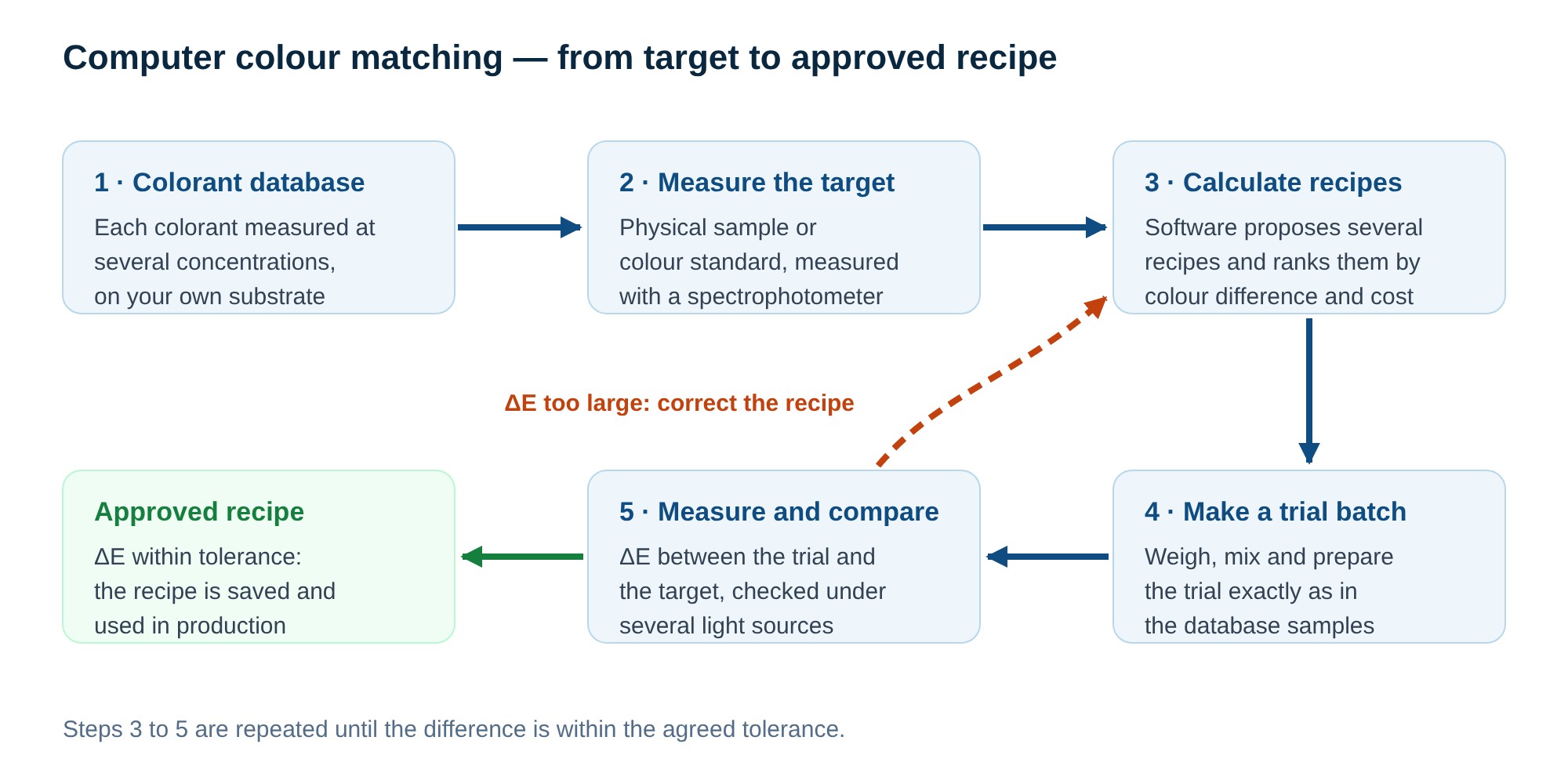 Colour Matching and FormulationHow a target colour becomes a recipe: colorant database, recipe calculation, correction and metamerism.
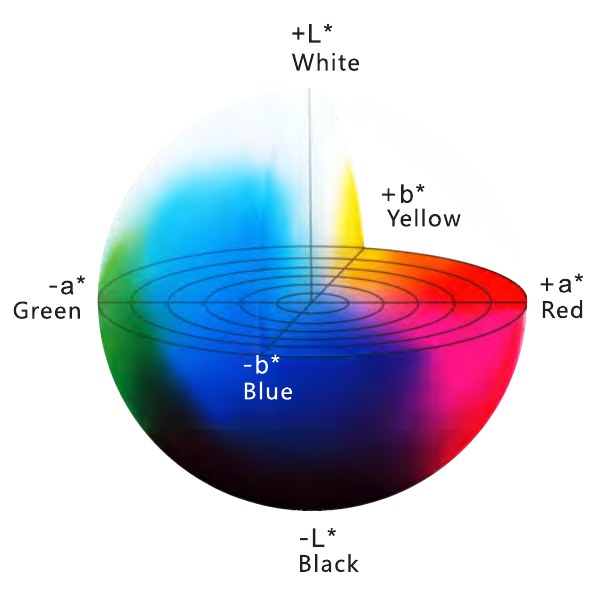 Colour Measurement GuideLight, colour numbers, ΔE, measuring geometries and how to choose an instrument.
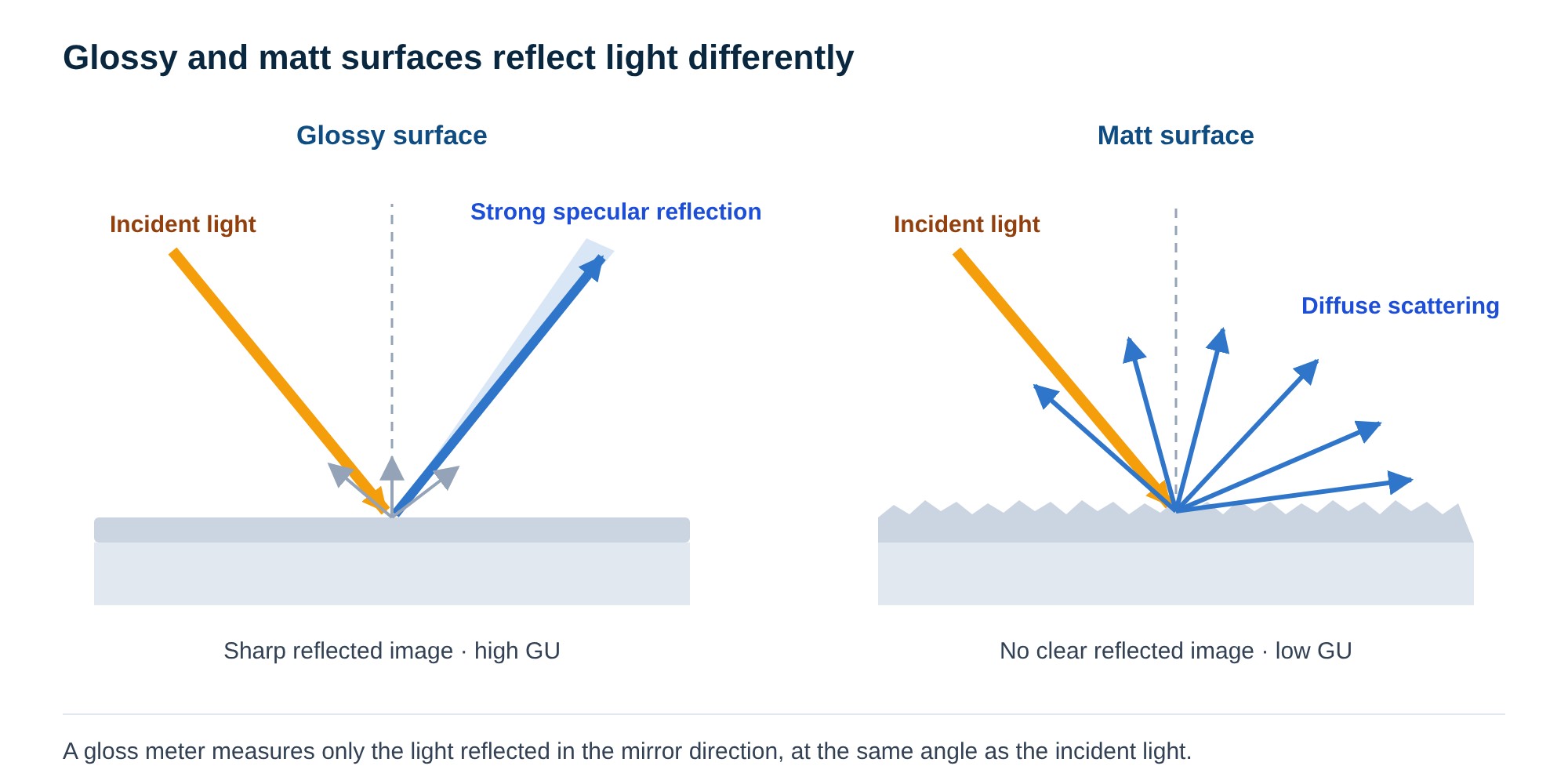 Gloss Measurement GuideGloss units, measuring angles 20°, 60° and 85°, standards and good practice.
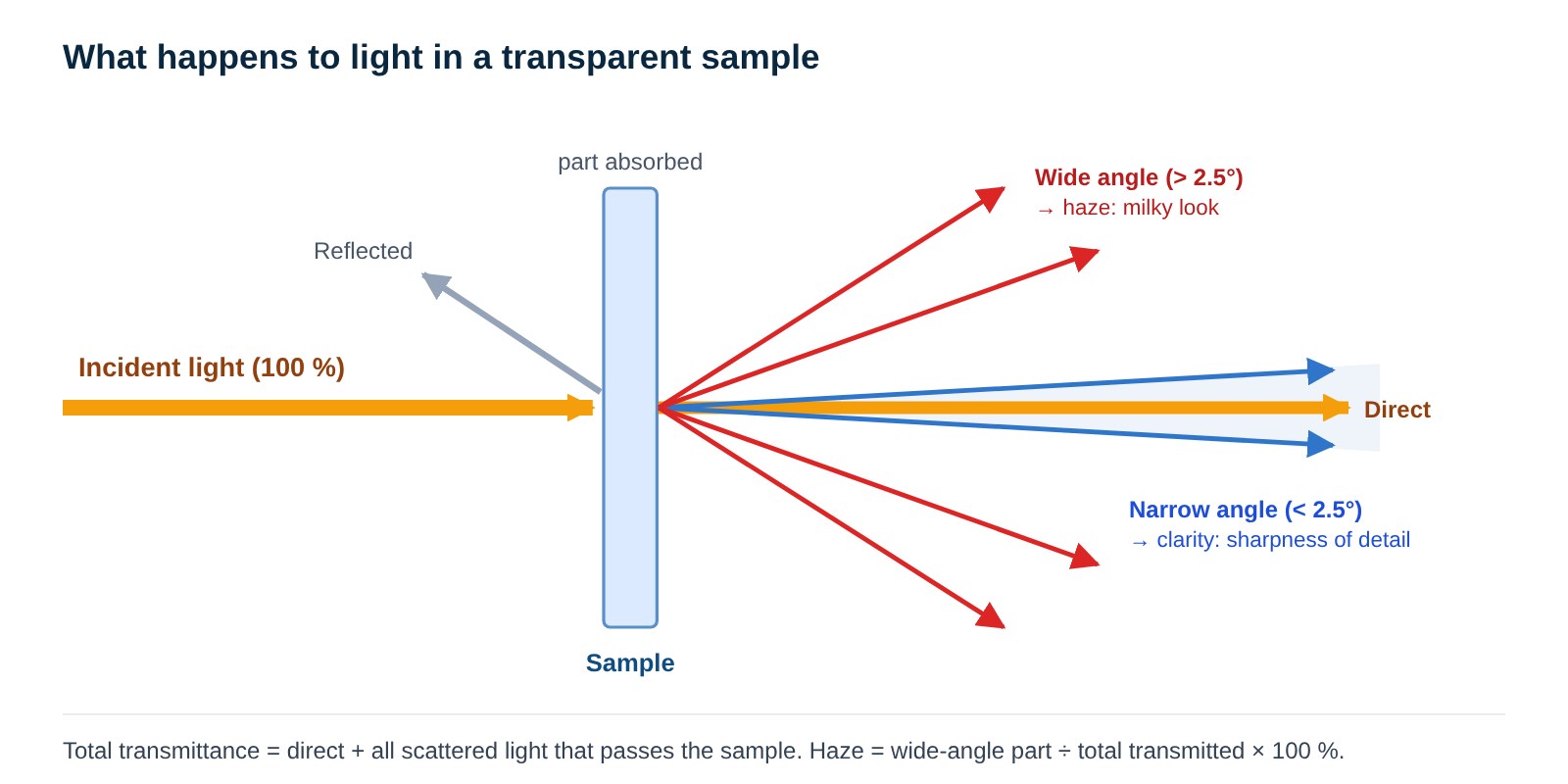 Haze Measurement GuideHaze, transmittance and clarity of transparent plastics, films and glass.

Paints and coatings
Colour against the standard from batch to batch, hiding power and gloss of the dry film.
What is measured
- Colour difference ΔE of each batch against the approved standard
- Whiteness and yellowness of white paints and primers
- Hiding power and the effect of film thickness on colour
- Gloss at 20°, 60° or 85°
- Matching customer colours and colour cards
Instruments: Benchtop colour spectrophotometers · Portable colour spectrophotometers · Gloss meters · Light booths
Read more: Colour Measurement Guide · Colour Matching and Formulation · Gloss Measurement Guide

Plastics and masterbatch
Colour of moulded parts and reference plaques, yellowing, and the appearance of transparent parts.
What is measured
- Colour of plaques and parts against the master
- Yellowness index after processing or ageing
- Haze and transmittance of transparent parts and films
- Gloss of surfaces and textures
- Masterbatch recipes
Instruments: Benchtop colour spectrophotometers · Portable colour spectrophotometers · Haze and transmittance meters · Gloss meters
Read more: Colour Measurement Guide · Haze Measurement Guide · Colour Matching and Formulation

Automotive colour and appearance
Body colour across suppliers and parts, effect coatings and the look of interior parts.
What is measured
- Metallic and pearlescent coatings measured at several angles
- Harmony between body panels and add-on parts from different suppliers
- Colour and gloss of interior plastics and textiles
- Visual check under several standard light sources
Instruments: Multi-angle spectrophotometers · Portable colour spectrophotometers · Gloss meters · Light booths
Read more: Colour Measurement Guide · Gloss Measurement Guide

Textiles and apparel
Dye recipes, shade control between lots and whiteness of optically brightened fabrics.
What is measured
- Shade of each dye lot against the standard
- Dye recipes and corrections
- Whiteness of fabrics with optical brighteners — measured with controlled UV
- Metamerism check under the customer’s light sources
Instruments: Benchtop colour spectrophotometers · Portable colour spectrophotometers · Light booths
Read more: Colour Measurement Guide · Colour Matching and Formulation

Building and decorative materials
Tiles, stone, panels, wall coatings and flooring — often large, textured surfaces.
What is measured
- Colour of textured and uneven surfaces with a large measuring aperture
- Shade sorting of tiles and panels
- Gloss of ceramics at 45° and of coatings at 60°
- Colour stability after weathering tests
Instruments: Portable colour spectrophotometers · Colorimeters · Gloss meters
Read more: Colour Measurement Guide · Gloss Measurement Guide

Glass, films and transparent materials
How clear, milky or tinted a transparent material looks and how much light it lets through.
What is measured
- Haze, total transmittance and clarity
- Visible light transmittance, UV and IR rejection of glass and window films
- Colour of transparent samples in transmission
Instruments: Haze and transmittance meters · Benchtop colour spectrophotometers
Read more: Haze Measurement Guide · Colour Measurement Guide

Chemicals, liquids and pharmaceuticals
Colour of liquids, resins, oils and solutions measured in transmission.
What is measured
- Colour of transparent liquids and colour indices such as APHA (Pt-Co)
- Batch-to-batch colour of raw materials and products
- Colour of powders and tablets in reflectance
Instruments: Benchtop colour spectrophotometers · Colorimeters
Read more: Colour Measurement Guide

Cosmetics
Shades of powders, creams, foundations and lipsticks, and their consistency between batches.
What is measured
- Shade of powders, creams and liquids against the master batch
- Non-contact measurement of soft and loose samples
- Colour of packaging and printed labels
Instruments: Benchtop colour spectrophotometers · Portable colour spectrophotometers
Read more: Colour Measurement Guide · Colour Matching and Formulation

Food and beverages
Colour as a sign of quality and process: meat, juices, sauces, bakery products, grain and spices.
What is measured
- Colour of meat and fish, bakery products, sauces and pastes
- Clear juices and beverages in transmission, cloudy ones in reflectance
- Powders, spices and granules measured without contact
- Colour grading of raw materials
Instruments: Benchtop colour spectrophotometers · Portable colour spectrophotometers · Colorimeters
Read more: Colour Measurement Guide

Packaging, printing and paper
Brand colours on packaging, paper whiteness and the gloss of printed and coated surfaces.
What is measured
- Print colours measured with 45/0 geometry
- Whiteness and brightness of paper with optical brighteners
- Gloss of paper and board at 75°, of varnished prints at 60°
Instruments: Portable colour spectrophotometers · Benchtop colour spectrophotometers · Gloss meters
Read more: Colour Measurement Guide · Gloss Measurement Guide
Your industry or material is not listed?
Tell us what you measure, how the result is used and which standard or tolerance you work to. We will propose the method and the instrument.
sales@colo.siSales and support for international customers
COLO Lab ExpertsPolje ob Sotli 4, SI-3255 Buče, Slovenia Phone: +386 70 713 437 · Email: sales@colo.si · Web: colo.si We supply laboratories across Europe directly and through partners. B2B prices are quoted net, excluding VAT.