

Organic Elemental Analysis
Complete Kjeldahl systems for nitrogen and protein determination — from 20-position block digestors and acid-fume scrubbers to distillation units and fully automatic analyzers with titration, data traceability and a 24-position autosampler.
The Kjeldahl method in three steps
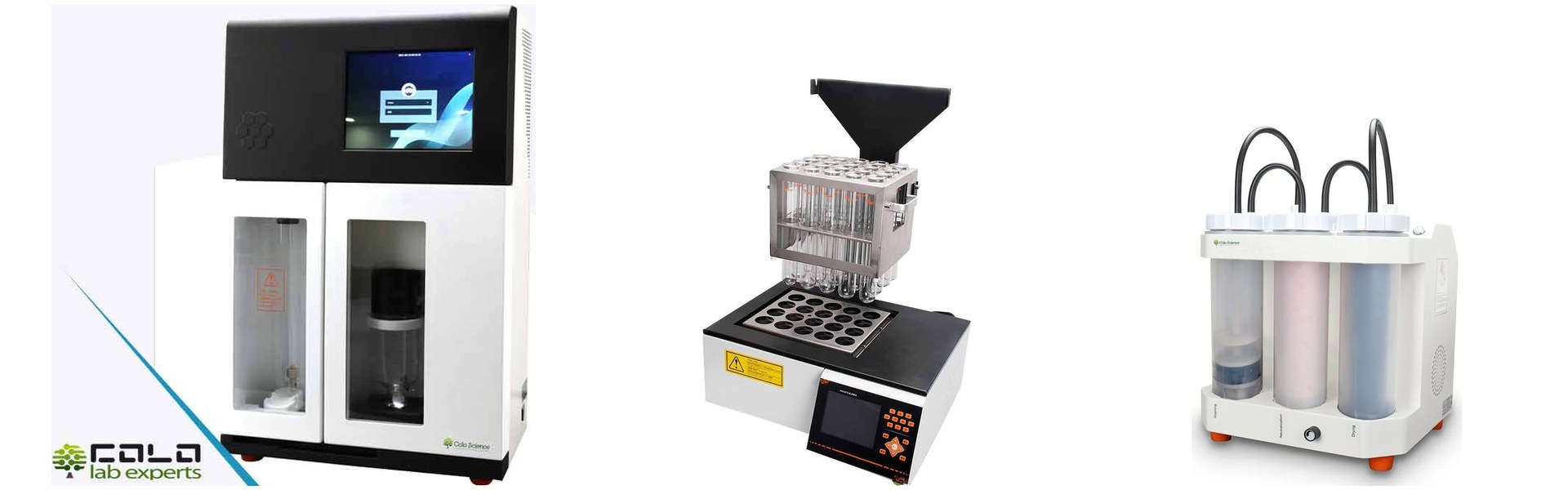
Analyzers, digestors and scrubber
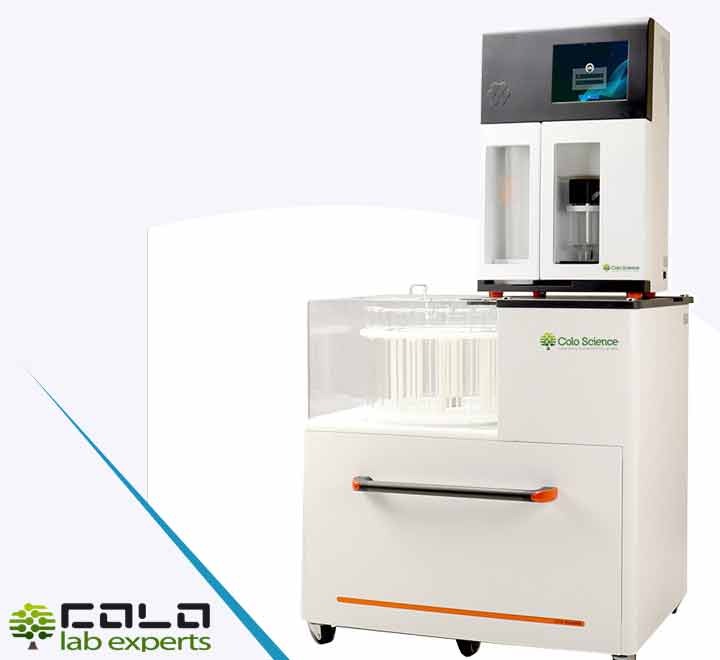
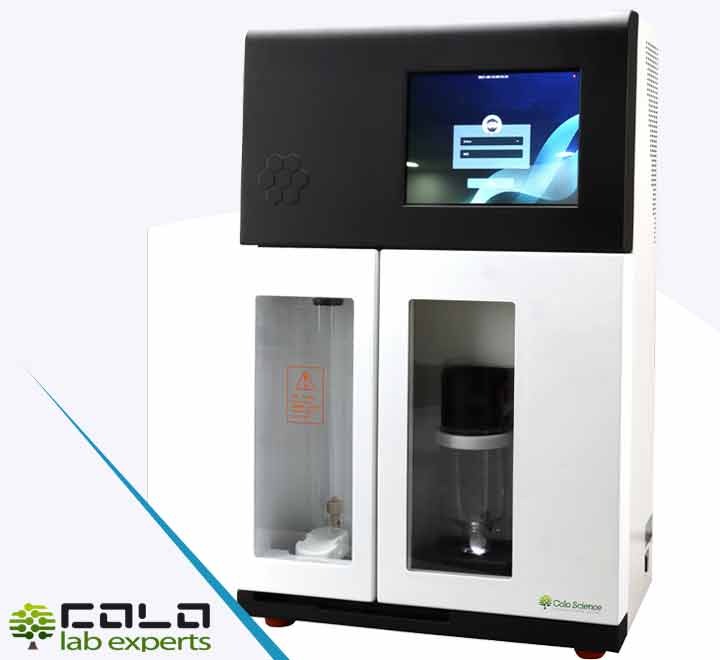
Fully automatic analyzer with autosampler
10″ touchscreen, burette resolution down to 0.2 µL/step, 21 CFR Part 11 user management, LAN/Wi-Fi and a 24-position autosampler for unattended batches.
KJELFASTER-K900 · KJELFASTER-A24
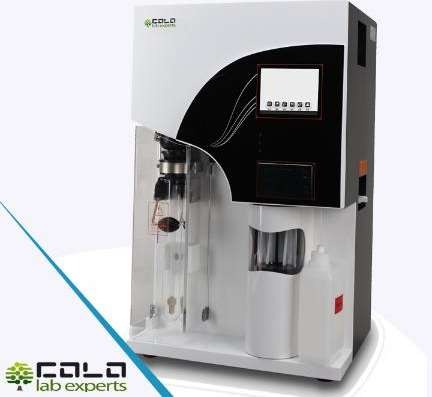
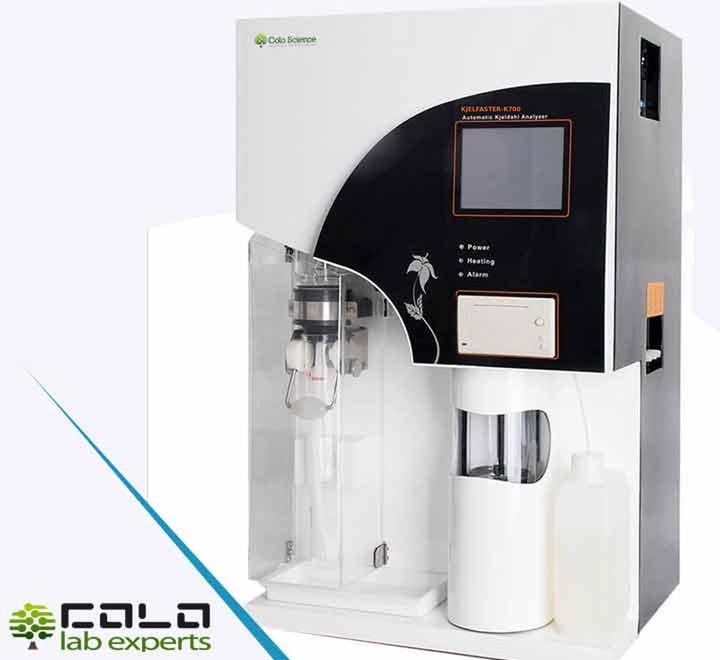
Automatic Kjeldahl analyzers
Distillation, colorimetric titration, calculation and printout in one instrument; 0.1–240 mg N, recovery ≥99.5 %, reproducibility ≤ ±0.5 %.
KJELFASTER-K700 · KJELFASTER-K500
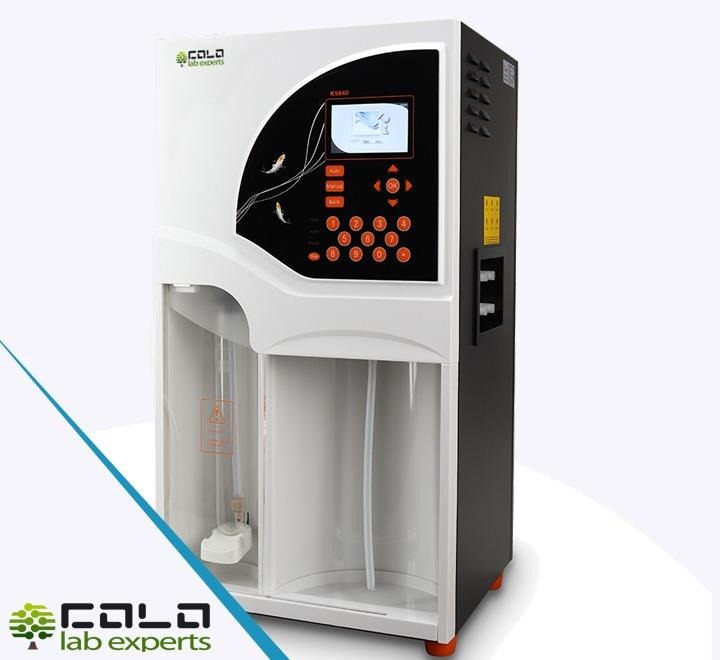
Kjeldahl distillation unit
Automatic steam distillation in 3–6 min per sample with automatic dosing of alkali and boric acid; titration done separately (manual or with a titrator).
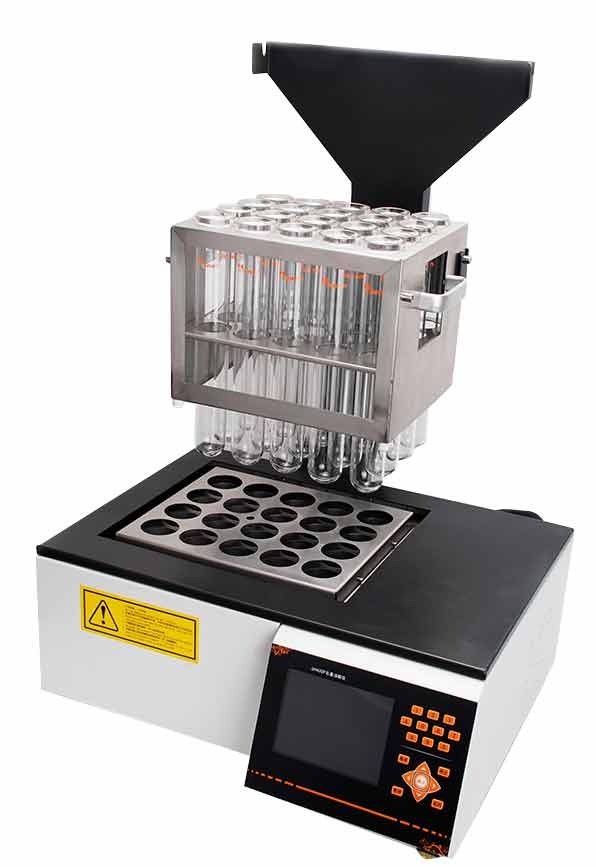
Kjeldahl block digestors
20 positions × 300 mL, room temperature +5 to 450 °C, ±1 °C, programmable linear and curve heating. Delivered with the fume collection hood.
KJELDIG-D450 · KJELDIG-D250
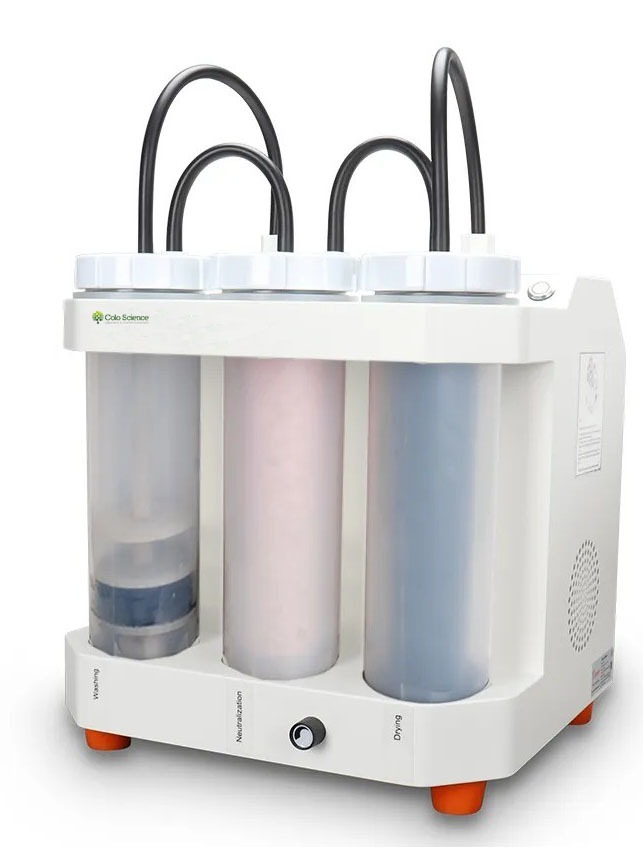
Scrubber
Three-stage neutralization of acid fumes from digestion: water condensation, alkali neutralization and activated-carbon filtration, with adjustable suction.
Which model fits your laboratory?
All four units measure 0.1–240 mg N with recovery ≥99.5 % and use the same φ42 mm × 300 mL digestion tubes, digestors and scrubber. They differ in how the titration is done, how fine the burette is, how results are documented and how much of the work runs unattended.
 KJELFASTER-K900 KJELFASTER-K900 |
 KJELFASTER-K700Most popular choice KJELFASTER-K700Most popular choice |
KJELFASTER-K500 |
KJELFAST-K300 |
|
|---|---|---|---|---|
| Best for | accredited and high-throughput laboratories | routine laboratory, low-nitrogen samples, finer titration | routine laboratory with printed results | occasional samples, teaching, lowest investment |
| Titration | integrated, variable-speed | integrated, during distillation | integrated, colorimetric, after distillation | external — manual or separate titrator |
| Burette resolution | 1.0 µL/step; 0.2 / 0.4 µL/step optional | 1.0 µL/step | 2.0 µL/step | — |
| Time per sample | 3–8 min | 5–10 min | 5–10 min | 3–6 min (distillation only) |
| Reproducibility | relative error of mean value ±0.5 % | relative error of mean value ≤ ±0.5 % | relative error of mean value ≤ ±0.5 % | — |
| Results and data | 1 million results, 21 CFR Part 11 audit trail, LAN / Wi-Fi | 1800 results, integrated printer, USB / RS485 optional | 1000 results, integrated printer | on the display |
| Unattended operation | 24-position KJELFASTER-A24 autosampler (optional) | — | — | — |
| Cooling water | 0.5 L/min | 1.5 L/min | 1.5 L/min | 1.5 L/min |
| Technical specification | KJELFASTER-K900 (PDF, 5 pages) | KJELFASTER-K700 (PDF, 5 pages) | KJELFASTER-K500 (PDF, 5 pages) | KJELFAST-K300 (PDF, 5 pages) |
Applications, methods and recommended configuration
| Sector | Typical determination | Method reference | Recommended |
|---|---|---|---|
| Dairy | crude protein in milk and milk products | ISO 8968-1 | K500 / K700 |
| Feed | crude protein | ISO 5983-2 | K500 – K900 |
| Cereals and grain | protein in cereals, flour and pulses | ISO 20483 | K500 / K700 |
| Food (general) | nitrogen and protein in meat, fish and processed food | ISO 1871, AOAC 2001.11 | K500 – K900 |
| Soil and fertilizers | total nitrogen after digestion | ISO 11261 | K300 / K500 |
| Water and wastewater | total Kjeldahl nitrogen (TKN), ammonium nitrogen | ISO 5663, EPA 351.3 | K700 / K900 (low nitrogen) |
| Contract and accredited labs | high sample numbers with full traceability | validated in-house methods | K900 + A24 |
| Teaching and research | method training, occasional samples | classical Kjeldahl | K300 |
The recommendation is a starting point; the final configuration is agreed on your sample types, daily sample number and documentation requirements.
Why a COLO.Science Kjeldahl system
One tube from digestion to distillation
the φ42 mm × 300 mL tube goes from the digestor straight into the analyzer — no transfer of the digest, no losses.
Open consumables
standard tubes, catalyst tablets and reagents from any supplier; no paid software options or locked cartridges.
Scalable system
same digestors, scrubber and tubes for all models; add an analyzer or autosampler when the sample number grows.
Precision where it matters
recovery ≥99.5 %, reproducibility ≤ ±0.5 %, burette resolution down to 0.2 µL/step for low-nitrogen samples.
Safe digestion
fume collection hood and three-stage EXSC5 scrubber; temperature and cooling-water protection on the analyzers.
Local support
installation, operator training, method validation on your sample and service by COLO.Science.