

Shigella · Biochemical identification
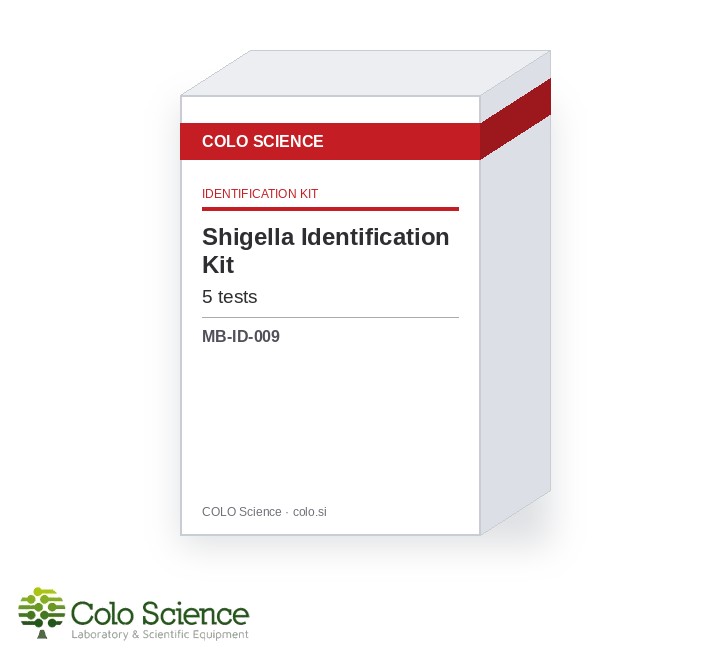
Shigella Identification Kit – biochemical confirmation of Shigella
The Shigella Identification Kit confirms suspect colonies with two strips of miniaturised biochemical tests and assigns Shigella isolates to the serological groups A to D together with colony morphology.
- Two strips (A and B) per test
- Groups A–D of Shigella
- 5 tests
How Shigella Identification Kit works
A pure colony from nutrient agar is suspended to 0.5 McFarland and dispensed into the wells of both strips. Carbohydrate fermentation, decarboxylase and other reactions are read after incubation; motility and TSI reactions are tested separately.
Technical data
| Inoculum | Pure colony suspended to 0.5 McFarland; 2 mL per strip |
| Incubation | 36 ± 1 °C, 18–24 h (some reactions up to 48 h) |
| Storage | 2–8 °C |
Applications and practical notes
Rapid tests, identification kits and reference strains shorten and secure the detection of Shigella after enrichment, while the culture method of ISO 21567 remains the reference. Typical applications include:
- Screening of enrichment cultures
- Confirmation of typical colonies
- Positive controls and media QC
- Laboratories with PCR or LAMP equipment
Working with Shigella Identification Kit: Cover the wells that need paraffin, add the indole reagent only after incubation and read the oxidase test within 30 seconds.
Good practice with rapid tests: store the kit as stated on the label, let the components reach room temperature before use and use each item only once. Record the lot number and the result, and confirm positive results according to the reference method when this is required.
About the Shigella and Yersinia methods: ISO 21567 describes the detection of Shigella in food by enrichment in Shigella broth with novobiocin, plating on selective agars such as MacConkey, XLD and Hektoen enteric agar, and biochemical and serological confirmation. ISO 10273 describes the detection of presumptive pathogenic Yersinia enterocolitica by enrichment at 25 °C and plating on CIN agar, followed by tests that separate pathogenic from non-pathogenic strains. COLO.Science offers media, supplements, rapid tests, identification kits and QC strains for these methods.
Complete sets from one supplier: COLO.Science supplies culture media, supplements, rapid tests, identification kits and QC strains as complete sets for the method you follow. Send us your sample types and standards, and we will prepare an offer with the matching products and documentation.
Shigella Identification Kit is supplied by COLO.Science in the pack sizes listed under Ordering information. For larger quantities, regular deliveries or method-specific sets that include Shigella Identification Kit, please send us a request. With every delivery of Shigella Identification Kit you receive the lot number and expiry date, and on request we send the available documentation for Shigella Identification Kit.
Where Shigella Identification Kit fits in Shigella and Yersinia testing
- Enrichment – Shigella broth with selective supplement; for Yersinia a peptone-sorbitol-bile type broth
- Selective isolation – Chromogenic Shigella Agar, Desoxycholate Citrate Agar, XLD; for Yersinia CIN agar and Chromogenic Yersinia enterocolitica Agar
- Screening – qPCR or LAMP kits after enrichment
- Confirmation and QC – biochemical identification kits and reference strains
See all Shigella and Yersinia products in the Microbiology Catalogue →
Ordering information
| Product | COLO code | Pack |
|---|---|---|
| Shigella Identification Kit | PRO7893 | 5 tests |
Product notice: preparation, storage conditions and shelf life are given on the label. Technical data on this page are for orientation; the label and the lot documentation apply. B2B prices are quoted net, excluding VAT.
Sales and technical support
COLO LabExperts
Polje ob Sotli 4, SI-3255, Slovenia
Quotations and technical support for culture media and microbiology products across our international sales territory. B2B prices are net, excluding VAT.
COLO.SCIENCE | MICROBIOLOGY SUPPORT
Need the complete set for your method?
Send the sample type, target organism and the standard you follow. COLO.Science will put together the media, supplements, QC strains and confirmation tests for the whole procedure.