 COLO.Science · Technical Specification
COSIT200
Electromagnetic Sieve Shaker · 3D Particle Motion · Dry/Wet Sieving
COSIT200 sieve shaker for particle size testing with combined vertical and horizontal vibration
to create effective three-dimensional particle motion. Designed for reliable granulometric separation
in QC and R&D, supporting dry or wet sieving workflows. Adjustable timer (1–99 min) with continuous or interval work
cycles; robust 450 W drive and support for multiple sieve heights and diameters. Optional 5″ LCD color touch screen
for improved usability. Key technical parameters in this sheet are derived from the COSIT200 spec summary.
20 µm–125 mm
dry / wet
electromagnetic
3D motion
3000 vib/min
3 mm amplitude
1–99 min
450 W
Ø 60–203 mm
Document type: Technical Specification Sheet
Format: Landscape (responsive)
Format: Landscape (responsive)
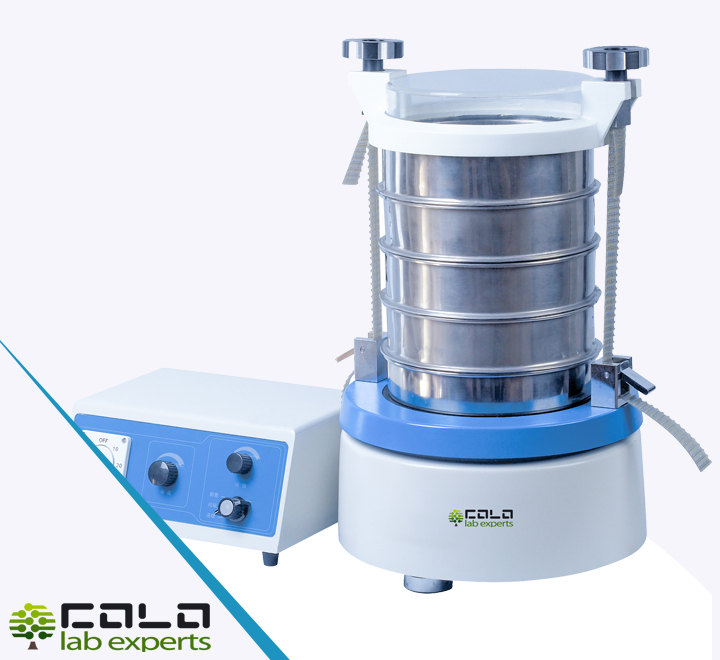
Instrument
COSIT200 · COLO.Science
Address (HQ)
Polje ob Sotli 4
SI-3255, Slovenia
SI-3255, Slovenia
Contact
COSIT200 standard model
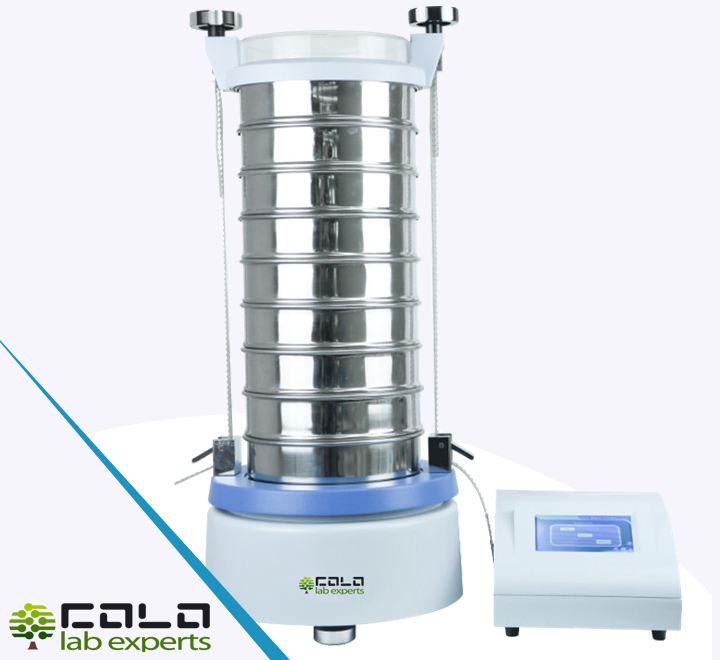
5″ LCD touch screen optional
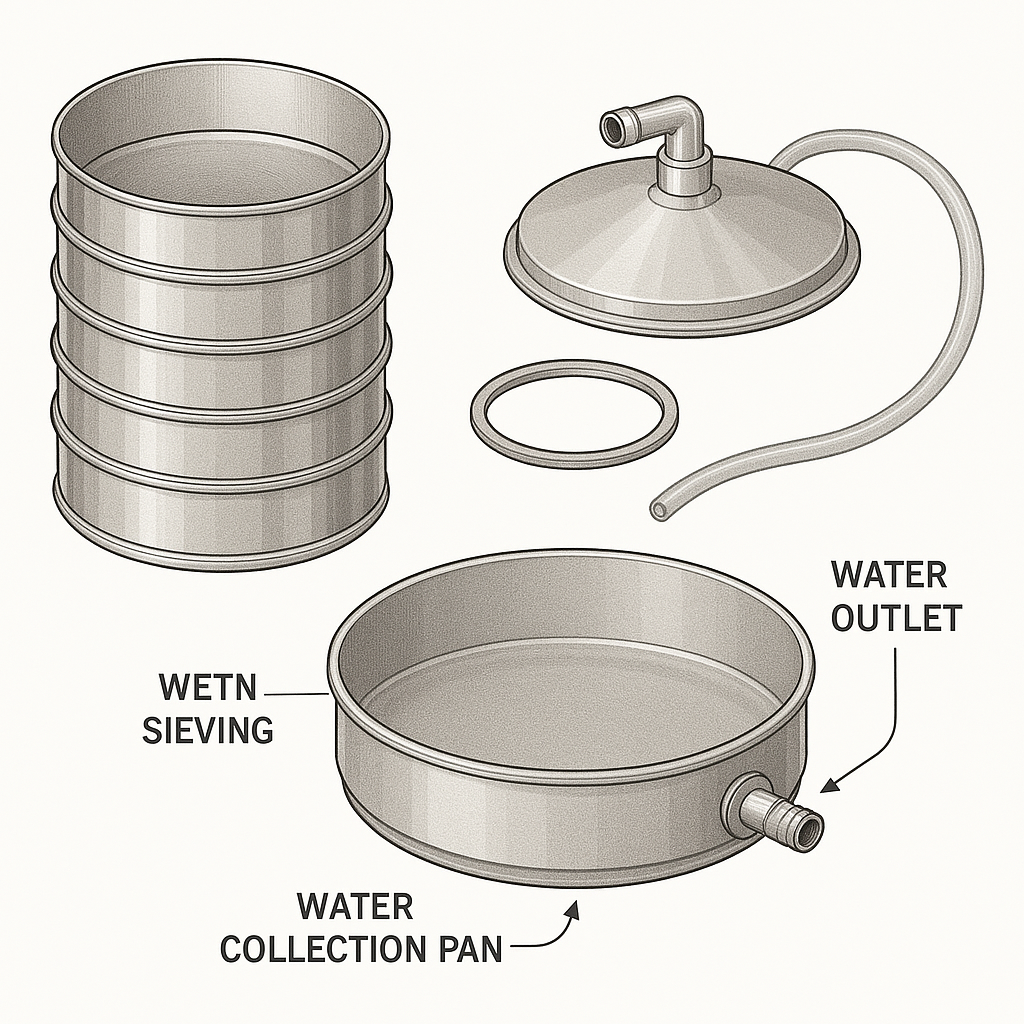
Wet granulometry kit water outlet & pan
COSIT200 · Technical Specification
Document ID: COL-TEC-COSIT200-EN
Version: Responsive
Informational technical sheet · Non-binding
Version: Responsive
Informational technical sheet · Non-binding
COSIT200 · Electromagnetic Sieve Shaker technical specification sheet
vertical + horizontal vibration
3D particle motion
dry / wet sieving
20 µm–125 mm
3000 vib/min
3 mm amplitude
1–99 min timer
450 W
Ø 60–203 mm
— interval mode · optional touch LCD
General & performance specifications
| instrument identity | |
|---|---|
| instrument type | COSIT200 sieve shaker |
| working principle | Electromagnetic, compact drive |
| application | Granulometric separation / particle size testing |
| type of sieving | Dry / Wet |
| sieving range & motion | |
| range of sieving | 20 µm to 125 mm |
| particle motion | Three-dimensional (3D) |
| dynamic of sieving | 3000 vibrations per minute |
| maximum vibration amplitude | 3 mm |
| time control | |
| timer | 1 to 99 minutes |
| work cycle | Continuous / discontinuous (interval mode with 10 s intervals) |
| sieve stack capacity | |
| maximum number of sieves | 8 (Ø 200/203 × 50 mm high) 15 (Ø 200/203 × 25 mm high) |
| sieve diameter compatibility | 60 to 203 mm |
| electrical & physical | |
| voltage | 230 V · 50/60 Hz |
| power | 450 W |
| dimensions (W × D × H) | 400 × 320 × 135 mm |
| gross / net weight | 32 / 27 kg |
| options (selected) | |
| user interface option | Optional 5″ LCD color touch screen |
Key instrument features
| 3D sieving efficiency | Combined vertical and horizontal vibration improves particle interaction and separation efficiency. |
| repeatability | Designed for consistent, repeatable particle size testing in routine QC workflows. |
| broad sieve range | Supports sieve stacks for 20 µm up to 125 mm particle size applications. |
| dry / wet workflows | Compatible with both dry and wet sieving methods depending on sample behavior. |
| timer & work cycles | 1–99 min timer; continuous or interval mode for sensitive or cohesive samples. |
| high capacity stacks | Up to 8 × 50 mm or 15 × 25 mm sieves (Ø 200/203 mm format). |
| compact, robust drive | Electromagnetic mechanism with 3000 vib/min and up to 3 mm amplitude. |
| touch LCD (optional) | 5″ color touch interface option for easier parameter entry and operation. |
Typical applications
| pharmaceutical powders and granules (particle size analysis) |
| food ingredients (flours, powders, additives) |
| construction materials and aggregates |
| chemicals, minerals and industrial powders |
| quality control / R&D laboratories |
Included / typical delivery (reference)
- COSIT200 main sieve shaker unit
- Power cable (region-specific)
- Operating / instruction documentation
- Optional: 5″ LCD color touch screen
- Optional: wet sieving accessories (water outlet, collection pan)
- Note: sieves selected according to ISO/ASTM
Operation overview
| loading | Place the sample on the top sieve of a stacked set with progressively smaller openings. |
| run | Set time (1–99 min) and select continuous or interval mode; start the shaker. |
| analysis | After the run, weigh retained fractions on each sieve to calculate PSD (mass % by fraction). |
| wet sieving | Use wet method for cohesive/fine materials where dispersion improves separation and reduces blinding. |
Ordering reference
| model | COSIT200 |
| options | 5″ LCD color touch screen, wet sieving kit |
| sieve formats | Ø 60–203 mm (capacity depends on sieve height) |
Practical notes for reliable PSD results
| topic | recommendation | note |
|---|---|---|
| sample mass | Use a consistent sample mass and avoid overloading the sieve mesh. | Overloading reduces separation efficiency and increases variability. |
| sieving time | Keep sieving time consistent (timer 1–99 min) and validate a standard method for each material. | Too short: incomplete separation; too long: potential attrition for fragile particles. |
| interval mode | Use discontinuous mode (10 s intervals) for cohesive or blinding-prone materials. | Intervals can help redistribution and reduce mesh blocking. |
| wet sieving | Apply wet sieving where dispersion is needed for fine/cohesive powders. | Ensure compatibility of sample with the chosen liquid and sieve material. |
| sieve maintenance | Clean sieves after each run and inspect mesh condition regularly. | Damaged meshes or residual deposits distort PSD results. |
Contact & Support
Headquarters address
Polje ob Sotli 4
SI-3255, Slovenia
Application guidance: Tell us your sieve diameter standard (ISO/ASTM), target size range, number of sieves,
and whether you need dry or wet sieving accessories. We will propose the optimal COSIT configuration.
Quick contact
Manufacturer & configuration notice (important):
Specifications in this document are provided for general reference and may represent a typical configuration. COLO.Science reserves the right to change technical specifications without notice.
For procurement and tender purposes, the only valid and binding specification is the official COLO.Science quotation and the accompanying technical specification that is engineering-approved.
Specifications in this document are provided for general reference and may represent a typical configuration. COLO.Science reserves the right to change technical specifications without notice.
For procurement and tender purposes, the only valid and binding specification is the official COLO.Science quotation and the accompanying technical specification that is engineering-approved.