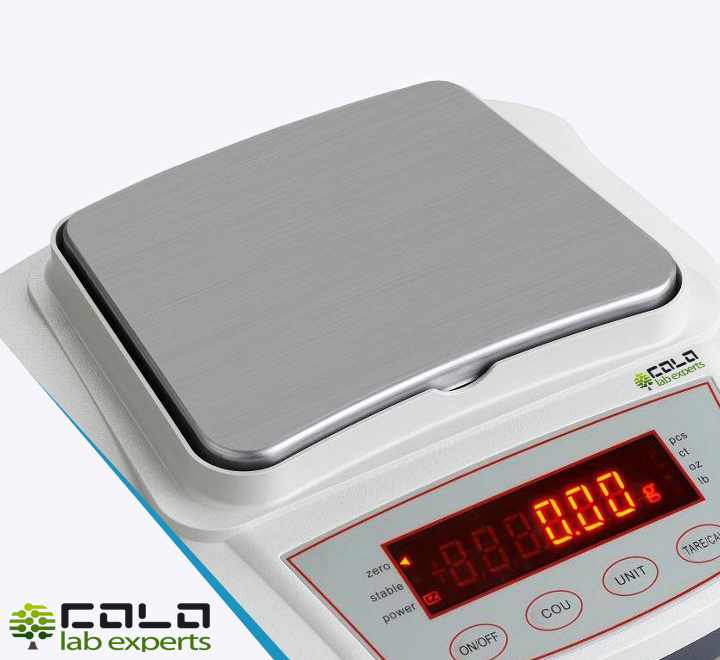
Two decimal places across the full 600–2000 g capacity range
Series overview
Weighing performance
- 0.01 g readability on every model of the series.
- Repeatability ±20 mg, linearity ±20 mg.
- Minimum weighing 200 mg; accuracy Class II.
- Stabilisation time ≤ 1.5 s on a stable bench.
Sensor & calibration
- Single load cell platform, identical across the series.
- External calibration with a control weight.
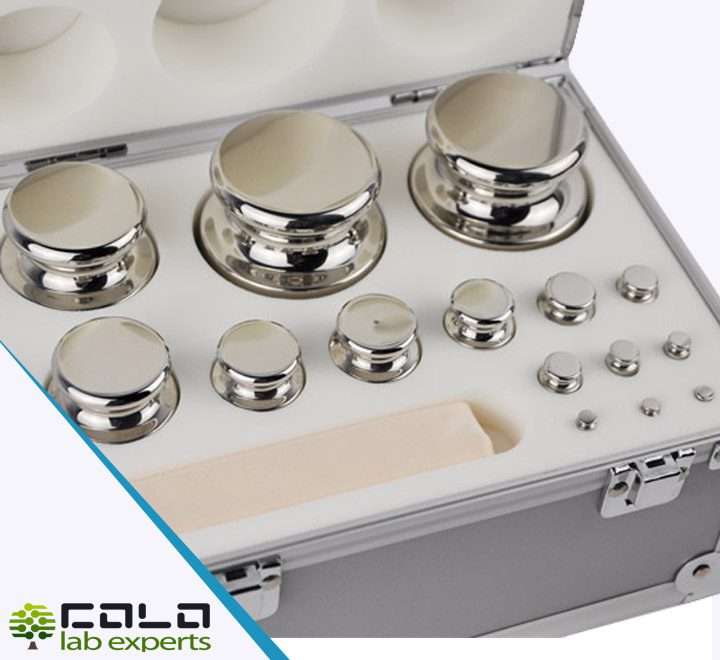
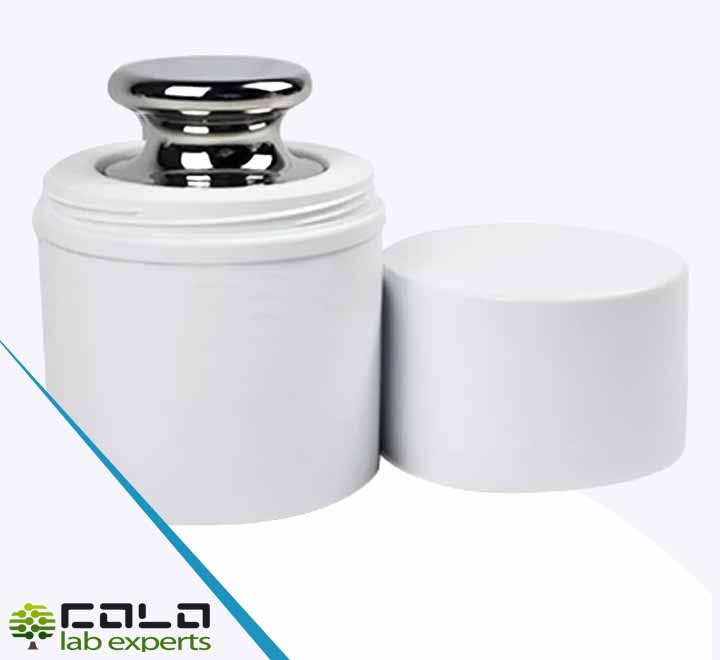
- An OIML M1 weight matching the capacity is the recommended class at 0.01 g.
- A calibration certificate for the weight is available on request.
Operation & functions
- Full-range tare subtraction over the whole capacity.
- Check weighing against preset limits.
- Parts counting of small identical components.
- Percentage weighing for formulation and dosing work.
Display, data & power
- Bright LED display, readable in poor bench lighting.
- RS232C interface available as an option.
- Mains adapter, AC 110–240 V 50/60 Hz, DC 5 V / 2 A output.
- Rechargeable battery as an option for work away from an outlet.
What distinguishes the CENS models
The models differ in maximum capacity only. CENS600 covers 600 g, where the full resolution is used over a short range; CENS1000 covers 1000 g for general laboratory work; CENS2000 extends the same 0.01 g resolution to 2000 g for heavier vessels and larger preparations. Readability, repeatability, linearity, pan size, display, calibration method, housing, functions and standard delivery are identical across the series — see the model table. Choose the smallest capacity that still accepts the heaviest sample together with its container.
Model selection
| Model | Product code | Maximum Capacity | Readability |
Repeatability | Linearity | Pan Size | Calibration |
| CENS600 | PRO3260 | 600 g | 0.01 g | ±20 mg | ±20 mg | 125 × 163 mm | External |
| CENS1000 | PRO2766 | 1000 g | 0.01 g | ±20 mg | ±20 mg | 125 × 163 mm | External |
| CENS2000 | PRO3259 | 2000 g | 0.01 g | ±20 mg | ±20 mg | 125 × 163 mm | External |
EXTERNAL the whole series is calibrated with a control weight — a matching OIML M1 weight is ordered separately. Codes are COLO product numbers.
Weighing & metrology
| Readability | 0.01 g (all models) |
| Repeatability | ±20 mg |
| Linearity | ±20 mg |
| Minimum weighing | 200 mg |
| Accuracy class | Class II |
| Stabilisation time | ≤ 1.5 s |
| Measuring cell | Load cell |
| Calibration | External, with control weight |
| Weighing pan | Stainless steel, 125 × 163 mm |
Display, control & utilities
| Display | LED display |
| Weighing functions | Full-range tare, check weighing, parts counting, percentage weighing |
| Interface | RS232C, optional |
| Data software | Optional, for collection and transfer of readings |
| Power supply | AC 110–240 V, 50/60 Hz; DC 5 V / 2 A adapter output |
| Battery | Rechargeable battery operation, optional |
| Operating temperature | 15–30 °C, fluctuation < 5 °C/h |
| Relative humidity | 40–80 % RH |
| Dimensions / net & gross weight | 225 × 220 × 80 mm · 1.2 kg / 1.5 kg |
Standard delivery: balance of the ordered model with stainless steel pan fitted, mains adapter and instruction manual. The series uses external calibration, so a matching OIML M1 control weight is recommended with every balance and is ordered separately; see the accessories page. Accredited calibration of the instrument — measurement traceable to a national standard, issued with a calibration certificate — is available on request and is billed separately, as is any service/calibration certificate outside the standard delivery.
Standard delivery and control weights
Standard delivery INCLUDED
OIML M1 control weights OPTION
Data output, power and documentation
RS232C, software and battery OPTION
Ordering note: please state the instrument model (CENS600 / CENS1000 / CENS2000) when requesting accessories, so that the nominal value of the control weight, the interface and the battery option can be matched to the capacity and to the intended use. Accredited calibration of the instrument and service/calibration certificates are quoted separately.
COLO ScienceLaboratory & Scientific Equipment
COLO.SCIENCE | PRODUCT SUPPORT
COLO.SCIENCE | CENS PRECISION BALANCE SUPPORT
Not sure which capacity and which control weight you need?
Send the maximum load including the container, the type of samples, whether check weighing, parts counting or percentage weighing is used, and any printing, data transfer, battery or certification requirement. COLO.Science can confirm the model and the approved configuration.
Official configuration notice: This document is provided for orientation and model selection. It does not replace the binding specification, delivered configuration, validation protocol or acceptance criteria confirmed in the official COLO.Science quotation, proforma invoice, order confirmation or manufacturer-approved technical offer. Confirm the model, capacity, accessories, control weight and certification requirement for the specific order. Specifications may change without notice.